Humidity and air movement are often underestimated in hydroponics. Everyone looks at pH and EC, but if the air is not right, even the best nutrient solution is of little use. The plant only really „drinks“ when it can evaporate water through its leaves. If the air is too humid, that stalls. If it is too dry or stagnant, you get other problems.
Here I show you which values make sense, how I do it indoors and how you can tell that something is wrong.
Why the air is so important
On the underside of the leaves there are tiny pores called stomata. Through them the plant releases water as vapour. This evaporation pull draws new nutrient solution up through the roots from below, and with it calcium and the other nutrients. If the air around is already very humid, hardly anything can evaporate. The plant then takes up less, even though there is enough in the nutrient solution.
If the air does not move, a humid, stagnant layer forms directly around the leaves. That is exactly where mould and fungi feel at home. A light breeze breaks up this layer, the leaves dry faster and the stems become stronger through the movement.
Guide values by growth stage
| Phase | Humidity | What to watch out for |
|---|---|---|
| Germination under the lid | 70 to 80 % | Keep moist, lid on, lift briefly every day |
| Young plants in the propagation station | 60 to 70 % | Leave the lid open longer and longer |
| Lettuce, herbs, leafy greens in the tower | 50 to 60 % | Air regularly, light breeze |
| Tomatoes, peppers in flower | 50 to 60 % | Not too humid, otherwise pollination suffers |
| Cucumbers | 60 to 70 % | Like it a little more humid, but with good air movement |
These are guide values, not rigid limits. More important than a few percent more or less is that the air does not stay at the upper end permanently and does not build up.
How I do it indoors
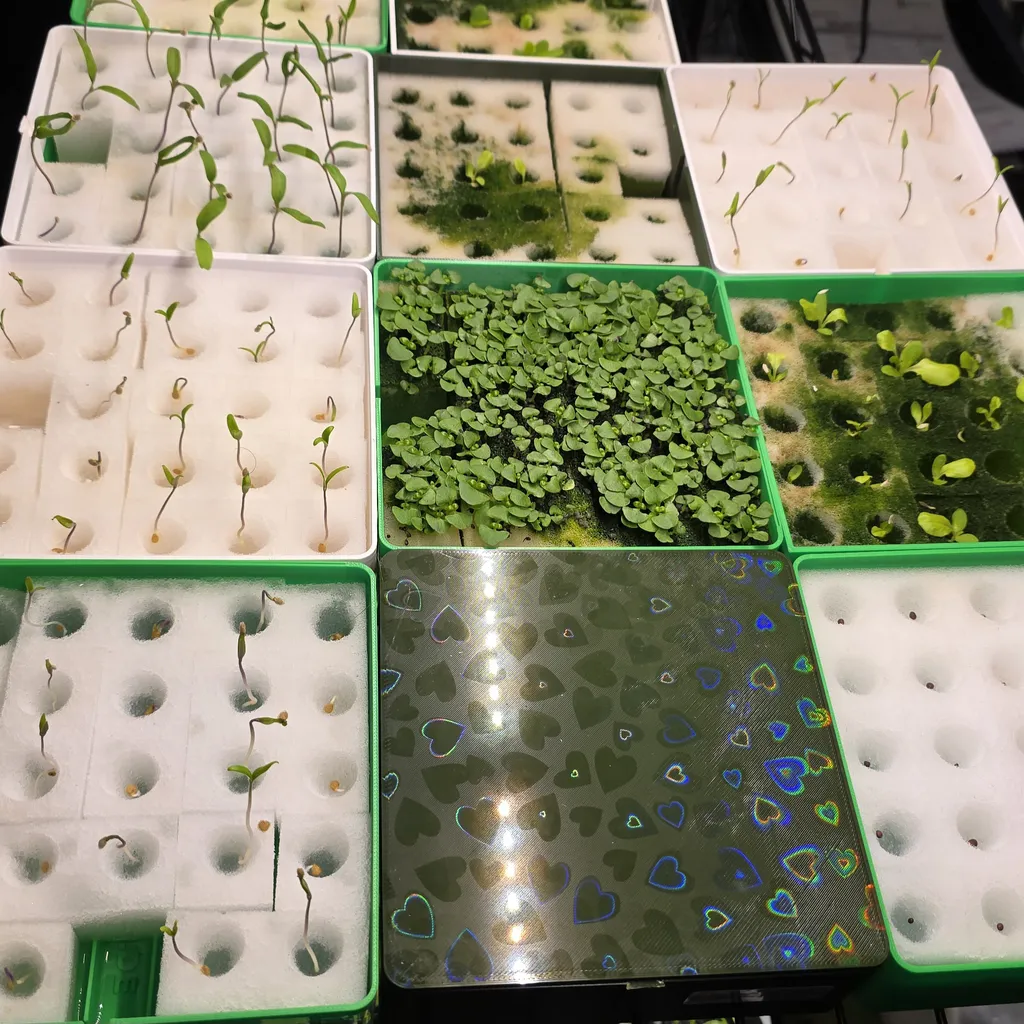
My seeds germinate in the propagation box with a lid. Underneath it is nice and humid, which is exactly what the seedlings want. As soon as the seedlings are up, you should get them used to normal room air step by step, so that they do not flop when the lid comes off completely.
In the propagation room I keep the humidity below 60 percent if possible. For this I air the room properly for about a quarter of an hour every morning. A fan also runs in the propagation shelf. It moves the air and gets the young plants used to wind while still indoors. That way the stems become sturdier before the plants go into the tower or outside.
Setting the fan correctly
- The leaves should move slightly but not flutter.
- Do not blow directly at one spot all the time, otherwise the leaf edges dry out. An oscillating fan distributes the air more evenly.
- Better to aim it a little above or below plant height than straight at the leaves.
- For small setups a clip fan on the shelf or wall is enough.
How to tell that something is wrong
These helpers make it easier for you
You do not need much for a good room climate. A hygrometer shows you where you stand, and a fan provides movement. If you grow on several levels, a propagation shelf with lamps serves you well.


* Affiliate-Link: Bei einem Kauf erhalte ich eine Provision, dein Preis bleibt gleich. Preis inkl. MwSt., zzgl. Versand, Stand 8.11.2026. Bilder: Amazon Creators API

* Affiliate-Link: Bei einem Kauf erhalte ich eine Provision, dein Preis bleibt gleich. Preis inkl. MwSt., zzgl. Versand, Stand 8.11.2026. Bilder: Amazon Creators API

* Affiliate-Link: Bei einem Kauf erhalte ich eine Provision, dein Preis bleibt gleich. Preis inkl. MwSt., zzgl. Versand, Stand 8.11.2026. Bilder: Amazon Creators API
FAQ
What humidity is ideal for hydroponics?
For most plants in the tower you are right with 50 to 60 percent. During germination it may be considerably more humid under the lid; cucumbers like it a little more humid than tomatoes and peppers.
Do I need a fan indoors?
For a few plants at the window, regular airing is often enough. As soon as you have a shelf with lamps or several towers, a small fan is worthwhile. The stems become stronger and the leaves dry faster.
What to do about mould when starting seeds?
Get more air in: open the lid more often and for longer, air the room in the morning, move the air gently. Take out affected cubes so that nothing spreads further.
Is dry heating air in winter a problem?
It can become one, because spider mites love dry air. Keep an eye on the humidity with a hygrometer and look under the leaves regularly.
Do you have questions about your setup? Write to me, I am happy to help.