Setting up the water supply in a hydro tower
Pump, hose, tank: how the water reliably gets to the top. For one tower, several towers on one tank, on the wall and for your holidays.
Water supply at a glance
The water supply is the heart of every hydro tower. A small pump lifts the nutrient solution from the reservoir to the top, and from there it trickles back down past every planting spot. The water is used again and again, and the roots get water, nutrients and oxygen at the same time.
Here I show you how I set up my water supply: for a single tower, for several towers on one tank, on the wall and for your holidays. With my videos and the materials I use myself. Just get started, it is easier than it looks.
How the water flows in a hydro tower
The pump sits in the reservoir at the bottom. It pushes the nutrient solution through a hose all the way to the top of the tower. At the top the water spreads out and runs down inside, past the planting spots. The roots take what they need. At the bottom everything drips back into the reservoir, and the cycle starts again.
The most important rule: One sufficiently thick hose goes up, and the water is split only at the top. That way enough water arrives up there, even when several towers or columns are supplied.
Pay attention to the pump’s lifting height. That is how high it can push water. The taller the tower, the less water arrives at the top. For lower towers up to about 1.30 metres a small 8-watt pump is enough; for tall towers take a stronger, adjustable pump.
Better not like this: thin hoses going up
For my first indoor water supply I ran lots of thin hoses up separately. That was a bad buy: friction slows the water down in thin hoses, too little arrived at the top, and the columns at the back got almost nothing. Thin lines also clog faster.
Better: one thick hose runs from the pump to the top, where the manifold sits. Only from there do the short lines go to the individual columns. That keeps the pressure even at the top.
▶ In the video:
Better not like this: thin hoses going up
With a big tank you hardly ever need to top up, not even on holiday. This is what I use myself.
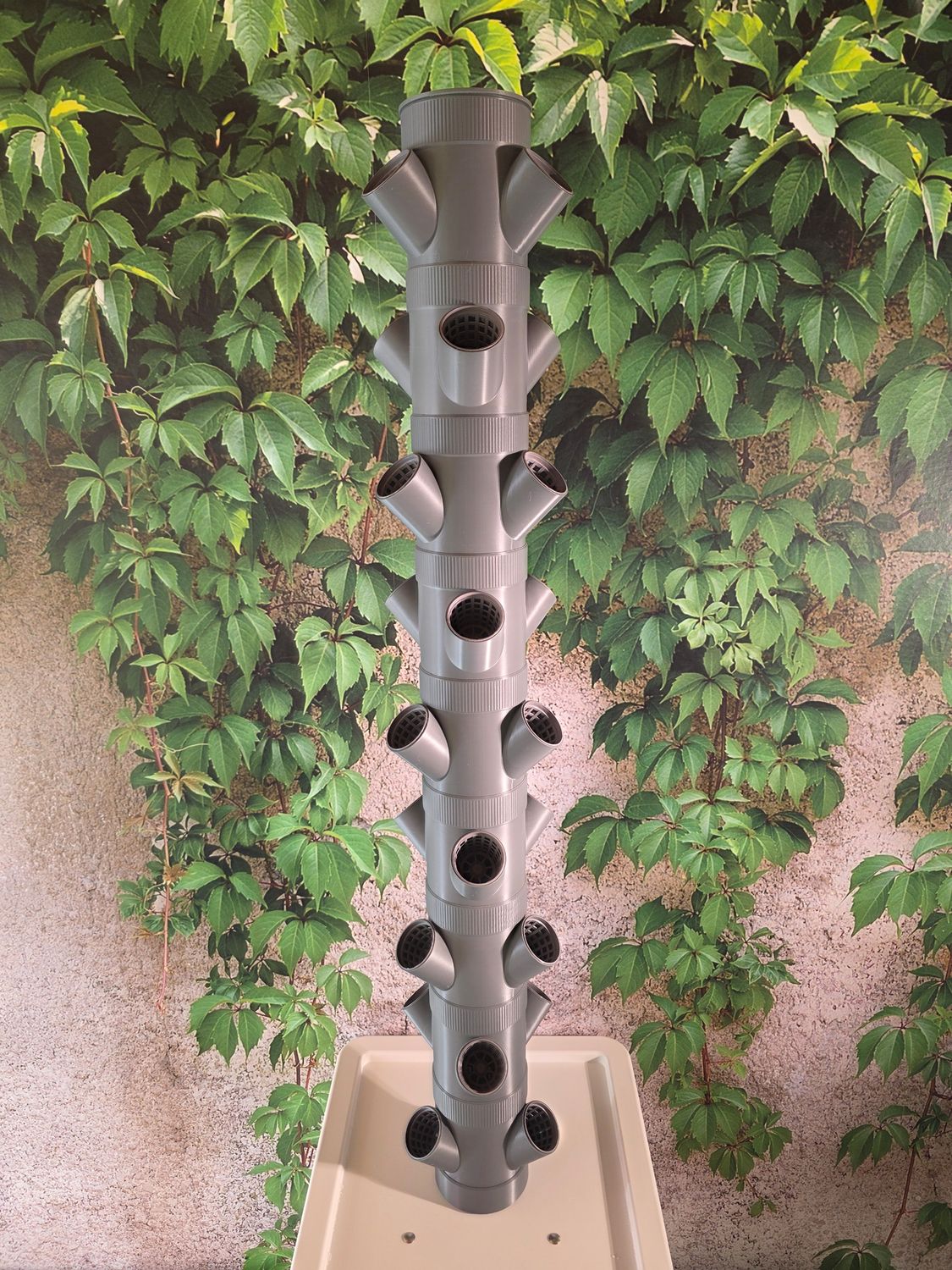 HydroFlex Tower 9+ with 37-litre tankPlenty of water for 27 plants and more, expandable at any time.View in shop
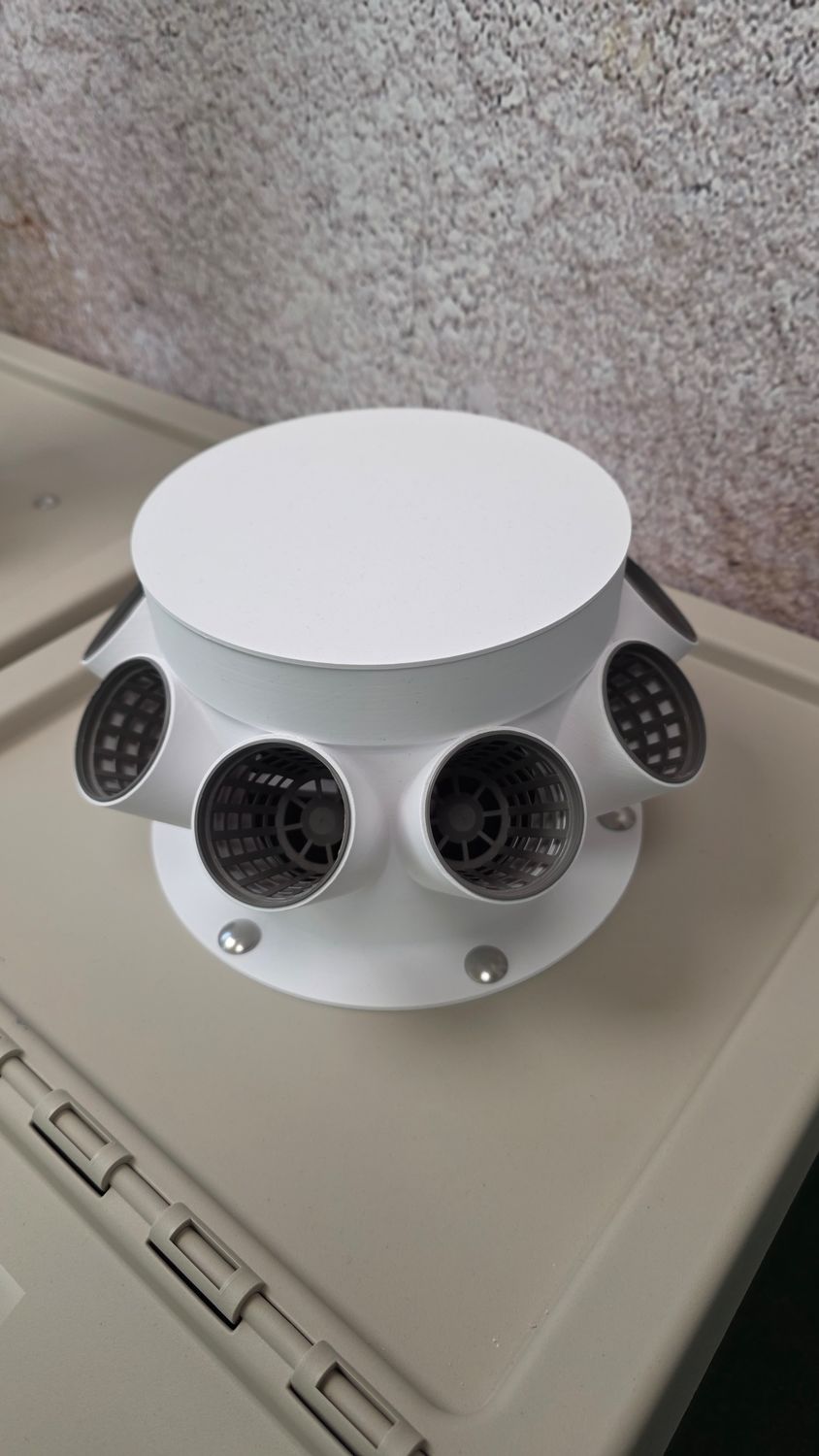 HydroFlex Tower Largo Uno with 37-litre tankThe wide tower for tomatoes, cucumbers and peas, with lots of water in the tank.View in shop
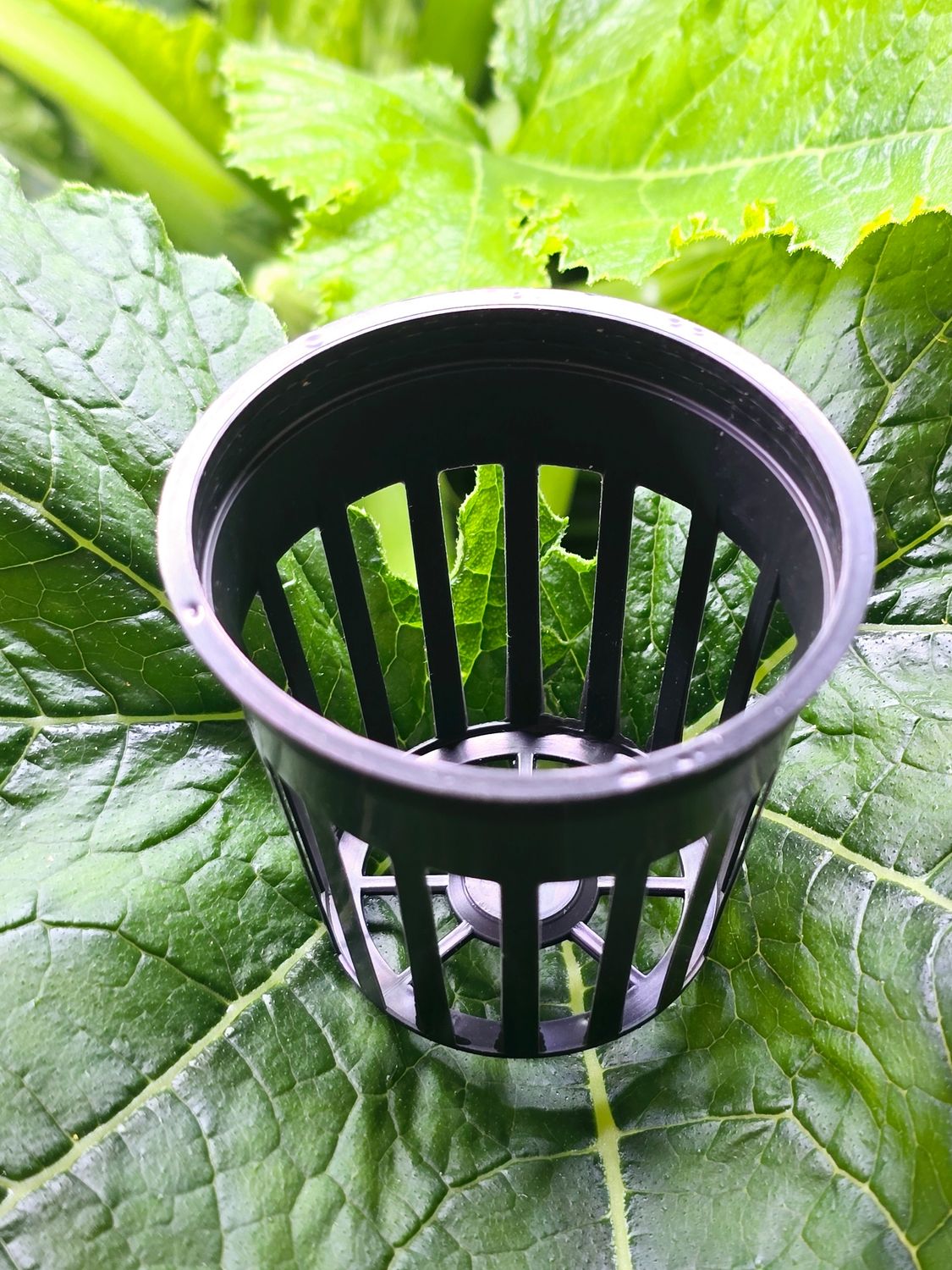 Net pots 5 cmA perfect fit for my towers, so everything sits tight and clean.View in shop
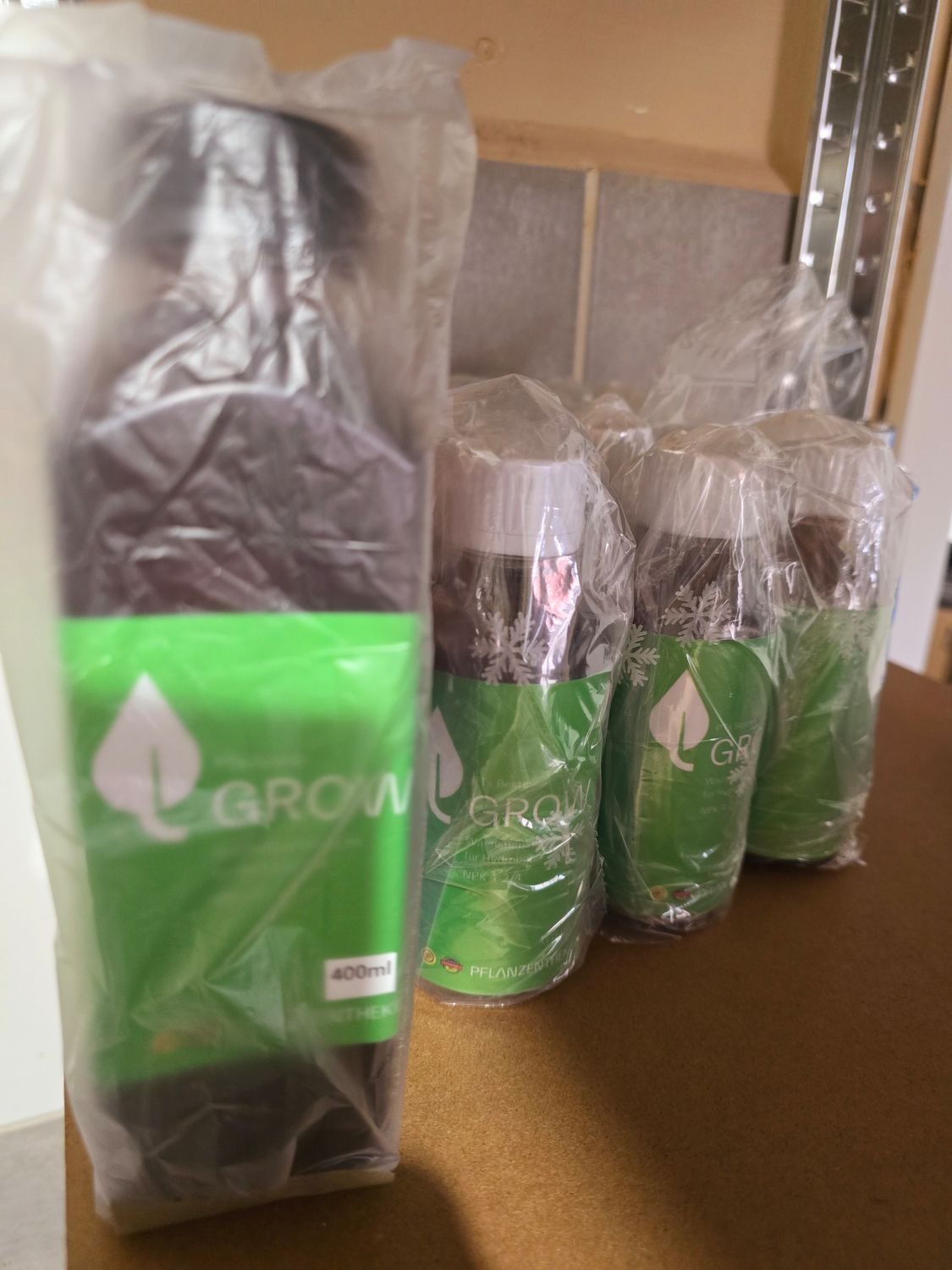 Frankie’s liquid fertiliserAdd it to the tank and your plants are fed. Simply dose and go.View in shop
Several towers on one tank
If you have several towers, you don’t need to measure and top up each reservoir separately. I connect the reservoirs at the bottom. The water levels out by itself and stands at the same height everywhere, like in two connected glasses. Then you measure pH and EC in one place and top up in one place.
Each reservoir gets a tank connector at the bottom, and a hose links them. Important: all reservoirs stand level and at the same height, otherwise one overflows. You can use one strong pump for all towers or keep a pump in each tower.
▶ In the video:
Connecting several reservoirs, one pump
Connecting towers to a shared nutrient tank
Fitting a tank connector: keep your reservoir watertight
To get the water from the reservoir into the hoses, I fit a ¾ inch tank connector (bulkhead fitting) into the reservoir wall. On the outside I screw on a Y splitter with two shut-off valves. That way I can connect two hoses and open or close each one separately.
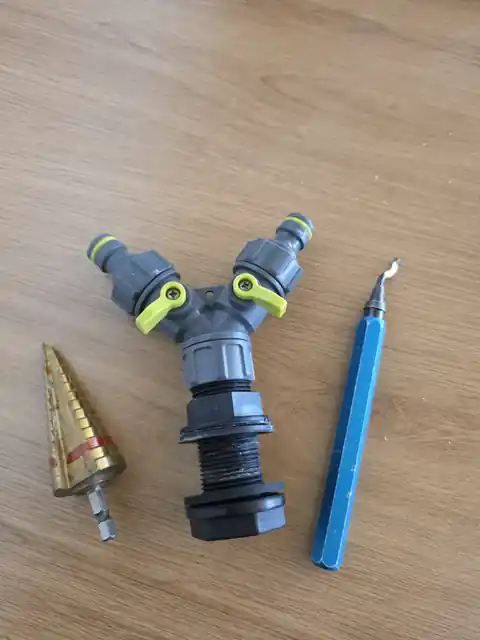
Where does the hole go?
I drill at the back of the reservoir, in the middle and 10 cm above the bottom. Not right at the bottom, on purpose: if a hose or a seal ever fails, there are still 10 cm of water left in the reservoir. So the pump never runs dry when it switches on automatically, and your plants keep getting their water.
My trick for a watertight hole
My tank connector needs a 26.5 mm hole. With the step drill I drill to 26 mm, not to the next step of 28 mm, because then the hole would be too big and the seal would no longer sit tightly. I take off the missing half millimetre with the deburring tool: once all the way round, very thinly. Then the connector fits exactly and stays watertight.
- Mark the hole at the back, in the middle, 10 cm up.
- Drill to 26 mm with the step drill.
- Go once round the edge with the deburring tool until you reach 26.5 mm.
- Push the tank connector through from the inside.
- Screw it tight from both sides with the sealing rings, hand-tight.
- Screw the Y splitter on the outside and click on the hoses.
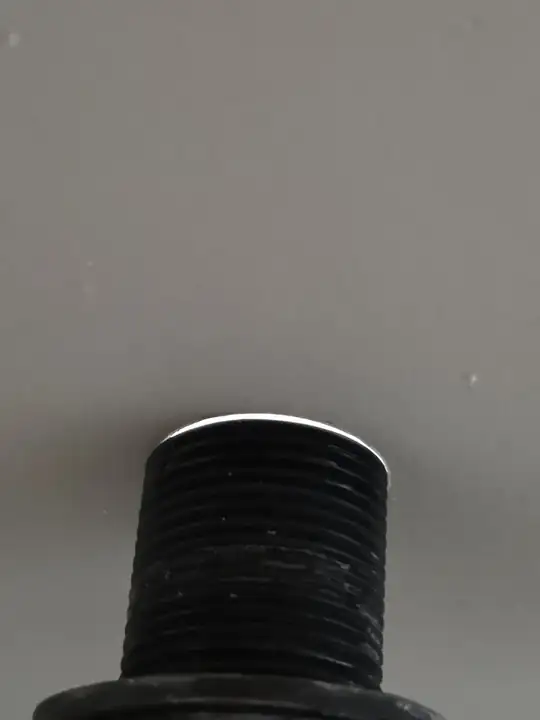
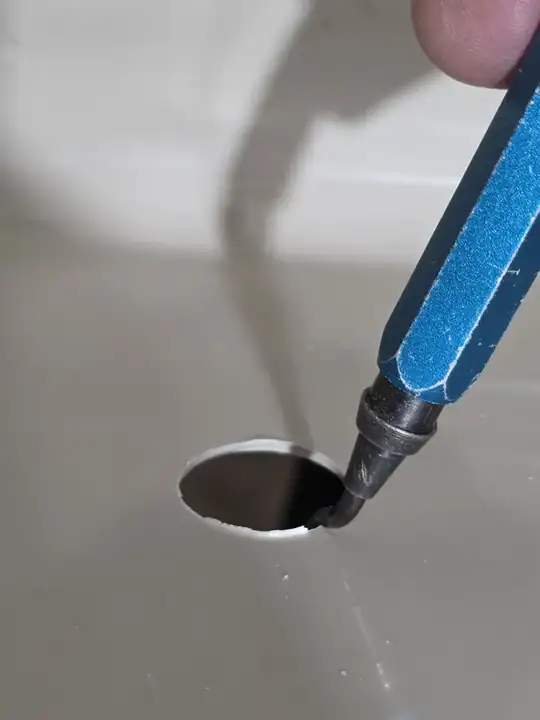
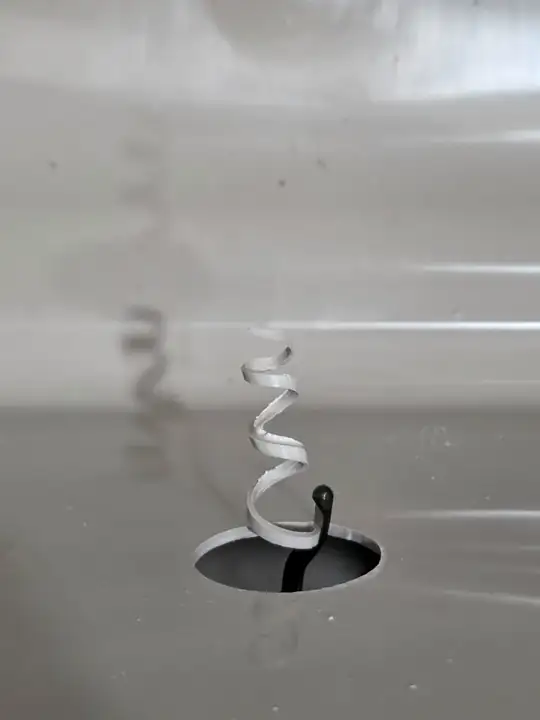
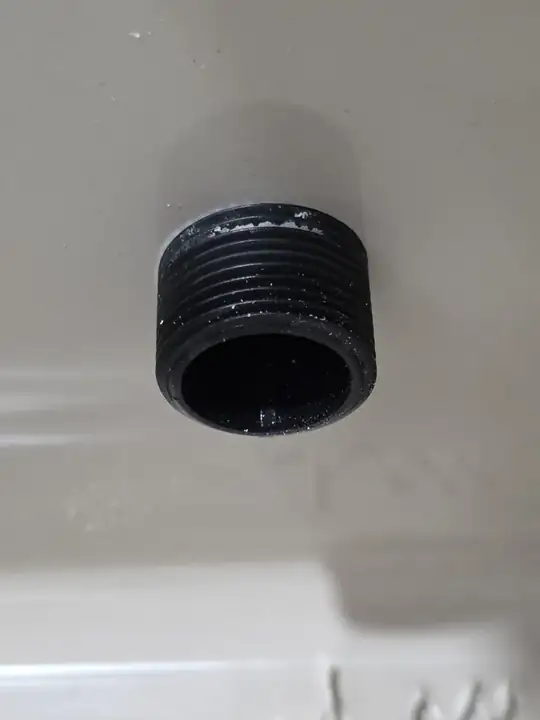
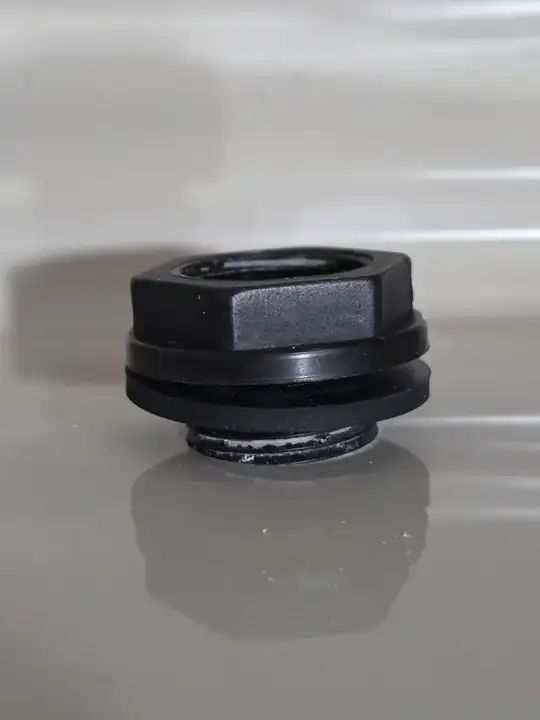
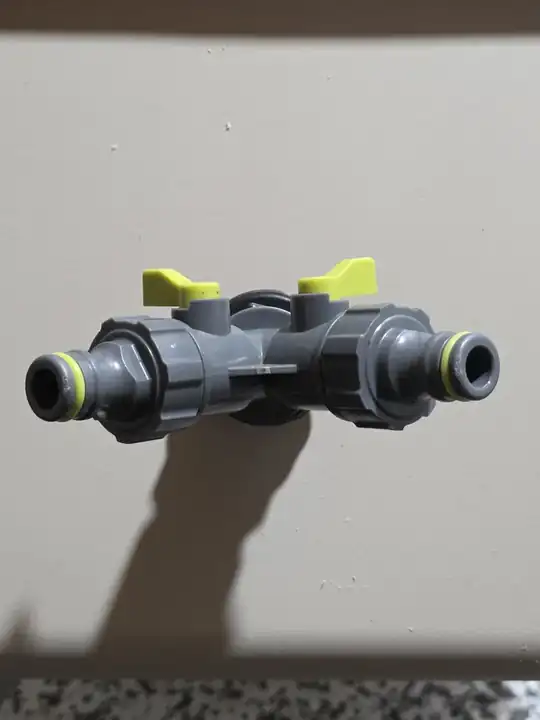
These are the two tools I use for it:
 DrillingStep drill setDrills clean, round holes in plastic, step by step. For the tank connector I drill to 26 mm with it.8,79 EURView on Amazon*To Amazon*
 Fine workDeburring toolTakes off wafer-thin shavings. I use it to widen the hole once round to 26.5 mm, so the connector sits watertight.13,48 EURView on Amazon*To Amazon*
* Affiliate link: if you buy, I earn a commission, your price stays the same.
Water supply on the wall
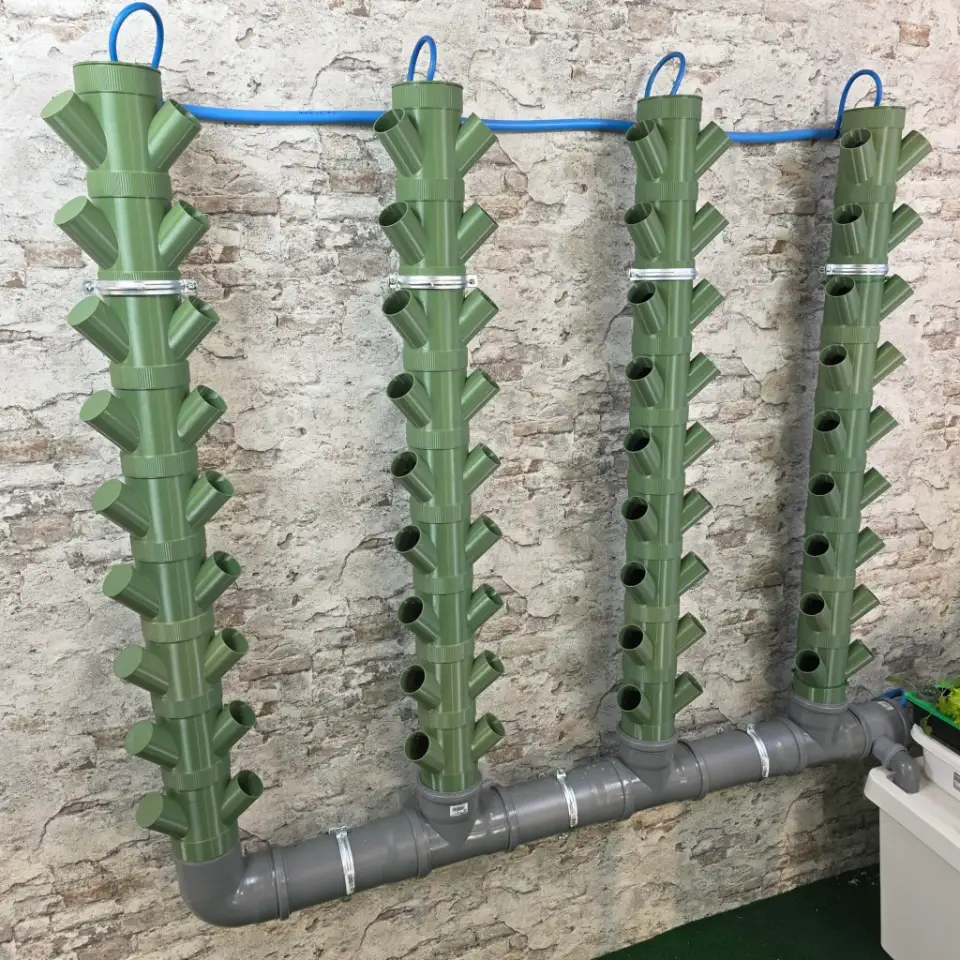
On the wall several columns stand side by side, with a shared reservoir and one pump below. A hose runs up to a manifold, and from there each column gets its water. At the bottom everything flows back into the reservoir. One pump supplies the whole wall with fresh lettuce, herbs or strawberries.
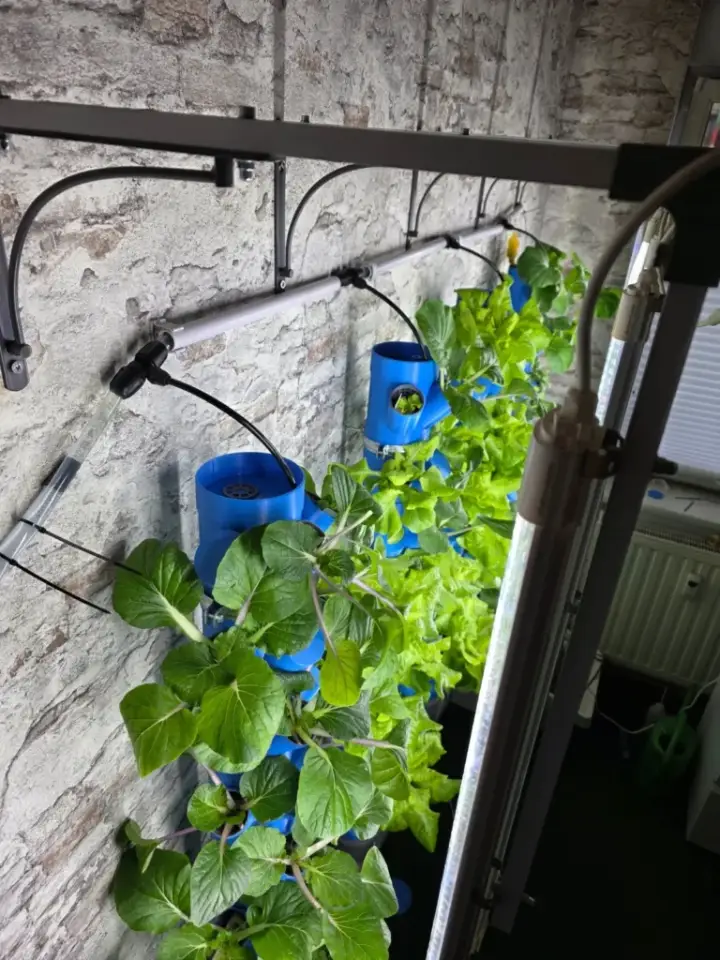
▶ In the video:
Water supply for a hydro tower on the wall
Water flow on the wall mount with lettuce
Pump and timer
The pump doesn’t need to run around the clock. I plug it into an interval timer: 5 minutes on, 30 minutes off. The roots stay moist, get plenty of air in between, and you save power. Only in great heat or full sun do I run it more often, about 15 minutes on and 15 minutes off.
An interval timer is ideal because it switches to the minute and repeats the interval over and over. How it works and why I use exactly this one, you can see in the video.
▶ In the video:
Pump interval and timer
 Up to 1.3 mPump 8 W, 600 l/hMy pump for lower towers up to 1.3 metres.15,99 EURView on Amazon*Amazon*
 Tall towers12-volt pump, adjustableFor tall towers. Can be turned down in steps, then it uses less power.29,99 EURView on Amazon*Amazon*
 Interval timer socketRuns the pump in cycles, to the second.15,98 EURView on Amazon*To Amazon*
* Affiliate link: if you buy, I earn a commission, your price stays the same.
Which pump suits you?
Both pumps run reliably, you choose by price and power use.
Small 8 watt pump: the budget choice for towers up to about 1.30 metres.
SWAWIS pump: costs a little more, but has 8 settings and lifts up to 5.5 metres. On a low setting it only needs around 4.5 watts on my 1 to 1.30 metre tower. And for water changes it doubles as your spare pump.
How little power it takes for me: four towers at once, only around 15 watts together.
More harvest than power bill: 4 towers, only 15 watts together
Playing the video connects to YouTube.

* Affiliate link: if you buy, I receive a commission, your price stays the same.
The Pro series has a 37-litre reservoir. Plenty of water, less topping up, ideal for holidays too.
To the shop ›Watering during your holidays
In summer the plants drink a lot. So you can go away relaxed, there are two simple ways that I use myself.
Option 1: a second pump as a backup plan
A second pump with its own lines feeds the connected towers from above. If the first pump fails, the second takes over and all towers keep being watered.
▶ In the video:
Backup plan: a second pump for your holidays
Option 2: gravity feed from a 200-litre tank
A large 200-litre tank stands a little higher than the tower reservoirs. A hose runs from the tank to a float valve in the tower reservoir. It works like a toilet cistern: when the water level drops, the valve opens and water flows in. When the reservoir is full, it closes by itself. The higher the tank, the faster the water refills.
For the float valve you drill a hole in the reservoir wall, above the water level you want. For a ½-inch valve that is usually about 21 to 22 mm. Connect the hose to the tank with a tank connector.
▶ In the video:
Gravity watering for holidays with a 200-litre tank
Gravity watering with a float valve
The materials I use
With these parts you build the holiday water supply. I use the tank, valve and hose myself.
 200 litresWater tank, 200 litresLarge storage tank for your holidays, food-safe and UV-resistant. Stands a little higher and refills your towers via the float valve.Preis nicht verfügbarView on Amazon*To Amazon*
 200 litresTank connector ¾ inch with tapConnects reservoir and tank tightly. With a shut-off tap so you can stop the water at any time. Set of 2. Drill hole: 27 mm.14,99 EURView on Amazon*To Amazon*
 Auto refillFloat valve, ½ inchKeeps the water level in the tower reservoir constant, like a cistern. Opens and closes all by itself.19,54 EURView on Amazon*To Amazon*
 Food-safePVC hose, 10 × 14 mmFood-safe hose for the lines from the manifold to the columns.40,99 EURView on Amazon*To Amazon*
* Affiliate link: if you buy, I earn a commission, your price stays the same.
You can find even more about pumps, the water cycle and plant care in my book* „Schritt für Schritt in die Hydroponik“. Questions? Just message me on WhatsApp.


More of my videos on this topic
Matching my videos
BeginnerPious 5-in-1 meterMeasures pH, EC and temperature in one. Ideal for getting started with your first tower.39,99 EURView on Amazon*To Amazon* ProBluelab OnePenRobust meter for pH, EC and temperature. Very accurate and long-lasting.203,15 EURView on Amazon*To Amazon*
* Affiliate link: if you buy, I earn a commission, your price stays the same.
Short videos from my own growing. Tap a video to play it.
Why the EC value rises
My holiday helper
One more video: Back from holiday ›
Did you enjoy this topic? Is anything missing, or do you see something differently? I keep learning all the time and I would love to hear your question and your experience. Just write it in the comments below, no sign-up needed.
Write your question or experience