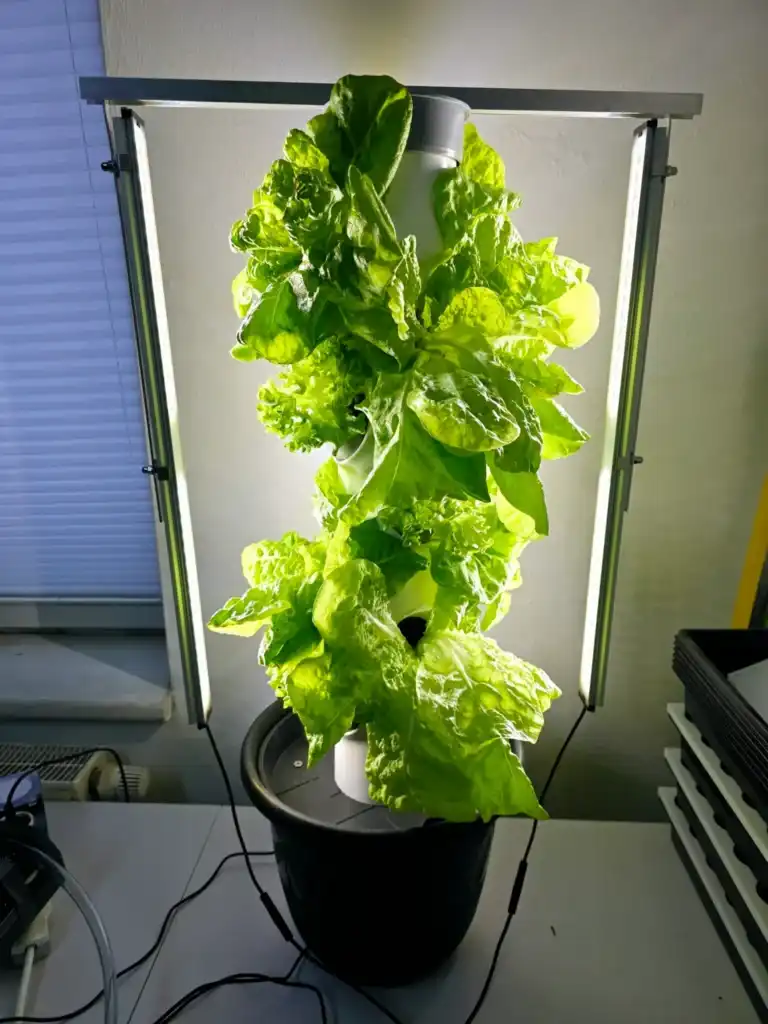
EC value in hydroponics: how much nutrient your plant needs
What the EC value measures, which values you need in which phase and how I mix my nutrient solution without lengthy calculations.
The EC value shows the nutrient concentration in your solution. Learn how to measure and set it correctly for ideal plant growth in every development phase.
More videos on my YouTube channel
What is the EC value?
The EC value (electrical conductivity) measures the concentration of dissolved salts, i.e. the nutrients, in your nutrient solution. It’s given in millisiemens per centimetre (mS/cm). The higher the EC, the more nutrient salts are dissolved in the water.
What the EC value measures
The EC shows how many salts are dissolved in your water. More nutrient means a higher EC. So it tells you how much is in there, but not which nutrients exactly. That’s why you need a good nutrient and the meter together.
Some devices show mS/cm, others µS/cm. 1.2 mS/cm is the same as 1200 µS/cm. The ppm value is only an estimate that every device converts differently. Only EC and pH count for you.
EC scale: from low to high (mS/cm)
- Distilled water
- RO water
- soft tap water without nutrient
- Young seedlings
- First weeks
- Established seedlings
- Early growth phase
- Leaf development
- Stem growth
- Flower formation
- Fruit development
- Leafy plants up to 1.6 at harvest, fruiting vegetables 2.0 to 2.5
- Salt stress
- Root damage
Visual EC scale
Hydroponics sweet spot
Problem ranges
EC above 2.5: salt stress and root damage
Importance for the plants
Nutrient supply
The EC shows how many nutrients are available to the plants. If the value is too low, they suffer deficiencies.
Growth phases
Young plants and seedlings need lower EC values than fully grown plants in the flowering or fruiting phase.
Ideal development
Only in the right EC range can plants reach their full potential and deliver maximum yields.
EC too low:
EC too high:
Optimal EC values and typical problems
EC values by plant stage
Examples for specific plants
EC values by growth phase
A simple rule of thumb for any nutrient: seedlings a quarter, young plants half, growth three quarters and at harvest or fruiting the full value.
| Plant | Seedlings | Young plant | Growth | Harvest / fruit |
|---|---|---|---|---|
| Lettuce | 0.4 | 0.8 | 1.2 | 1.6 |
| Basil | 0.4 | 0.8 | 1.2 | 1.6 |
| Kohlrabi | 0.6 | 1.1 | 1.7 | 2.2 |
| Peppers | 0.5 | 1.0 | 1.5 | 2.0 |
| Tomato | 0.6 | 1.3 | 1.9 | 2.5 |
| Cucumber | 0.6 | 1.3 | 1.9 | 2.5 |
My values with my nutrient
This is how much EC my own liquid nutrient gives with my soft water. The millilitres are only the starting value, the meter decides.
| Nutrient per litre | Total EC for me | Stage |
|---|---|---|
| 0.5 ml | 0.4 to 0.5 | first true leaves |
| 1 ml | 0.6 to 0.8 | Young plant |
| 1.5 ml | 0.8 to 1.0 | |
| 2 ml | 1.0 to 1.2 | strong plant |
| 2.5 ml | 1.2 to 1.4 | |
| 3 ml | 1.4 to 1.6 | fully grown |
These amounts only apply to Frankie’s liquid nutrient. With a different nutrient, use its instructions and the rule of thumb above. For your exact value, use the nutrient calculator.
Related:Calculating nutrient: my nutrient calculator for your amount of water›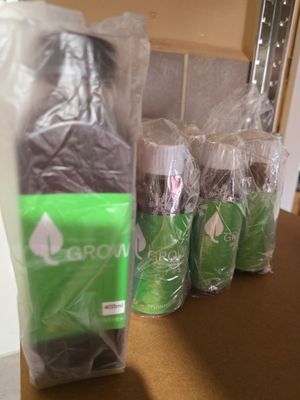
Seedling and leaf nutrient from one bottle, with calcium and magnesium, made for soft water. For all plants from sowing to the growth phase, leafy plants until harvest.
View in the shop ›Measuring and setting EC correctly
Tips for measuring EC
Timing
- ✔Daily at the same time
- ✔Measure after every feeding
- ✔Check at every water change
Temperature
- ✔Optimal: 20 to 25 °C
- ✔Temperature affects EC
- ✔Use automatic compensation
Procedure
- ✔Rinse the electrode well
- ✔Stir the solution
- ✔Let the value stabilise
Meters I use
I have three devices: a beginner pen for about 40 euros that shows µS/cm, a quality pen with app and a monitor that stays in the water permanently. A simple combination meter for EC and pH is completely enough to start with.
 Bluelab OnePenMy quality pen for pH, EC and temperature, with app.203,15 EURView on Amazon*To Amazon*
 UIUZMAR pH EC TDS Messgerät 7 in 1 pH WertsMonitor for pH, EC and temperature that can stay in the reservoir.50,56 EURView on Amazon*To Amazon*
* Affiliate link: if you buy through it, I earn a small commission. Your price stays the same. Prices incl. VAT, as of 26.11.2026.
 BudgetPious 5-in-1 meterAffordable, easy to use and perfectly adequate for beginners.39,99 EURView on Amazon*To Amazon*
 Pro, in the tankBluelab Guardian MonitorKeeps measuring EC, pH and temperature. You always know whether the nutrient solution is still right, even on the road.399,00 EURView on Amazon*To Amazon*
* Affiliate link: if you buy through it, I earn a small commission. Your price stays the same. Prices incl. VAT, as of 26.11.2026.
Two complete fertilisers in one pack: a main fertiliser to suit your water plus a balancing fertiliser you can use to balance the pH yourself. Every water is different: start with a little balancing fertiliser and slowly find your ratio.
Adjusting the EC value correctly
Step-by-step guide
Measuring
Determine the current EC value
Adjust
Add nutrients or water
Mix
Mix the solution well
Check
Measure again and adjust
Mixing nutrient solution: how I do it
For 0.5 ml per litre I fill the 10 litre watering can with about 3 litres of water, add 5 ml of nutrient and then fill up. My meter then shows about 0.45. For large amounts I add the nutrient with a syringe under the running water, leave the meter in and turn off the tap as soon as the target EC is reached.
- EC too high: dilute with water.
- EC too low: add nutrient, in small steps.
Important note:
Pro tips for stable EC values
- Always take the starting water EC into account
- Evaporation leads to EC rising
- If the plant takes up more nutrients than water, the EC falls; usually it rises because the plant drinks more water
- Regular water changes stabilise
- Use quality nutrients
- Calibrate the meter regularly
- Keep temperature constant
- Records help with optimising
Why the EC value changes
Plants take up more water than nutrient. So when the water level drops, the EC rises. In the tower I top up with ready-mixed nutrient solution. If the value keeps rising for no reason or deficiency signs show, I change the solution completely. Outdoors the EC drops after rain, then I measure again.
A few questions about space, location and what you want to harvest, and you get a recommendation.
To the tower advisor ›You will find the EC values for around 60 plants in my big table: pH and EC values of all plants ›
How my four EC stages work
Every plant has a highest EC value that it tolerates well when fully grown. I divide this value into four stages: a quarter for seedlings, half for young plants, three quarters during growth and the full value at harvest. That way your plant always gets as much as it needs at its age. During germination there is no fertiliser yet; the seedling stage begins with the first leaves.
| Stage | When | Share of the highest EC | Example lettuce |
|---|---|---|---|
| Germinate | seed in the cube until the first leaves come | no nutrient | 0 |
| Seedlings | first leaves, propagation box and propagation station | a quarter | 0.4 |
| Young plant | strong young plant, move into the tower | half | 0.8 |
| Growth | the plant grows vigorously | three quarters | 1.2 |
| Harvest or fruit | fully grown, for fruiting plants the fruiting period | full value | 1.6 |
All values in the tables are in mS/cm. If your meter shows µS/cm, multiply by 1000: 1.2 mS/cm is 1200 µS/cm. The EC always applies to the finished nutrient solution, meaning your water and the fertiliser together. You do not subtract the EC of your tap water; you simply measure what is in the container at the end.
Different plants in one tower
In the tower young and large plants often stand together, and usually different varieties too. Then I set all of them to an EC of about 1.1 to 1.2. The young plants tolerate that well, just as in soil. Only the opposite way is bad: if large plants get a solution for young plants, they lack nutrients.
I also run my lettuce at 1.1 to 1.2 with soft water, even though it would tolerate up to 1.6. That is why lettuce, herbs, pak choi and Swiss chard fit together nicely in one tower. Plants with a high final value such as tomatoes, cucumbers or chillies stand in their own container with me, because from flowering they need significantly more. For tomatoes I use the wide HydroFlex Tower Largo Uno.
| Mixing in the tower | EC | Why |
|---|---|---|
| Lettuce, herbs, pak choi, Swiss chard | about 1.1 to 1.2 | similar values, young plants tolerate it well |
| Lettuce next to large brassicas | rather a little higher | the large plants should not go hungry |
| Tomato, cucumber, chilli | own container | from flowering up to 2.5 or 3.0 |
A few questions about space, location and what you want to harvest, and you get a recommendation.
To the tower advisor ›My fertiliser and the stages
Up to flowering I use my own liquid fertiliser for all plants; leafy plants get it until harvest. The millilitres are starting values for soft water with an EC of 0.25. Your meter decides. If you use a different fertiliser, follow its instructions and dose by EC.
| Stage | Frankies liquid fertiliser per litre | EC approx. |
|---|---|---|
| first leaves | 0.5 ml | 0.4 to 0.6 |
| Young plant | 1 ml | 0.6 to 0.8 |
| strong plant | 2 ml | 1.0 to 1.3 |
| fully grown, for example lettuce | 3 ml | up to 1.6 |
This is how I measure: my tap water has an EC of 0.25 without fertiliser. If I add 2.5 ml of my fertiliser to 5 litres, I end up at about 0.45. That shows you why you should know your own water: only then can you dose sensibly.
Seedling and leaf nutrient from one bottle, with calcium and magnesium, made for soft water. For all plants from sowing to the growth phase, leafy plants until harvest.
View in the shop ›From flowering, tomatoes and other fruiting plants need a fertiliser with less nitrogen and more potassium. I then mix powder fertiliser myself, as in my guide for tomatoes. It is easier with a three-part fertiliser. How much of it you need for your target EC is calculated by my Nutrient calculator .

* Affiliate link: if you buy through it, I earn a small commission. Your price stays the same. Prices incl. VAT, as of 26.11.2026.
Why my values are lower than in some tables
In textbooks and online you often find higher values, for tomatoes for example up to 4.0. Professionals in the greenhouse run tomatoes at over 3. My tomatoes do very well at 2.0 to 2.5; they do not need more with me. My values are enough for the tower at home, and you save fertiliser.
Watch your plants: if the leaves turn pale, fertiliser is lacking, so add a little more. That also depends on the variety. But be careful in spring: if the leaves discolour in May, it is usually due to cold water and not the fertiliser. If something is wrong, measure pH and EC first. That is usually the cause.
My tables above list the plants from my book. Fruit such as blueberries or citrus trees and tubers such as potatoes are not in my book. You will find their values in the large overview, where they come from the specialist literature. For all other plants: take a similar plant from the table as a starting value and watch how it grows.
EC value stability: a key to successful plant growth
The stability of the EC value in your hydroponic nutrient solution is crucial for the healthy growth of your plants. Here are some tips and measures to keep the EC value stable:
Regular monitoring
Check the EC value at least once a week. With fast-growing plants or high nutrient consumption it may be necessary to measure the EC value more often.
Adjusting the nutrient solution
If the EC value is too high, add water to dilute the solution. If the EC value is too low, add more nutrients to increase the concentration. Make sure to add the nutrients slowly and in small amounts to avoid overdosing.
Avoiding evaporation
Cover open water containers to minimise evaporation. Evaporation can increase the concentration of nutrients and thus make the EC value rise.
Regular topping up
Top up the hydroponic system regularly with ready-mixed nutrient solution or a little fresh water to keep the EC value stable. This is especially important if you use a system like the Kratky method in which the water is not continuously replaced.
Cleanliness of the system
Keep your hydroponic system clean to avoid deposits and contamination that can affect the EC value. Regularly clean the containers, hoses and pumps.
Preventing algae growth
Algae can consume nutrients and destabilise the EC value. Use opaque containers or cover your nutrient solution to prevent algae growth.
Temperature control
Make sure the temperature of the nutrient solution stays in the optimal range. High temperatures can affect the solubility of the nutrients and change the EC value.
When the EC changes by itself
| What you see | Why | What you do |
|---|---|---|
| EC rises | the plants drink more water than they take up nutrients, or there is little water in the container | top up with ready-mixed nutrient solution or a little plain water |
| EC falls | the plants take up a lot of nutrients; outdoors rain dilutes the solution | add a little fertiliser |
| EC rises week after week | salts from the water build up | change the water |
Influence of the starting water
Take tap water into account
Tap water often already contains dissolved salts: always measure the starting water first, this value counts towards the total EC!
Example calculation:
Measure the tap water first
Before feeding, measure your plain tap water. My water in Falkenstein is very soft: about 4 degrees German hardness and an EC of 0.25. This value always counts towards the total EC.
| Water | EC without nutrient | Hardness (approx.) |
|---|---|---|
| soft | below 0.3 | below 8.4 °dH |
| medium | 0.3 to 0.5 | 8.4 to 14 °dH |
| hard | above 0.5 | above 14 °dH |
An example: with soft water (0.25) you still have 1.35 free for nutrient up to an EC of 1.6. With hard water (0.8) only 0.8 remains. The same amount of nutrient quickly gives too much there.
Related:How hard is your water? Look up water hardness by postcode (Germany)›Optimal
- RO water
- Distilled water
- Rainwater (filtered)
- soft tap water (like mine)
Acceptable
- Good tap water
- Well water (measure first)
- Can be used
Problematic
- Hard tap water
- RO system recommended
- Difficult dosing
RO water: the best choice for hard water
RO water is ideal for hydroponics because it contains almost no salts of its own and nutrient dosing can be controlled precisely.
If you have soft tap water below 0.3 mS/cm, you don’t need an RO system. RO water contains no calcium and magnesium, so the nutrient has to bring both. My liquid nutrient contains calcium and magnesium.
- Precise nutrient dosing
- No unknown salts
- Constant starting conditions
- Purchase costs
- Maintenance required
- Water waste
HydroFlex Tower for indoors and outdoors, seedling box, seedling station, support rings and my own nutrient. After you buy, I’ll help you on WhatsApp.
To the shop ›

More of my videos on this topic
Matching my videos

* Affiliate link: if you buy, I earn a commission, your price stays the same.
Short videos from my own growing. Tap a video to play it.
Mixing nutrient solution
My meters compared
One more video: Spotting deficiencies ›
Did you enjoy this topic? Is anything missing, or do you see something differently? I keep learning all the time and I would love to hear your question and your experience. Just write it in the comments below, no sign-up needed.
Write your question or experienceFAQ & practical tips
FAQ
How often to measure the EC value?
Daily, especially when changing systems or with new nutrient solutions.
Fluctuating EC values?
Causes: evaporation, plant growth or topping up water. Check regularly.
EC and pH at the same time?
Yes, many combination meters measure both. Both values are crucial.
Further reading
Conclusion
FAQ about the EC value
What does the EC value mean in hydroponics?
Which EC value is right for lettuce?
Which EC value is right for tomatoes?
Which EC value is right for peppers?
What’s the difference between mS/cm and µS/cm?
Do I have to include my tap water?
When is water considered soft?
Do I need RO water?
Why does the EC rise by itself?
What to do if the EC is too high?
What to do if the EC is too low?
How often do I need to calibrate the EC meter?
Do I need the ppm value?
Should I set the EC or the pH first?
In which unit is the EC value given?
Into how many stages do you divide a plant’s EC value?
Do seeds get fertiliser during germination?
When does the highest EC apply to fruiting plants?
When does the full EC value apply to leafy plants?
Which plants in your table have the highest EC?
Which plant in your table has the lowest EC?
Which EC suits cucumbers?
Is „pepper“ in old EC tables a spice?
Which EC do you set when different plants stand in one tower?
Why do you put tomatoes in their own container?
Do you subtract the EC of your tap water from the table value?
Why is tap water with 800 µS/cm unfavourable?
In which unit are the values in your table?
How do you measure the EC value correctly?
How do you store the calibration solution?
How much Frankies liquid fertiliser do you use for the first leaves?
How much Frankies liquid fertiliser does fully grown lettuce need?
Why are your tomato values lower than in some textbooks?
Why does the EC fall?
Why should you cover the water container?
Do you need EC stabilisers?
How much hydrogen peroxide do you use for disinfection?
How do you store fertiliser correctly?
How often should you measure the EC?
Continue with your own growing

212 pages, now available on Amazon, simply explained for beginners and with videos on the topics (in German). Exactly how I grow myself: from sowing to harvest.
View the book on Amazon* ›A few questions about space, location and what you want to harvest, and you get a recommendation.
To the tower advisor ›Blausocke: She wanted to know whether different vegetables need different values. My answer with a table: Do different vegetables need different values? ›
Do you have a question too? Here is how to ask it ›
Tapping opens WhatsApp (provider: WhatsApp Ireland Ltd.). More in the privacy policy.