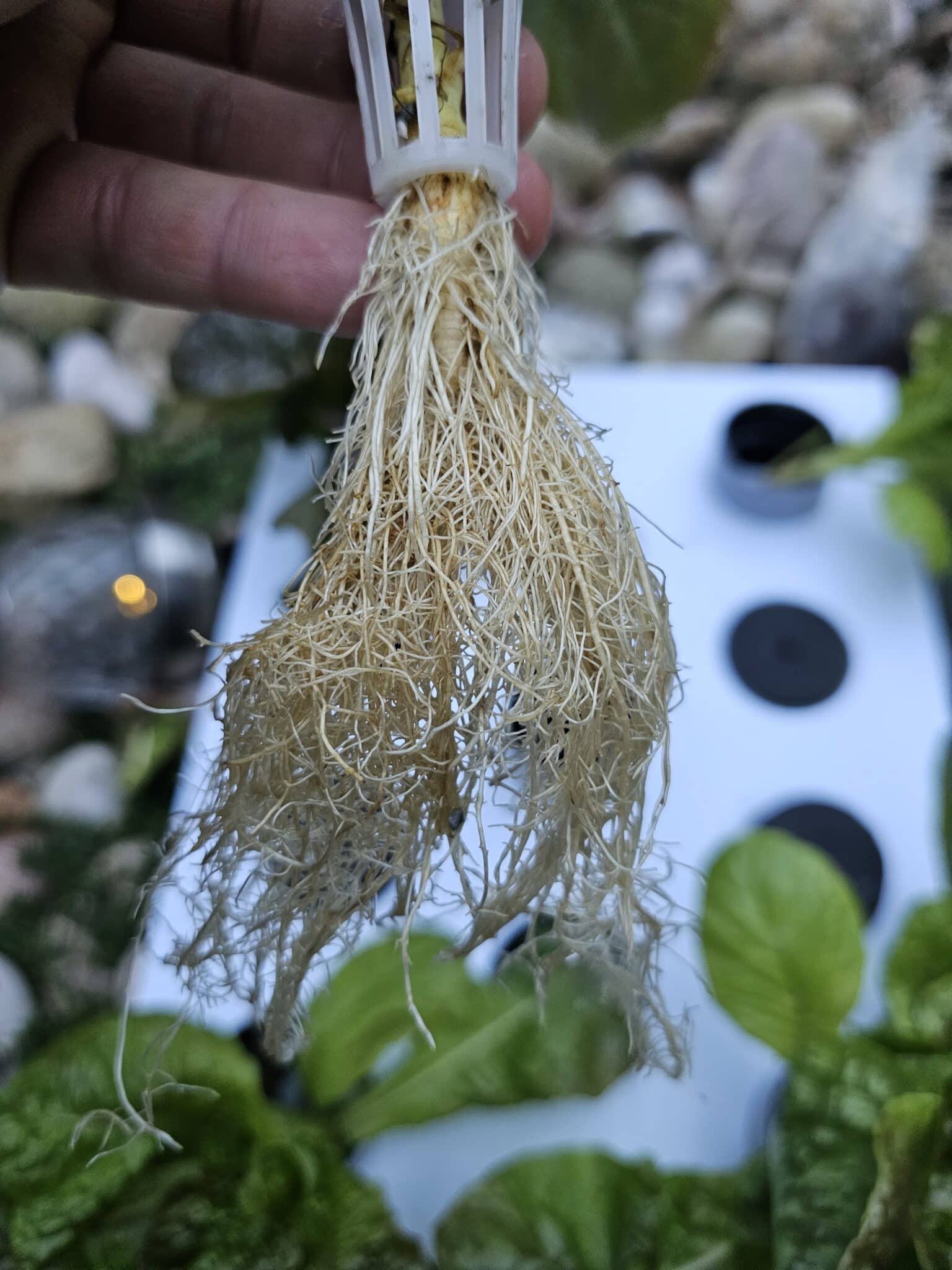
Setting the pH value correctly in hydroponics
Which pH value is ideal, why it rises and falls, and how I keep it stable at 5.8 with a few drops.
The pH value is the key to ideal nutrient uptake. Learn how to measure it correctly, adjust it and keep it stable for healthy, strong plants.
What is the pH value?
The pH value measures how acidic or alkaline a solution is, on a scale from 0 (very acidic) to 14 (very alkaline), with 7 being neutral. In hydroponics the pH shows how well your plants can take up nutrients. An optimal pH is essential for healthy, strong plants and a rich harvest.
Important to know: each step is tenfold. pH 5 is ten times more acidic than pH 6, pH 4 already a hundred times. That’s why a few drops are often enough when adjusting.
pH scale: from acidic to alkaline
- Battery acid
- Lemon juice
- Blueberries
- Acid rain
- Most plants
- Ideal nutrient uptake
- Nutrient solution in the tower, my target 5.8
- Pure water
- Neutral range
- a lot of tap water is at 7 to 8
- Soapy water
- Baking soda
- Household cleaner
- Caustic soda
Visual pH scale
Hydroponics sweet spot
Problem ranges
- •pH below 5.5: magnesium, calcium and molybdenum deficiency
- •pH above 6.5: iron deficiency possible, plus phosphorus, manganese, zinc, copper and boron get scarce
Why is the pH value so important in hydroponics?
🌱 Nutrient availability
The pH controls which nutrients are available to the plants. If the pH is outside the optimal range, deficiencies or toxic effects can occur even if all nutrients are present.
So the pH decides whether the plant can reach the nutrients that are in the solution. In the range around 5.8 they’re all well available. If the value drifts, individual nutrients are blocked even though they’re there.
Why the pH value rises and falls
| Lowers the pH | Raises the pH |
|---|---|
| fresh nutrient (mine lowers it noticeably) | the plant uses up the nutrient |
| pH down or acid | topping up with limy tap water |
| air in the water drives out carbonic acid |
Tap water is often at pH 7 to 8. Waterworks deliberately keep it above 7 to protect the pipes. Hard water pushes the pH up further, then you need pH down more often.
Related:How hard is your water? Look it up with your postcode (Germany).›My own nutrient already lowers the pH when mixing. For me 0.5 ml per litre is enough to lower it by about 0.5, for example from 7.3 to 6.8. The more nutrient, the stronger. Over time the value then slowly rises again. That’s a good sign: when the plant takes up nitrate, it releases alkaline substances into the water. The stronger it grows, the faster the pH rises.
Seedling and leaf nutrient from one bottle, with calcium and magnesium, made for soft water. For all plants from sowing to the growth phase, leafy plants until harvest.
View in the shop ›Optimal pH range for hydroponics
🎯 For most plants: pH 5.5 to 6.5
Special cases
| Blueberries | pH 4.5 to 5.5 |
| Lavender | pH 6.0 to 7.0 |
| Mint | pH 5.5 to 6.5 |
| Pumpkin | pH 5.5 to 6.5 |
| Peppers, cucumber, melon, parsley | pH 5.5 to 6.0 |
Important note
Tip
How do you measure the pH value in hydroponics?
1. Digital pH meter (recommended)
- ✅Precise and fast
Ideal for regular measurements - ✅Digital display
Easy to read, no interpretation needed - ✅Calibrate regularly
With calibration solutions pH 4.01 and pH 7.00
2. Test strips/indicator solutions
- •Cheap and easy
Good for a quick, rough overview - •Colour comparison
You read the colour against a scale, only in rough steps - •No calibration needed
But too imprecise for a target of 5.8
How I measure correctly
- Remove the cap and dip the meter into the nutrient solution.
- Swirl briefly.
- Wait until the number stays still.
- Rinse the electrode and put the cap back on, the tip should stay moist.
I always measure at the same time of day, in the tower without a permanent meter every 2 to 3 days, daily for the first days after mixing. And always in this order: first EC, then pH. Every nutrient correction shifts the pH.
Measuring tips
🕒Timing
- •Always measure at the same time of day
- •Wait approx. 1 hour after feeding
- •Measure before refilling
🌡️Temperature
- •Ideal: nutrient solution 18 to 24 °C
- •Temperature affects the pH value
- •Create constant conditions
🧪Procedure
- •Rinse the electrode well
- •Stir the solution
- •Let the value stabilise

168 pages, simply explained for beginners and with videos on the topics (in German). Exactly how I grow myself: from sowing to harvest.
More about the book ›Calibrating the meter
Calibrate at least once a month, more often with heavy use, for example every 2 weeks. You need buffer solution pH 7.0 and pH 4.0.
- Rinse the electrode and dab it dry.
- Bring the buffer solutions to room temperature.
- Dip into pH 7.0 and calibrate.
- Rinse, dip into pH 4.0 and calibrate.
- Finally check in a solution.
Store the electrode moist in storage solution, never dry and not in distilled water.
Related:Calibrating a pH meter: my guide with pictures (German)›📖More on this in my book (in German) in the chapter “Messgerät kalibrieren”. Just check the table of contents.›A few questions about space, location and what you want to harvest, and you get a recommendation.
To the tower advisor ›Adjusting the pH value and keeping it stable
Step-by-step guide
Measuring
Adjust
Mix
Wait
Repeat
Lowering the pH value: my method
I use phosphoric acid from a small dropper bottle with a nozzle. If the value rises above 6, I add 2 to 3 drops and stay at 5.8. With soft water 2 to 3 drops per 10 litres are enough, hard water needs more. Phosphoric acid keeps the pH stable for a long time.
For beginners a ready-made pH down from the shop is safest, because it’s already diluted. You usually only rarely need pH up. If the value has dropped too far, fresh water usually helps.
Related:Lowering the pH value in hydroponics: how I do it (German)›Pro tips for stable pH values
- ✅Use small amounts and be patient
- ✅The pH often keeps rising after the first adjustment
- ✅With big deviations, take several small steps
- ✅Keep the water temperature constant (affects pH)
- ✅Mix the nutrient solution well before measuring
- ✅Record your adjustments with the date for better control, so you see where it’s heading
HydroFlex Tower for indoors and outdoors, seedling box, seedling station, support rings and my own nutrient. After you buy, I’ll help you on WhatsApp.
To the shop ›Automatic pH control
Nutrient controllers for bigger systems
For bigger systems there’s automatic measuring and control technology (“nutrient controllers”) that monitors the pH around the clock and adjusts it automatically when needed. For a tower at home, a pen or a permanent monitor in the reservoir that shows the value constantly is enough.
Benefits:
- ✅24/7 monitoring
- ✅Automatic adjustment
- ✅Constant values
- ✅Less work
Disadvantages:
- ⚠️High purchase costs
- ⚠️Maintenance required
- ⚠️Technical understanding needed
- ⚠️Depends on electricity
Tips for stable pH values
What you should do
- ✅Quality nutrients: Use hydroponic-specific nutrients for stable pH values
- ✅Regular checks: Measure every 2 to 3 days, daily after mixing and especially when changing systems
- ✅Calibration: Calibrate and look after the pH meter regularly
- ✅Cleanliness: Keep the nutrient solution clean, avoid algae
- ✅Order: first EC, then pH
What you should avoid
- ❌Adjusting too fast: Always go step by step
- ❌Uncalibrated meters: Lead to wrong values
- ❌Wrong nutrients: Only use products suitable for hydroponics
- ❌Ignoring temperature: Measure at a constant temperature
What I use for measuring and lowering

* Affiliate-Link: Bei einem Kauf erhalte ich eine Provision, dein Preis bleibt gleich. Preis inkl. MwSt., zzgl. Versand, Stand 8.11.2026. Bilder: Amazon Creators API

* Affiliate-Link: Bei einem Kauf erhalte ich eine Provision, dein Preis bleibt gleich. Preis inkl. MwSt., zzgl. Versand, Stand 8.11.2026. Bilder: Amazon Creators API

* Affiliate-Link: Bei einem Kauf erhalte ich eine Provision, dein Preis bleibt gleich. Preis inkl. MwSt., zzgl. Versand, Stand 8.11.2026. Bilder: Amazon Creators API
* Affiliate links: I earn a commission if you buy, your price stays the same.
Affordable, easy to use and perfectly adequate for beginners.
View on Amazon* ›* Affiliate link: I earn a commission if you buy. Your price stays the same.
Further reading
Conclusion
The pH value is one of the most important factors for successful hydroponics. With regular checks, quality meters and step-by-step adjustments you create ideal conditions for your plants. Invest in a good pH meter and calibrate it regularly: it’s the basis for healthy, productive plants. I keep my value at 5.8 and always set the EC first, then the pH.
FAQ about the pH value
Which pH value is ideal for hydroponics?
Why does the pH value rise in the nutrient solution?
What’s the best way to lower the pH?
Can I use vinegar or citric acid?
What happens at a pH below 5.5?
What happens at a pH above 6.5?
Should I set the pH or the EC first?
How often do I need to measure the pH value?
How often do I need to calibrate the pH meter?
Do I need pH up?
Are test strips enough for measuring pH?
Which acid is best for lowering the pH?
What do I use to raise the pH?
What is a nutrient controller?
Do pH values from soil also apply to hydroponics?
Questions about your setup? Message me on WhatsApp.
Tapping opens WhatsApp (provider: WhatsApp Ireland Ltd.). More in the privacy policy.