Foam cubes: how I start every plant
Preparing the mat, setting the seeds correctly, keeping them moist, thinning and transplanting: the steps that make every sowing work for me. You will find germination temperatures and germination times of all plants on my page Germination temperatures and times.
Why I start seeds in foam cubes
There are many options for starting seeds: rock wool, starter plugs, coco or foam. I prefer foam cubes. They are cheap, clean and pH neutral, they do not crumble, and nothing dissolves that later floats around in the system. The roots simply grow through.
The biggest advantage comes when transplanting: the cube simply moves into the net pot with the plant. Nothing has to be rinsed off, and the fine roots stay undamaged. That is why the cube is my favourite method as soon as there are many plants. Every year I start around 36 tomatoes of different varieties, and that easily fits in two propagation boxes.
| Material | What I say about it |
|---|---|
| Foam cubes | my choice: clean, pH neutral, does not crumble |
| Rockwool | common in commercial growing, untreated it can raise the pH |
| Seed plugs | good alternative, can crumble a little in the system |
| Coco | fine for a few plants, must be rinsed before moving |
1Preparing the mat
once before the first use
The foam mat comes from the factory. That is why I first wash it hot so that no residues from production remain. Then I rinse it cold so that the seeds do not go into a hot mat.
In the propagation box I put a grid, such as a draining rack, and the mat on top. Underneath, the roots will have room later. The mat stays in one piece, because the connected cubes keep each other moist. Then I pour in enough water that about a third of the mat stands in water. It soaks itself from below without the seeds lying in water.
I use my seedling box with lid and 25 cubes and for many plants the Foam mat with 100 cubes.
2Setting the seeds
how many, and how deep
How many seeds go into one cube depends on what you want to harvest later. Plants that grow individually get one seed from me. With many herbs, on the other hand, I want a small bunch, so depending on the plant 3 to 6 seeds go into one cube.
| One seed per cube | Several seeds for a bunch |
|---|---|
| Lettuce, pak choi, kohlrabi | Parsley, chives |
| Tomato, pepper, chilli | Dill, coriander |
| Cucumber, basil | Rocket |
If your seeds are older or weak, it is better to set 2 seeds per cube. A germination test shows you whether they still germinate well: 10 seeds on damp kitchen paper, cover, put somewhere warm and count after a few days. If 8 out of 10 germinate, your seeds have a germination rate of 80 percent.
Light germinators: press lightly, leave uncovered
Light germinators such as lettuce, basil or rocket need light to germinate. I put the seed into the slit of the cube and only press it lightly. Nothing is covered. If a light germinator sits too deep, it gets no light and germinates poorly.
Dark germinators: do not press in, lid on
Dark germinators such as tomato, pepper or parsley germinate better in the dark. You do not have to press them in. I put the seed into the slit the same way and simply put the lid on the propagation box. Underneath it is dark, and the moisture stays in. Check dark germinators every day: as soon as they have germinated, the lid comes off and they need light immediately.

3Keep moist and warm
the first days
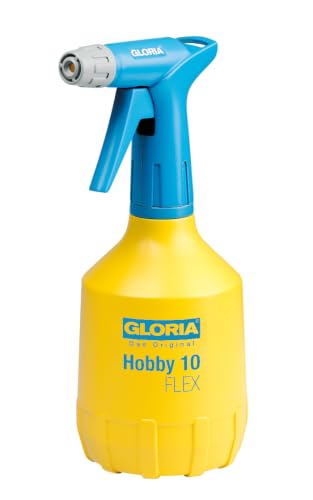
The surface of the cubes dries out quickly. That is why I spray the seeds from above every day. It is even easier with cling film or a zip bag over the box. Then the moisture stays in, nothing dries out and you do not have to spray. Light comes through the film, which suits light germinators. For dark germinators you use the lightproof lid.
Every plant has its comfort temperature. Lettuce likes it cool; above 24 °C it germinates worse. Tomatoes, peppers and chillies, on the other hand, need warmth; below 20 °C they germinate only slowly. You keep the warmth most precisely with a heat mat with thermostat. I put the sensor into the water of the box, where it measures the temperature right at the cube. The fan stays off during germination, otherwise the cubes dry out.

* Affiliate-Link: Bei einem Kauf erhalte ich eine Provision, dein Preis bleibt gleich. Preis inkl. MwSt., zzgl. Versand, Stand 8.11.2026. Bilder: Amazon Creators API

* Affiliate-Link: Bei einem Kauf erhalte ich eine Provision, dein Preis bleibt gleich. Preis inkl. MwSt., zzgl. Versand, Stand 8.11.2026. Bilder: Amazon Creators API
* Affiliate links (Amazon): if you buy, I receive a commission; your price stays the same.
4Germinated: lid off, light on
now comes the first fertiliser
As soon as the seeds have germinated, film and lid come off. If the film stays on longer, mould quickly forms in the humid air. By the way, white fuzz directly on the root is not mould; those are root hairs. And a green film on the cube is algae. It grows where it is moist and bright, and it is harmless.
Germinated means: straight into the light. If seedlings get too little light, they stretch and become long and thin. With the propagation box the lamp hangs from above, about 20 to 30 cm above the plants, and shines 14 to 16 hours a day, never longer.
During germination there is only water, because the seed has its own nutrient reserve. Once the seed leaves are open, I give 0.5 ml of my liquid fertiliser per 1 litre of water. From a plant size of 2 to 3 cm I use 1 ml. These amounts only apply to my fertiliser. With a different fertiliser, follow its instructions and dose by EC value.
Starting seeds creates a lot of moisture in the air. That is why I open the window wide for about 15 minutes every morning. You can read more about this in the post Humidity and air circulation.
HydroFlex Tower for indoors and outdoors, seedling box, seedling station, support rings and my own nutrient. After you buy, I’ll help you on WhatsApp.
To the shop ›5Thinning
when two germinate in the same cube
If two plants have germinated in a cube where one should be enough, the stronger one stays. I cut off the weaker one with small scissors directly above the cube instead of pulling it out. That way the roots of the other plant stay undamaged. With herbs for a bunch, of course, all of them stay.
6Transplanting into the propagation station
from about 2 cm with first roots
I transplant when the seedlings are about 2 cm tall and the first roots are growing out of the bottom of the cube. That is easy to check: lift the cube and look underneath. No roots yet? Then give them a few days. Anything that has not germinated yet may keep germinating in the box.
I take the cube with the plant out of the mat and put it into a net pot of the propagation station. Hold the cube, not the plant, and do not bend the roots. At first the pot dips at most 0.5 cm into the water. Only when 2 to 3 cm of roots stick out at the bottom of all plants do you lower the water level so that about 1 cm of air remains. The air bubbler runs there from the start, day and night.
My propagation stations are available for 13, 25 and 35 plants, for example the station for 25 plants and the station for 35 plants. How things continue with lettuce afterwards, you can read in the post Growing lettuce without soil.
If it does not work: the most common mistakes
| What you see | Usually the cause is | What helps |
|---|---|---|
| Seed rots | cube stands too deep in water | mat only a third in water |
| Seed dries out | surface dries out | spray daily or cover with film |
| Light germinator does not germinate | too deep in the cube | only press lightly, leave uncovered |
| Dark germinator germinates poorly | too bright | lid on the box |
| Lettuce does not germinate | too warm | cool spot, not on the heater |
| Tomato, pepper germinate slowly | too cold | heat mat with thermostat |
| Mould on the cubes | film or lid left on too long | remove immediately after germination |
| long, thin seedlings | too little light | lamp right after germination |
| nothing germinates at all | old seeds | do a germination test, new seeds |
Do not give up too early. Some herbs take two to three weeks, and not every seed is equally fast. How long each plant takes for me is under Germination temperatures and times.
Frequently asked questions about starting seeds in foam cubes
Why do I use foam cubes for starting seeds?
Do I have to rinse off soil when the plant comes out of the cube?
What is the difference between foam cubes and rock wool?
Do I have to wash a new foam mat before the first use?
How much water goes into the propagation box?
Why does the mat stay in one piece?
What is the grid under the mat for?
How many seeds go into one cube?
When do I put two seeds in one cube?
How do I set light germinators in the cube?
How do I set dark germinators in the cube?
What happens if a light germinator sits too deep in the cube?
How do I keep the cubes moist during germination?
When do film and lid come off?
Is the white fuzz on the germ root mould?
Is a green film on the cube bad?
Why are my seeds not germinating in the cube?
What happens if the cube stands too deep in water?
What is the chamomile bath for seeds?
Does the chamomile bath reliably protect the seeds from fungi?
When do the seedlings get fertiliser?
What do I do if two plants germinate in one cube?
When do I move the cube into the propagation station?
How deep does the pot stand in water after transplanting?
Why do I not germinate directly in the tower?
Why do I start cucumbers directly in the foam cube?
You will find all germination temperatures and germination times under Germination temperatures and times. Next up is growing media, the Net pot and lighting.
Continue with your own growing

168 pages, simply explained for beginners and with videos on the topics (in German). Exactly how I grow myself: from sowing to harvest.
More about the book ›A few questions about space, location and what you want to harvest, and you get a recommendation.
To the tower advisor ›Questions about your setup? Message me on WhatsApp.
Tapping opens WhatsApp (provider: WhatsApp Ireland Ltd.). More in the privacy policy.