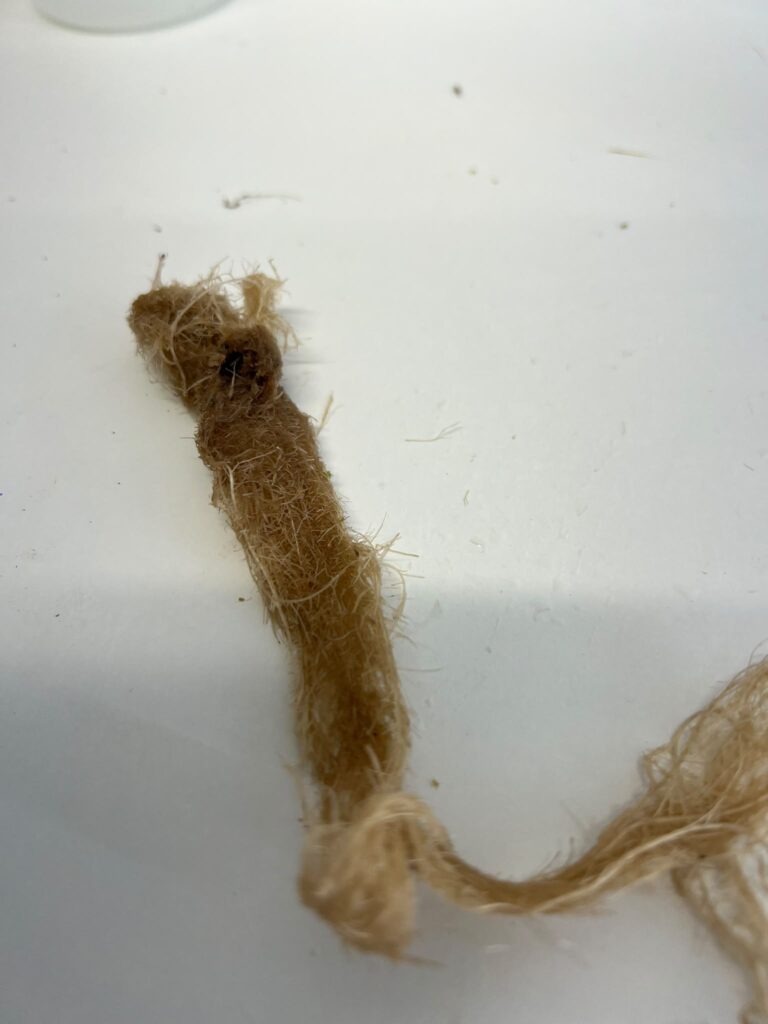
Lettuce in the tower: brown, slimy roots – what to do?
Daniel’s lettuce grew beautifully at first, then the roots turned brown, slimy and matted. Read our real WhatsApp chat, what caused it and how the plants recovered within a week.
In short
Brown, slimy roots almost always get too little oxygen. A few simple steps make them light again, and the lettuce keeps growing.
The chat with Daniel, just as it happened
Daniel sent me his question on WhatsApp and allowed me to show his photos and messages here. The chat was in German, this is the English translation, without his surname.
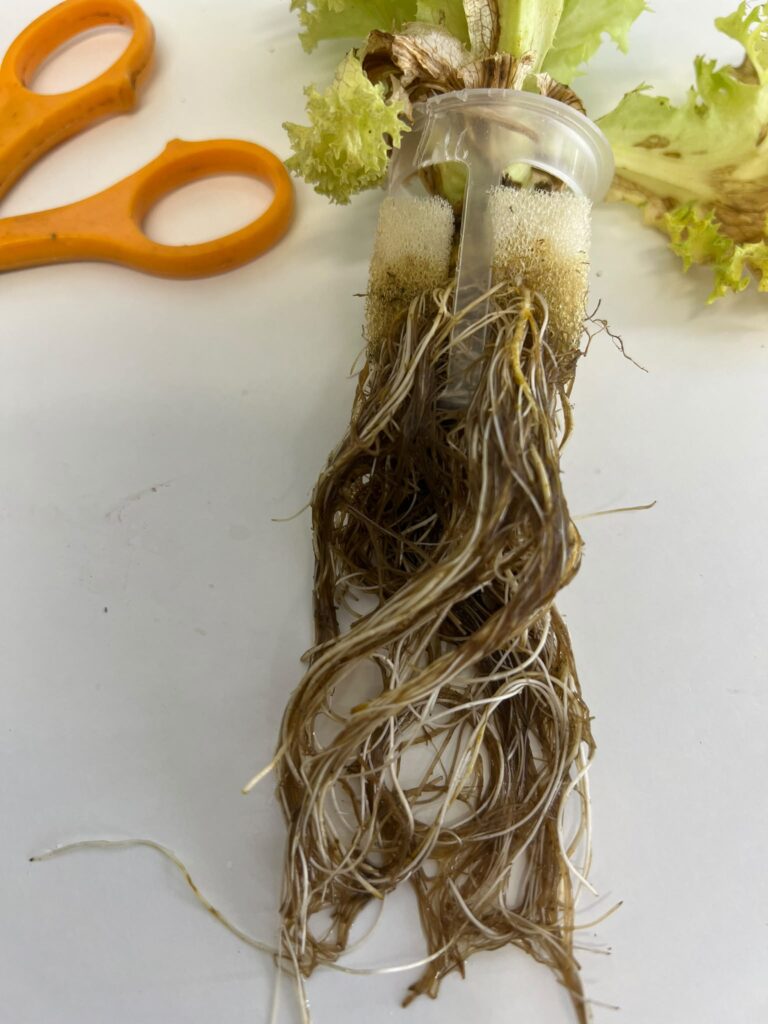
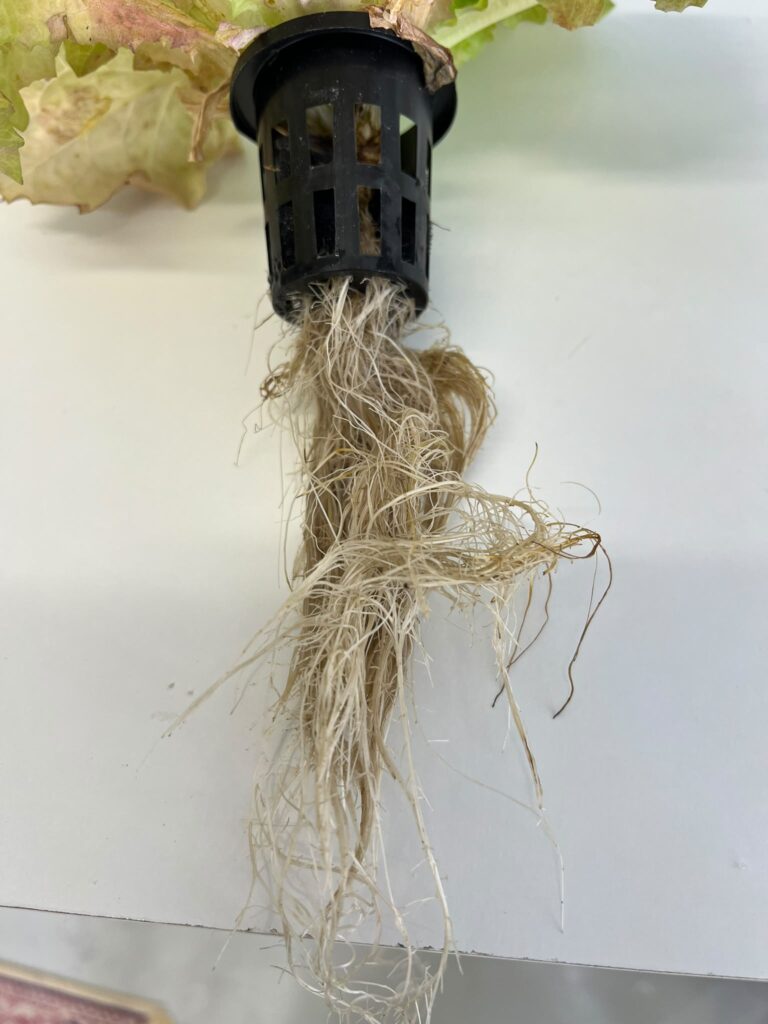
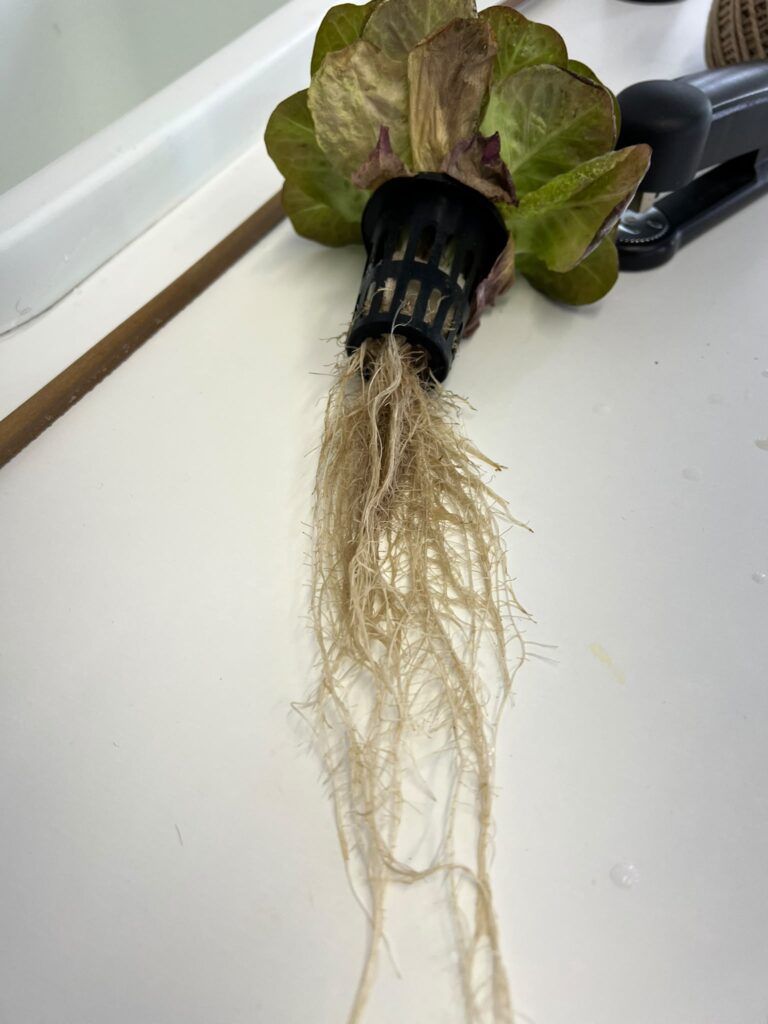
Original WhatsApp chat (translated from German), published with Daniel’s permission
The causes: why the roots turned brown and slimy
Healthy lettuce roots are white to cream, firm and smell fresh. Daniel’s were brown, matted like a braid and slimy. That is the typical picture when roots get too little oxygen: the fine root hairs die and rot sets in exactly there.
Several things came together:
- The pump ran too long: 15 minutes on, 15 off means the roots are wet almost all day and hardly get any air.
- Too much fertiliser: an EC of 2.1 is far too strong for lettuce and stresses the roots further.
- Light on the roots: light came through the clear pots onto cubes and roots. Algae grow there and take oxygen away from the roots.
- Wet leaves: daily spraying kept the leaves damp, which caused the brown spots on the heads.
The temperatures, on the other hand, were good: 22.5 °C in the room and 19.5 °C in the water suit lettuce.
Why does the fertiliser rise by itself?
Daniel wrote that the fertiliser „got too high over time“. This happens to many growers: plants draw water from the tank every day and some of it evaporates, but the nutrient salts stay behind. The water level drops, the salts remain, and the solution gets stronger day by day although you have not added anything.
How to do it right: top up the tank with plain water only and change the nutrient solution completely at regular intervals. Then the value stays where your lettuce likes it.
To notice in time when the value rises, measure it every week. These are the meters I use and recommend:

* Affiliate-Link: Bei einem Kauf erhalte ich eine Provision, dein Preis bleibt gleich. Preis inkl. MwSt., zzgl. Versand, Stand 26.11.2026. Bilder: Amazon Creators API
Just dip it in: you see straight away when the fertiliser in the tank rises by itself.


* Affiliate-Link: Bei einem Kauf erhalte ich eine Provision, dein Preis bleibt gleich. Preis inkl. MwSt., zzgl. Versand, Stand 26.11.2026. Bilder: Amazon Creators API
Measures EC and pH right in the tank and saves your values, so every rise is in black and white.

* Affiliate-Link: Bei einem Kauf erhalte ich eine Provision, dein Preis bleibt gleich. Preis inkl. MwSt., zzgl. Versand, Stand 26.11.2026. Bilder: Amazon Creators API
Stays in the tank and shows EC, pH and temperature around the clock.
The solution: five simple steps
- Shorter pump times: the roots need breaks in the air. Pump times for the tower
- Fresh, milder nutrient solution: mix it fresh and much weaker for lettuce. How I feed my lettuce
- No more spraying: dry leaves get no spots.
- Move the air: a small fan nearby brings fresh air to the leaves. How I do it at the tower
- No light on the roots: use dark net pots and cover them with support rings. All about net pots
For short pump breaks and more oxygen in the water I use these two:

* Affiliate-Link: Bei einem Kauf erhalte ich eine Provision, dein Preis bleibt gleich. Preis inkl. MwSt., zzgl. Versand, Stand 26.11.2026. Bilder: Amazon Creators API
Lets you set short run times and long breaks, so the roots get air in between.

* Affiliate-Link: Bei einem Kauf erhalte ich eine Provision, dein Preis bleibt gleich. Preis inkl. MwSt., zzgl. Versand, Stand 26.11.2026. Bilder: Amazon Creators API
Adds extra oxygen to the water so the roots turn light and strong again.
And to keep the leaves dry and the air moving:

* Affiliate-Link: Bei einem Kauf erhalte ich eine Provision, dein Preis bleibt gleich. Preis inkl. MwSt., zzgl. Versand, Stand 26.11.2026. Bilder: Amazon Creators API
A gentle breeze dries the leaves quickly and keeps fungi like mildew away.

* Affiliate-Link: Bei einem Kauf erhalte ich eine Provision, dein Preis bleibt gleich. Preis inkl. MwSt., zzgl. Versand, Stand 26.11.2026. Bilder: Amazon Creators API
Shows humidity and temperature at the tower, so you spot a bad climate at once.
I developed the support rings for my net pots myself. They cover the pot against light so no algae grow on the roots, and they hold heavy plants. Thanks to the slit you can fit them from the side even on big plants.
The result after one week
Daniel put everything into practice and gently „combed“ the matted roots. A week later he writes: „The plants seem to be recovering.“ The new roots are light again and the lettuce is pushing strong, fresh leaves.
And the white spots?
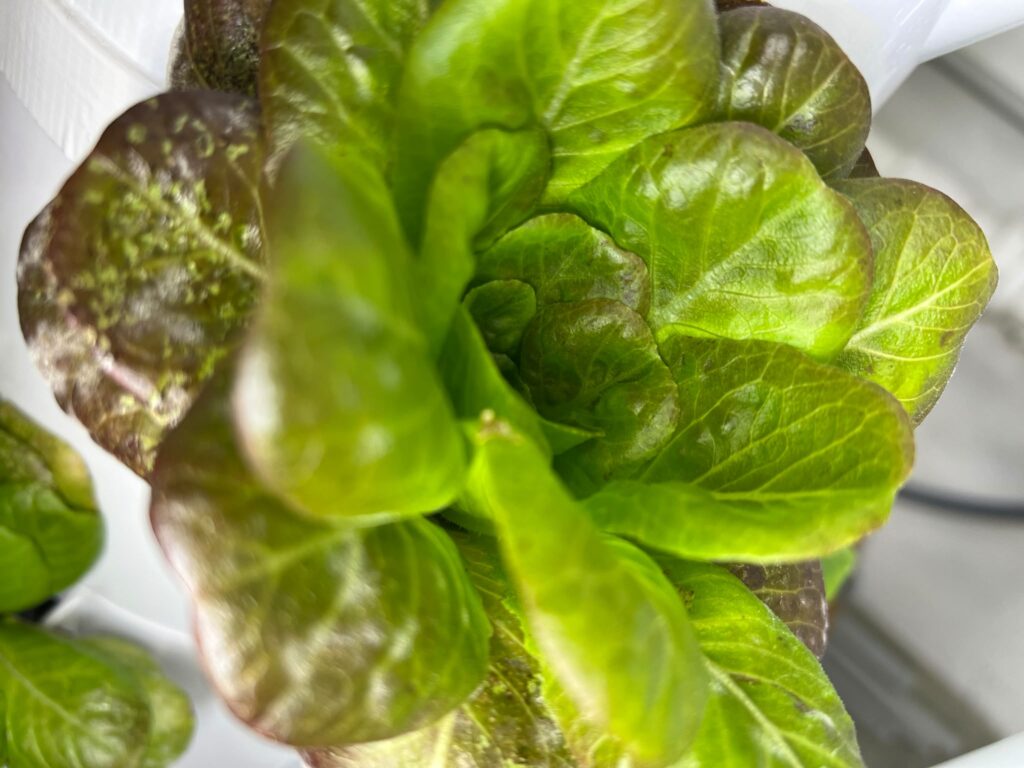
Finally Daniel mentions white, roundish spots on the leaves. On his photo it looks like downy mildew: pale green patches between the veins on top and a white coating underneath. This fungal disease appears when leaves stay wet for a long time, for example after spraying.
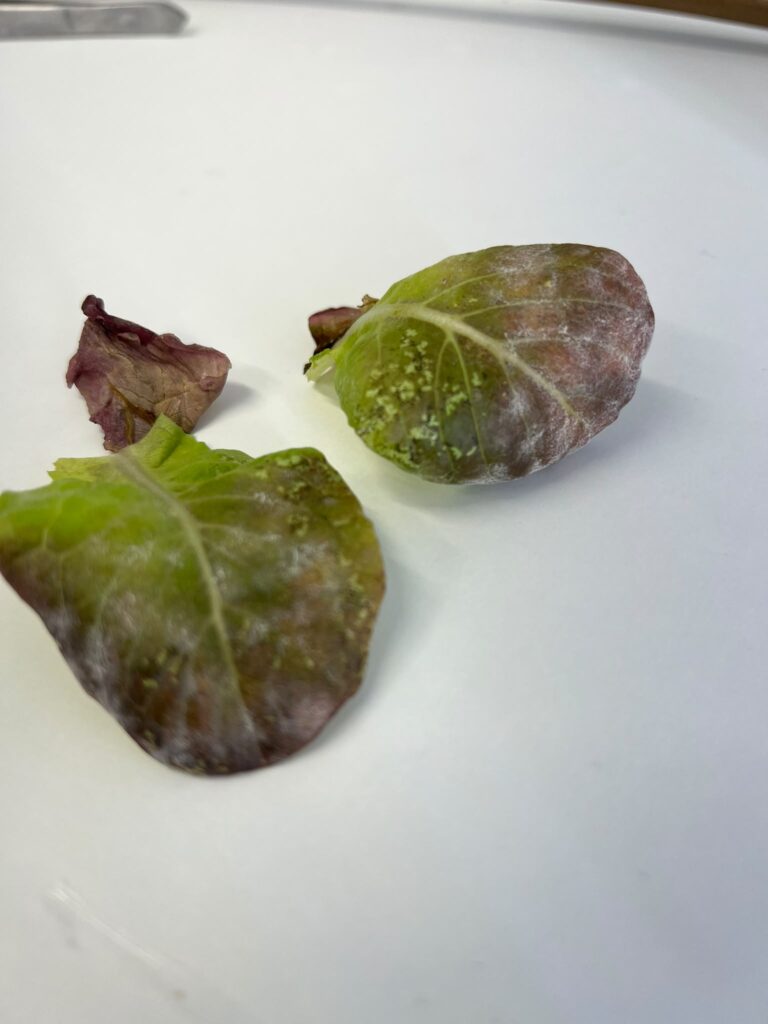
How to get the white spots under control:
- Pick off affected leaves and put them in the household waste, not on the compost.
- Stop spraying: leaves must stay dry, overnight too.
- Ventilate well: a small fan gently blowing over the plants dries the leaves quickly. This is the most important step. You will find my fan above in the five steps.
- Exchange the air: air the room regularly, especially small rooms like Daniel’s old oil tank room.
- Leave space: lettuce heads should not touch, then air reaches everywhere.
You can harvest and eat the healthy leaves of the same head as usual.
If something does not grow the way it should, send me photos of plants and roots and your values, just like Daniel. I will take a look and tell you what is wrong. You will also find all guides for your tower in your customer area „From seed to plate“.
Did you enjoy this topic? Is anything missing, or do you see something differently? I keep learning all the time and I would love to hear your question and your experience. Just write it in the comments below, no sign-up needed.
Write your question or experienceFAQ: brown lettuce roots
Why are my lettuce roots turning brown and slimy?
Usually the roots get too little oxygen. This happens when the pump runs too long, there is too much fertiliser in the water, or light reaches the roots and algae grow. The fine root hairs die and rot sets in.
What do healthy lettuce roots look like?
White to cream, firm and covered in fine hairs. They smell fresh, not musty.
Can lettuce with brown roots recover?
Yes, just like Daniel’s. Once you fix the causes, the plant grows new, light roots. You can carefully remove very mushy parts.
Why does the fertiliser level in the tank rise by itself?
Plants take up water and some evaporates, but the nutrient salts stay in the tank. The solution gets stronger every day. Top up with plain water and change the nutrient solution completely at regular intervals.
Which EC suits lettuce?
Lettuce likes it mild. Around 1.0 to 1.2 mS/cm is a good range. 2.1, as in Daniel’s case, is far too much.
Why must no light reach the roots?
Where light hits moist cubes and roots, algae grow. They use up oxygen and make roots prone to rot. Dark pots and support rings keep the light out.
Should I spray lettuce in the tower?
No. Wet leaves easily get brown or white spots. Moving air from a small fan helps your lettuce much more.
What are the white spots on lettuce leaves?
Often downy mildew. It shows as pale spots on top and a white coating underneath, and appears when leaves stay wet for long. Pick off affected leaves, ventilate well and keep the leaves dry.
Can I still eat lettuce with mildew?
You can harvest and eat the healthy leaves as usual. Pick off affected leaves and put them in the household waste.