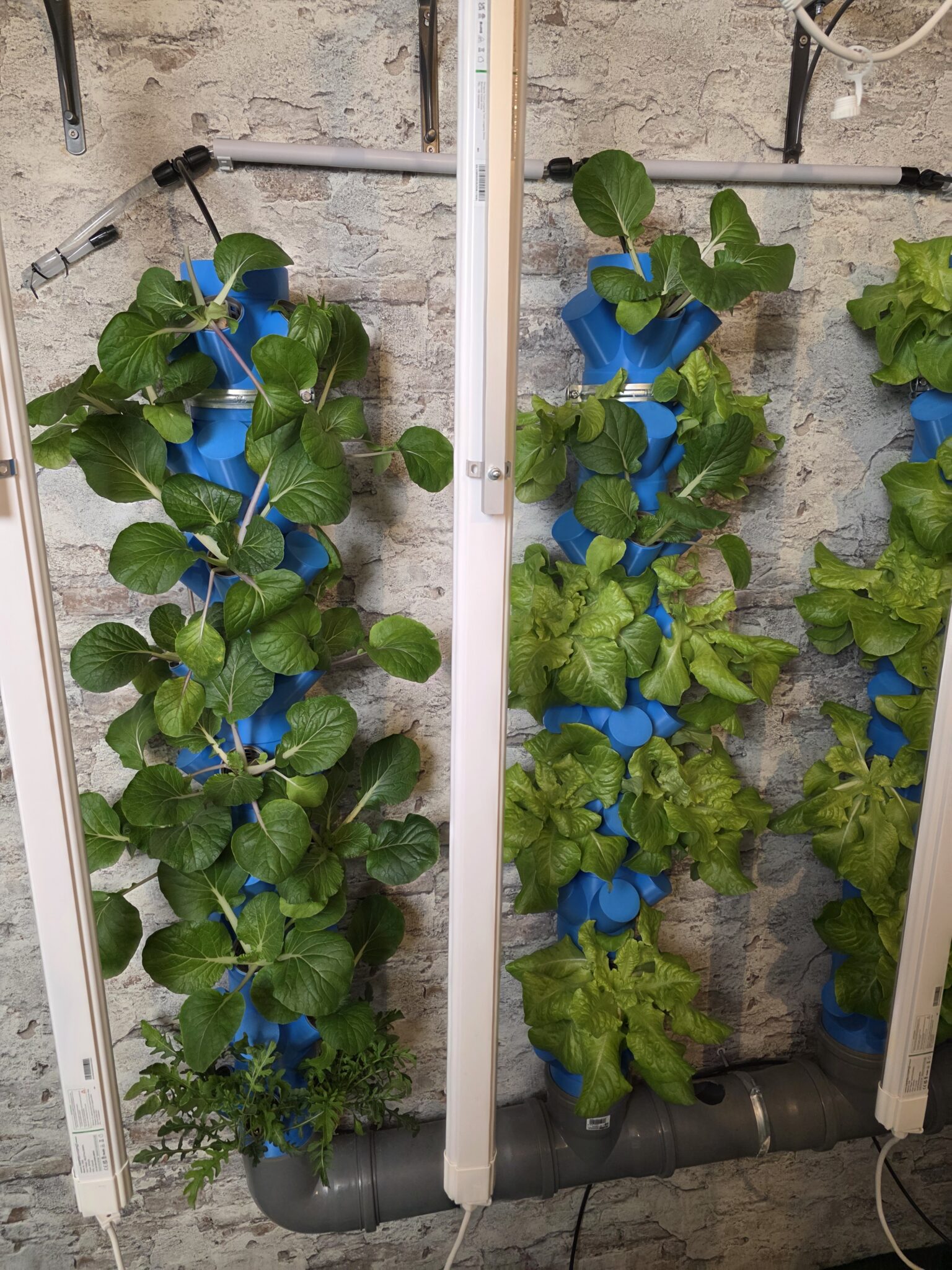
Humidity and air circulation in hydroponics
How humid the air may be, when the fan runs and when not, how I air the room and why too strong a breeze harms just as much as stagnant air. For starting seedlings, the tower indoors and the greenhouse.
Why they are crucial: Importance for transpiration, nutrient uptake and plant health. Preventing mould and strengthening plants through air movement.
Why humidity and air circulation are crucial
The right humidity and good air circulation are crucial for the successful growth of your plants in a hydroponic system.
Optimal humidity supports the plants‘ transpiration and nutrient uptake, while good air circulation strengthens the plants, prevents disease and promotes healthy growth overall.
Transpiration and nutrient uptake
Plant health
Mould prevention
Everyone talks about water, fertiliser, EC and pH. The air around the plants is often forgotten. Yet it helps decide whether your plants grow strongly or whether mould, powdery mildew and spider mites move in. The good news: with a hygrometer, a small fan and regular airing you have it under control.
The leaves drive the water flow
Your plants constantly evaporate water through their leaves. This is called transpiration. It creates a pull that draws water with the dissolved nutrients up from the roots. Calcium only travels through the plant with this water flow. The more a leaf evaporates, the more water and calcium it draws in.
If the air is still or very humid, the leaves hardly evaporate any more. Then too little calcium arrives in the young leaves, even though there is enough in the nutrient solution. If the air is very dry or the wind blows too hard, on the other hand, the delicate leaf edges dry out faster than water arrives. Both end up looking the same: brown leaf edges.
What relative humidity means
The hygrometer shows you the relative humidity in percent. It says how much water the air currently contains, compared with the maximum it can hold at that temperature. Warm air can hold much more water than cold air. Air at 21 °C holds about twice as much as air at 10 °C.
That is why relative humidity rises at night when it cools down, even without any water being added. If the air cools to the so-called dew point, the water condenses, first on the coldest surfaces: on windows, on film and also on the leaves. Wet leaves overnight are exactly what fungi like.
Optimal values and devices for different crops
Constant monitoring of humidity is essential to make sure your plants have optimal conditions.
| Plant type | Humidity (in %) | Special features |
|---|---|---|
| Vegetables | 50 to 70 | Generally robust. Indoors for seedlings and young plants I keep it below 60 % |
| Herbs | 45 to 60 | Less humidity needed |
| Seedlings during germination | 70 to 80 | High humidity needed: film or lid on, remove immediately after germination |
| Young plants and growth indoors | 40 to 60 | Moderate humidity, I keep it below 60 % |
| Flowering and fruit set, for example tomatoes | 50 to 80 | Reduce mould risk: ventilate well. Good for pollination; too dry dries out the pollen |
| Pepper/cucumber | 60 to 80 | Greenhouse preferred. Cucumbers like it more humid than tomatoes |
Recommended devices
Hygrometer
Clip fans
↔️ Oscillating fans
Humidifier
Automatic ventilation
Dehumidifier
Too humid or too dry: how to tell
| What you see | What is usually behind it | What you do |
|---|---|---|
| mould in the propagation box after germination | film or lid on too long, humid air | remove film and lid after germination |
| white, floury coating on the leaves | powdery mildew, air too humid and stagnant | remove infested leaves, air the room, fan, make space |
| condensation on windows and film in the morning | air cooled to the dew point at night | air in the morning, move the air |
| fine pale dots, later webbing | spider mites, air hot and dry | spray in the morning, use predatory mites |
| brown, dry leaf edges on young leaves | fan blowing too hard or air stagnant | set the breeze gentler, move the fan further away |
| long, thin, soft stems | too little light, no breeze | grow light, gentle fan |
1Germination: keep moist, fan off
The cubes must not dry out.
During germination it should be humid. Cling film or a zip bag over the propagation box keeps the moisture in. Nothing dries out, and you do not have to mist. Light comes through, which suits light germinators. For dark germinators a light-tight lid helps.
The fan stays off during this time, otherwise the cubes dry out. As soon as the seeds have germinated, the film has to come off. For me lettuce germinates after about 3 days. If the film stays on longer, mould quickly forms in the humid air.
If you start tomatoes in coco, the same applies: no fan until germination, otherwise the coco dries out.
What I use for this: my seedling box with lid and 25 cubes.
Related:Germination temperatures and times: how warm and how long for each plant›📖How I get seeds to germinate reliably without mould forming is in my book in the chapter “Tipps für eine gute Keimung” (Tips for good germination). Just check the table of contents.›2Seedlings and young plants: air the room and move the air
Humidity below 60 %.
Starting seedlings creates a lot of moisture in the air. The water in the station evaporates, and the plants release water through their leaves. If humidity stays high for long, the plants quickly get powdery mildew.
That is why every morning I open the window wide for about 15 minutes. After that the humidity drops from about 65 % to below 60 %. A hygrometer shows you the value. So you see immediately whether your airing is enough.
Now the fan comes in
As the plants get bigger, I switch on a small fan. The gentle breeze makes the stems stronger and drives the humid air out from between the leaves. Plants react to movement: if they are moved gently on a regular basis, they form sturdier, more compact stems.
The fan runs in my seedling shelf anyway. That has a nice side effect: the stems already know the wind before they go outside to harden off.
Make space
As the plants get bigger, they shade each other. The lower leaves hardly get any light, and the air stagnates between the leaves. That is exactly where powdery mildew likes to start. Then pull the pots apart or spread the plants over a second station.
A simple hygrometer is quite enough. Place it at plant height, then it measures where it counts.

* Affiliate-Link: Bei einem Kauf erhalte ich eine Provision, dein Preis bleibt gleich. Preis inkl. MwSt., zzgl. Versand, Stand 8.11.2026. Bilder: Amazon Creators API
* Affiliate link (Amazon): if you buy, I receive a commission; your price stays the same.
📖How I care for young plants in the station, air the room and protect them from powdery mildew is in my book in the chapter “Jungpflanzen pflegen” (Caring for young plants). Just check the table of contents.›HydroFlex Tower for indoors and outdoors, seedling box, seedling station, support rings and my own nutrient. After you buy, I’ll help you on WhatsApp.
To the shop ›The importance of air circulation and suitable fans
Good air circulation prevents moisture build-up and promotes plant stability.
Clip fans
- ✔Even air circulation
- ✔Strengthens the stems
- ✔Reduced risk of mould
Floor fans
- ✔Powerful air circulation
- ✔Height-adjustable
- ✔For larger greenhouses
Oscillating fans
- ✔Even air distribution
- ✔Avoids hot spots
- ✔Reaches all plants
3Indoors at the tower: gentle rather than strong
The leaves should only move slightly.
Air movement is important indoors, because there is no wind there. It keeps the air between the leaves dry, makes the stems sturdy and helps the water flow in the plant. But too much of a good thing does harm. I have experienced that myself.
My brown edges indoors
Indoors on my four towers my lettuce suddenly got brown edges. At first I thought the air in the room was too humid. I thought the moisture was settling on the leaf edges and starting to rot there. But for me it was exactly the opposite: the edges had dried out.
My fan stands centrally between my four towers. On the lettuce in the middle, the leaf edges on the left and right had dried out. The lettuce in the right tower was only dry on its left side, exactly where the fan blows. On the other side the wind did not reach directly, and there the leaves were healthy. It was not calcium deficiency. My fertiliser brings extra calcium, and outdoors in summer I had no brown edges with the same fertiliser.
What I changed
- Moved the fan further away. The air should only move the leaves slightly, not ruffle them.
- Used a fan with several speeds, for example ten. That lets you set a gentle air movement precisely.
- Hung the lamps higher. 1.20 metre lamps with 40 watts are very strong and dry out the edges even more.
- Reduced the lighting from 16 to 14 hours. That does not cure it, but it helps.
The fan I recommend has ten speeds and swings back and forth. That way the breeze reaches all plants without constantly blowing on one side.

* Affiliate-Link: Bei einem Kauf erhalte ich eine Provision, dein Preis bleibt gleich. Preis inkl. MwSt., zzgl. Versand, Stand 8.11.2026. Bilder: Amazon Creators API
* Affiliate link (Amazon): if you buy, I receive a commission; your price stays the same.
Related:Lettuce in the hydro tower: my guide from sowing to harvest›The fan also helps with aphids and tomatoes
If you have aphids indoors, dip small plants upside down into a bucket of water regularly. Good air afterwards is important so the leaves dry quickly. A small fan helps with this.
If your tomatoes stand indoors under lamps, no wind moves them. Tomatoes pollinate themselves; the pollen just has to be shaken out of the flower. Then a small fan that gently rocks the plants back and forth helps. Or you gently shake the string once a day.
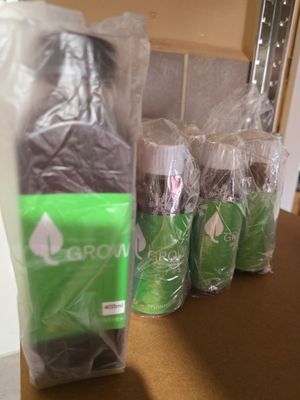
Seedling and leaf nutrient from one bottle, with calcium and magnesium, made for soft water. For all plants from sowing to the growth phase, leafy plants until harvest.
View in the shop ›Tips for monitoring and practical solutions
When growing indoors, regular airing helps control humidity and prevent mould.
Measure regularly
Air circulation
Avoid mould
Automation
Humidity and air circulation when growing indoors and in the greenhouse
Grow tent and indoors
- ✔Humidifier for optimal moisture
- ✔Automatic ventilation
- ✔Controlled environment
- ✔Ideal for winter growing
Greenhouse
- ✔Regular hygrometer checks
- ✔Fans for air circulation
- ✔Adjust to growth phases
- ✔Use natural ventilation
4Greenhouse and outdoors
The moisture has to get out.
In spring: air during the day
My greenhouse stays closed until the end of May. During the day I air it when it is warm. At night an oil radiator keeps the temperature above 10 °C. After that the side panels come out, and the greenhouse stays open until the end of the season.
In spring and autumn especially, the nights are cool. The air cools down, the humidity rises, and water condenses on windows and leaves. That is why in these weeks it is worth airing thoroughly in the morning and not wetting the leaves in the evening.
📖When my tomatoes move into the greenhouse and how I air and heat it in spring is in my book in the chapter “Umzug ins Gewächshaus” (Moving into the greenhouse). Just check the table of contents.›In summer: everything open
I open my greenhouse from the end of May, as soon as the nights are warm enough, and only close it again in late autumn. The door always stays open, because the moisture has to get out. Tomatoes really only need a roof. The roof keeps the rain off the leaves. If they stay wet for a long time, late blight and grey mould come.
I hardly have any spacing: I have 36 tomatoes on 4 square metres. That makes good air movement and dry air all the more important. That is why I consistently remove side shoots, and as soon as the trusses hang, all the leaves below them come off. A dense bush means little light, little air and more fungi.
Related:Tomatoes in the hydro tower: my guide with side shoots and lowering›Wind pollinates the tomatoes
In the open greenhouse the wind does the pollinating. It shakes the flowers, and the pollen falls onto the stigma. I do nothing at all, and my tomatoes still bear plenty every year. In great heat and very humid air, however, the pollen suffers. Above about 30 °C it becomes infertile, and the flowers drop without forming fruit. Then ventilate well and take out the side panels.
Cucumbers like it more humid
Cucumbers like it more humid than tomatoes. If both are in the same greenhouse, as with me, the air is often too dry for the cucumbers. And hot, dry air is exactly the favourite climate of spider mites and thrips. At 35 to 38 °C in summer they have an easy time.
That is why I spray tomatoes and cucumbers with water early in the morning. That raises the humidity, and the leaves dry off again by the evening. I never spray in the evening, because wet leaves overnight attract fungi. I also use predatory mites. By the way, the predatory mite against spider mites prefers it moist: below about 60 % humidity its eggs hatch poorly. So spraying in the morning helps twice over.
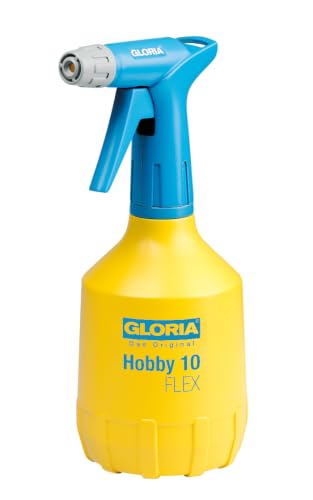

* Affiliate-Link: Bei einem Kauf erhalte ich eine Provision, dein Preis bleibt gleich. Preis inkl. MwSt., zzgl. Versand, Stand 8.11.2026. Bilder: Amazon Creators API
* Affiliate link (Amazon): if you buy, I receive a commission; your price stays the same.
How to recognise spider mites, thrips and powdery mildew and what helps against them, you can read on my page Pests and diseases in hydroponics.
A few questions about space, location and what you want to harvest, and you get a recommendation.
To the tower advisor ›Powdery mildew: do not underestimate it
Powdery mildew is a white, floury coating on the leaves. It does not need wet leaves; humid, stagnant air is enough, especially humid nights. Downy mildew, on the other hand, tends to come with wet leaves. It shows as yellowish spots on the upper side and a grey coating on the underside.
With my peas the powdery mildew was faster than me, and my cucumbers get it every year. That is why I act immediately: infested leaves off, heavily infested plants out completely, plus plenty of air movement. It is best not to let it get that far: air the room in the morning, keep humidity indoors below 60 %, run a gentle fan and give the plants enough space.
Related:Pests and diseases: spider mites, thrips, powdery mildew and root rot›📖How I recognise powdery mildew, grey mould and rot and what I do immediately is in my book in the chapter “Fäule und Mehltau” (Rot and mildew). Just check the table of contents.›Which devices you really need
| Device | What for | Do you need it? |
|---|---|---|
| Hygrometer | shows humidity and temperature | yes, so you know where you stand |
| Clip fan with several speeds | gentle air movement between the plants | yes, indoors from the young plant stage |
| Hand sprayer | raise humidity in the morning | in hot summers against spider mites |
| Window or door | humid air out, fresh air in | always, every morning |
| Dehumidifier | lower humidity | only if airing alone is not enough |
For most people the combination of hygrometer, fan and regular airing is quite enough. A dehumidifier only becomes an issue if you grow in a room you can hardly air and the hygrometer shows permanently high values despite airing.
Conclusion
The right humidity and air circulation are key factors for the success of your hydroponic gardening. By controlling these aspects well, you can maximise the growth and health of your plants.
Invest in suitable devices: a simple hygrometer and a fan with several speeds are quite enough. Monitor the conditions regularly to get the best results.
My rules for good air
| Rule | Why |
|---|---|
| during germination film on, fan off | the cubes stay moist |
| remove film and lid after germination | otherwise mould forms |
| air the room for about 15 minutes every morning | humidity drops below 60 % |
| a gentle fan from the young plant stage | strong stems, no humid air between the leaves |
| never point the fan directly and strongly at the plants | otherwise the leaf edges dry out |
| pull plants apart, remove side shoots | the air gets everywhere |
| only spray in the morning | higher humidity against spider mites, dry leaves at night |
| in summer greenhouse open, door always open | the moisture has to get out |
| a roof over the tomatoes | no rain on the leaves, fewer fungi |
Frequently asked questions about humidity and air circulation
What do I do if humidity is too high?
How do I recognise humidity that is too low?
How often should I air the room?
Which devices are most important?
What humidity is ideal for starting seedlings indoors?
How long do I air the room in the morning?
Why is there so much moisture when starting seedlings?
Does the fan run during germination?
When do I remove the film and lid from the propagation box?
Is white fuzz on seedling roots mould?
What do I need a fan for?
How strongly should the fan blow?
Which fan suits my setup?
How do I know my fan is too close?
Why does lettuce get brown leaf edges even though there is enough calcium in the water?
What is transpiration?
What does relative humidity show?
Why does humidity rise at night?
What humidity do vegetables and herbs need?
Which pests like dry air?
When do I mist the plants with water?
Why does spraying in the morning also help the predatory mites?
Does powdery mildew need wet leaves?
What do I do if powdery mildew appears?
Why does the door of my greenhouse stay open in summer?
Why do tomatoes need a roof?
Why do I consistently remove side shoots from tomatoes?
Who pollinates tomatoes in the greenhouse?
At what humidity does tomato pollination work well?
Do cucumbers like more humid air than tomatoes?
How does the fan help with hardening off?
Do I need a humidifier in a grow tent?
Further reading
You will find more basics on nutrients, on lighting, on Algae and in the guide to the hydro tower.
Continue with your own growing

168 pages, simply explained for beginners and with videos on the topics (in German). Exactly how I grow myself: from sowing to harvest.
More about the book ›A few questions about space, location and what you want to harvest, and you get a recommendation.
To the tower advisor ›Questions about your setup? Message me on WhatsApp.
Tapping opens WhatsApp (provider: WhatsApp Ireland Ltd.). More in the privacy policy.