
Hydroponics: growing vegetables and herbs without soil
What hydroponics is, how the cycle in the tower works, which systems there are and what you can grow. Plus the most important values from my book and all my pages on the topic.
Gardening without soil: innovation, efficiency and variety in the smallest space
Discover how modern hydroponics lets you grow fresh herbs, vegetables and more in little space and without soil. Everything about systems, benefits and tips for a successful start into soilless gardening!
What is hydroponics?
In hydroponics, plants grow without soil. Their roots take up water and the nutrients dissolved in it directly from a nutrient solution. A plant really only needs soil for two things: for support and as a store for water and nutrients. In hydroponics, the system takes over both.
In hydroponics, special growing media such as perlite, coco coir or rockwool take over the role of soil. These materials give the roots support while ensuring good aeration and drainage. The nutrients are delivered in precisely balanced solutions directly to the roots, which ensures an ideal supply.
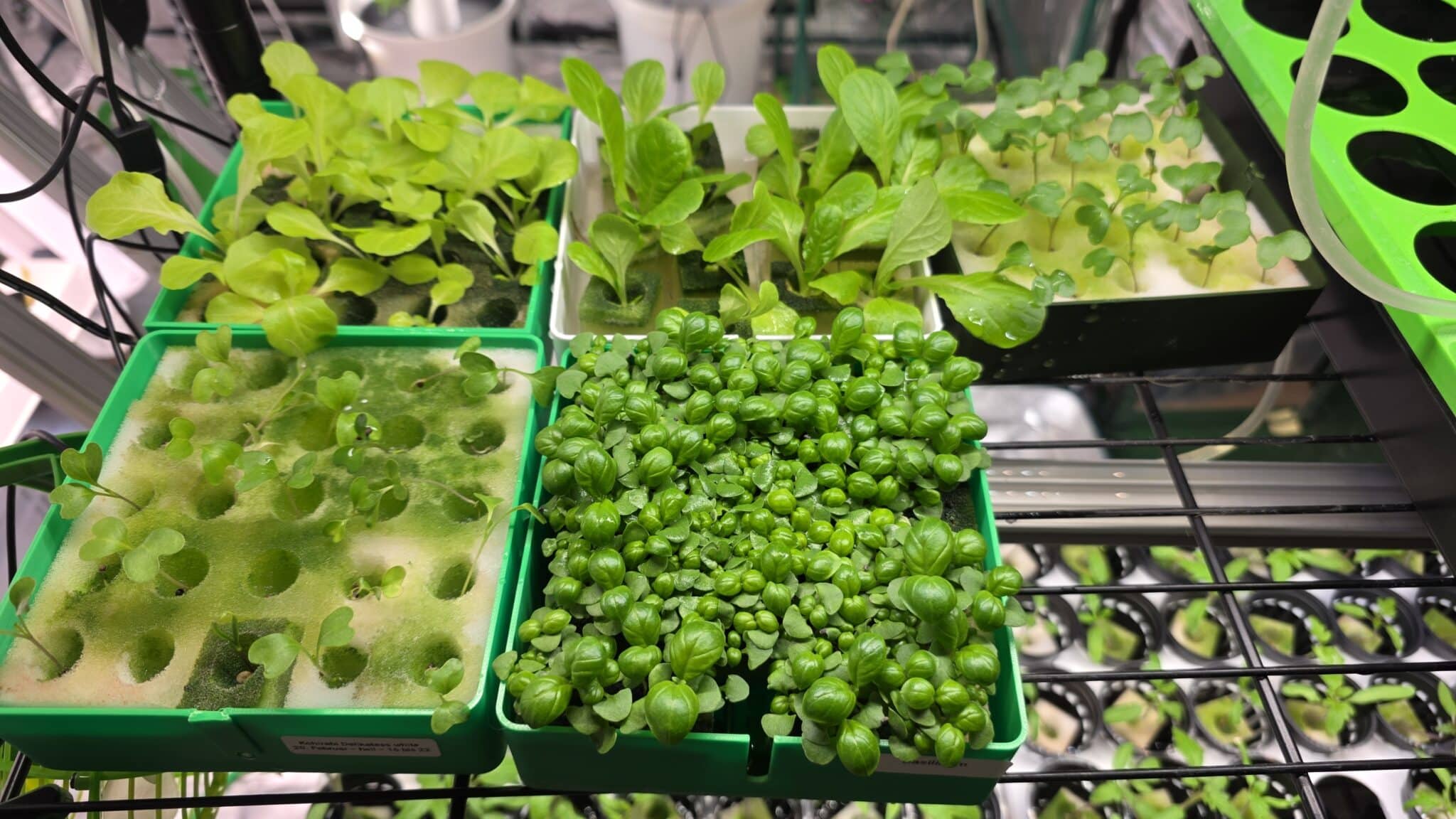
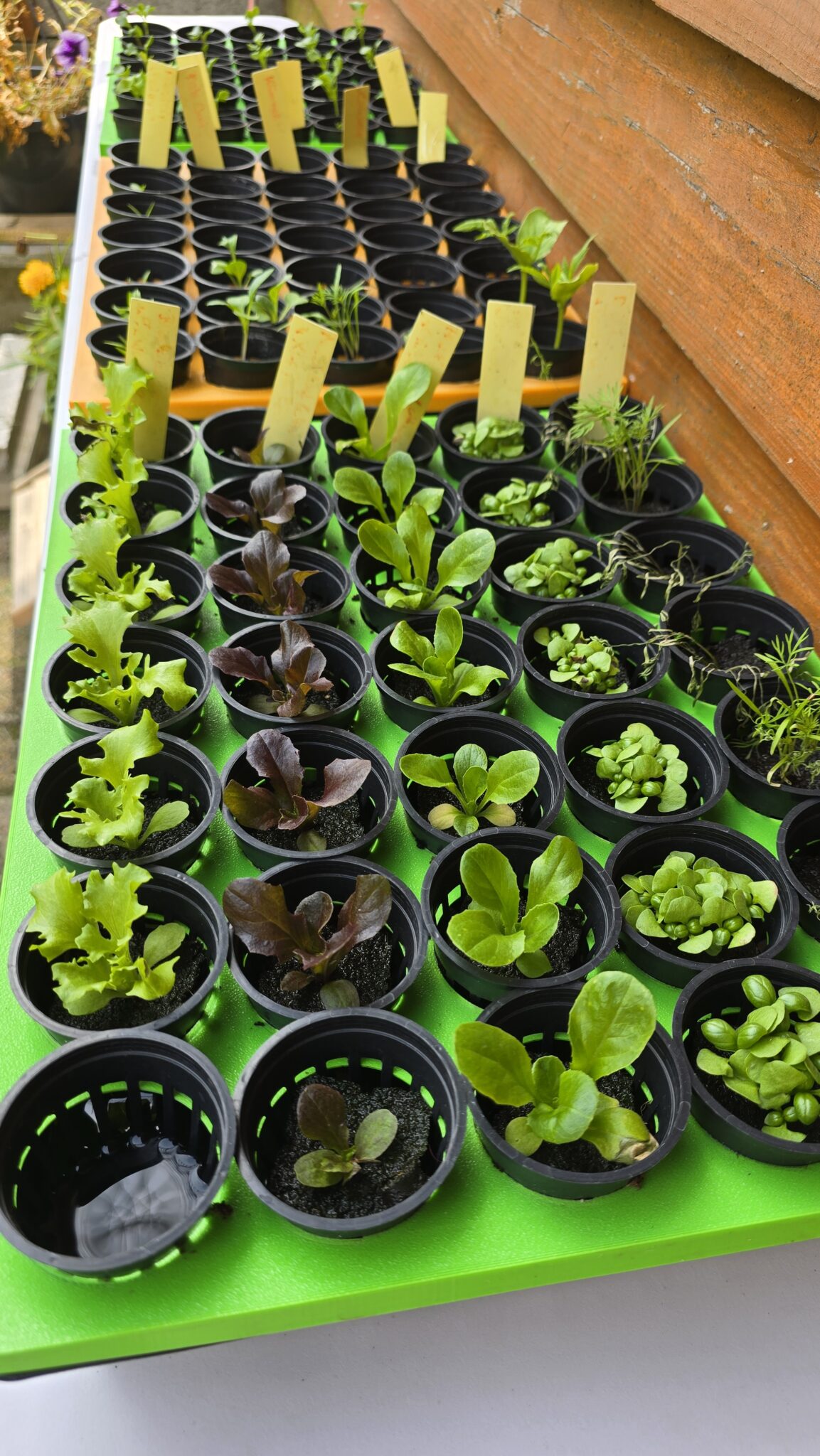
Materials such as foam cubes, coco, rockwool or clay pebbles in a net pot give the roots support. I start my seeds in foam cubes and put the young plants into the net pot with them. Which materials there are is explained on my page about growing media.
One of the biggest advantages of hydroponics is being able to grow plants in a controlled environment. Growing conditions such as light, temperature, humidity and nutrient supply can be controlled and optimised precisely. This leads to faster growth, higher yields and often better quality produce.
Where is hydroponics possible?
Hydroponics is especially popular in cities where space is limited. Vertical growing systems such as hydro towers or plant towers make growing possible in the smallest space, for example on balconies or indoors.
Hydroponics doesn’t need a garden. What matters is enough light, suitable temperatures and a good location. Vertical plant towers use height and save floor space. Even a small yard or terrace is enough for fresh vegetables. A stable stand, enough light and protection from strong wind are important.
- On the windowsill: Even without a balcony you can grow lettuce and herbs. In winter daylight often isn’t enough, then a grow light helps.
- On a fence or wall: A tower on the wall hardly needs any floor space. I show how it works in the wall mounting guide.
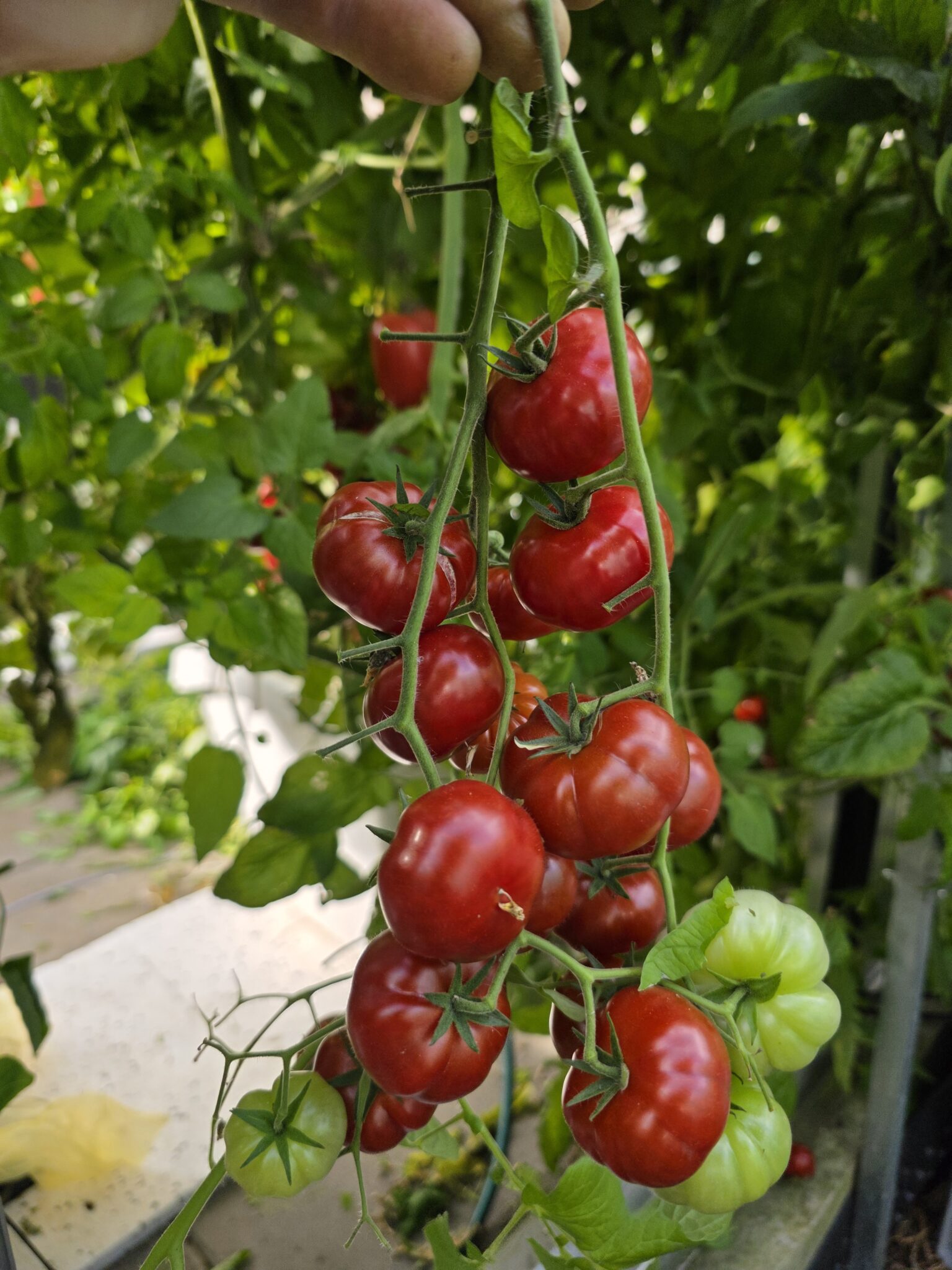
- In the greenhouse: Here the plants are protected from wind and rain, and the season gets longer. In my greenhouse, 36 tomato plants stood on just four square metres, and the harvest was huge.
- Indoors: With a grow light you harvest all year, independent of the weather. Indoors you don’t need to harden plants off.
Outdoors the sun provides the light, from mid-May it’s completely enough. Before that, harden the plants off, otherwise the leaves get burnt. When buying, make sure your tower is suitable for outdoors, i.e. sturdy and UV-resistant. I use my HydroFlex Tower indoors and outdoors.
📖More on this in my book (in German) in the chapter “Wo ist Hydroponik möglich?”. Just check the table of contents.›Vertical hydroponics: plant towers, hydro towers & plant columns
Want to dive into hydroponics but only have little space? Then plant towers, hydro towers and plant columns are exactly right for you! These systems let you grow a wide variety of plants in the smallest space, perfect for balconies, terraces or even indoors.
What are plant towers, hydro towers and plant columns?
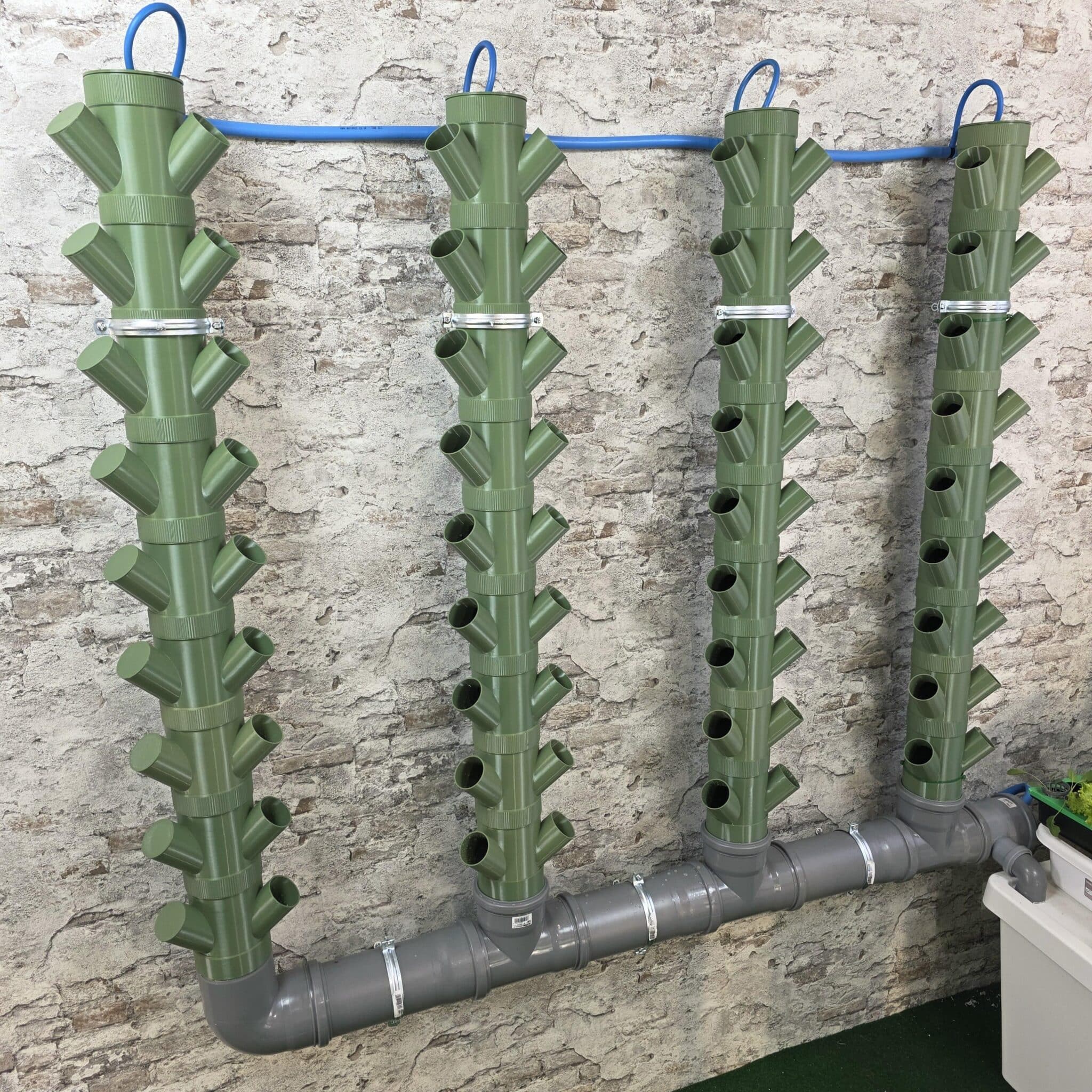
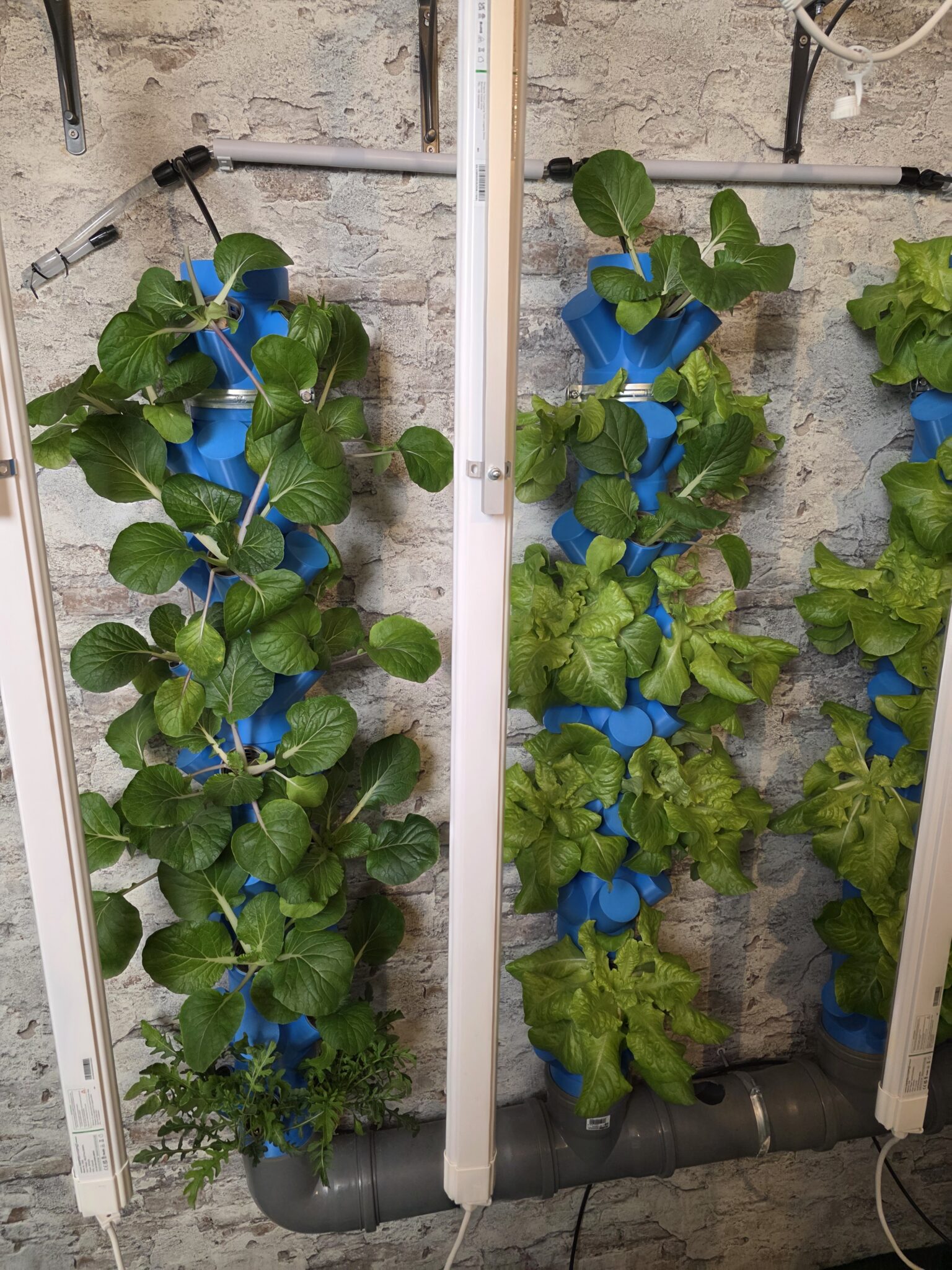
Plant tower, hydro tower and plant column are different terms for the same concept: a vertical growing system with several planting pockets or levels in which plants can grow. They maximise the growing area by placing plants above each other instead of next to each other. My tower is called the HydroFlex Tower.
⚙️ How it works
Vertical design
Nutrient supply
Watering
The principle in the tower: a closed cycle
A pump sits in the reservoir. It pushes the nutrient-rich water up into the tower. At the top it spreads out, trickles past the roots and flows back into the reservoir through the openings in the segments. The roots take up water and the dissolved nutrients along the way. And there we have a cycle.
Because the water is pumped through the tower at fixed intervals and collected again at the bottom, hardly anything is lost. That saves water, nutrients and time.
Indoors my pump runs for 5 minutes and then pauses for 30 minutes. That’s enough, the roots stay moist. The often quoted 15 on and 15 off is too long for me indoors, strawberries for example stay too wet. If the tower stands outside in blazing sun, I switch to 15 minutes on and 15 minutes off. If the lettuce leaves droop, the pause is too long.
The pump goes on a digital timer with a cycle function. Simple mechanical timers from the DIY store usually only switch in 15-minute steps, which isn’t enough for 5 minutes. The air pump doesn’t go on the timer but straight into the socket. That way it runs constantly.
Benefits of vertical growing systems
Space-saving
Efficient nutrient supply
Water saving
Easy care
A few questions about space, location and what you want to harvest, and you get a recommendation.
To the tower advisor ›Different hydroponic growing methods
There are different ways to grow plants without soil. The basic principle is always the same: the roots need water, nutrients and oxygen. The systems differ in how the water gets to the roots.
🗼Hydro tower (vertical plant tower)
The hydro tower is a vertical growing system that is particularly space-saving and perfect for balconies and small spaces. The plants grow on several levels above each other while a nutrient solution circulates through the system at intervals.
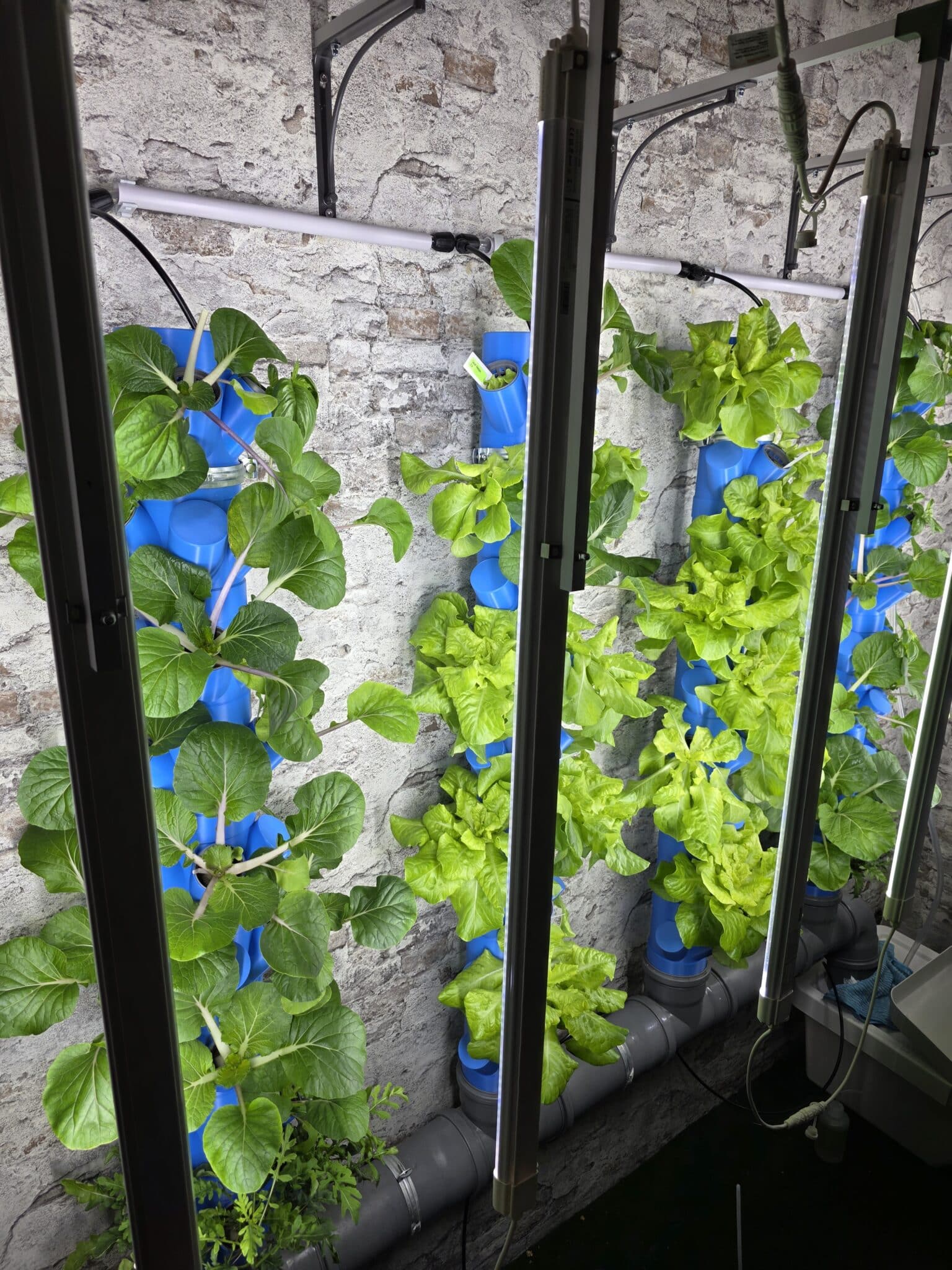
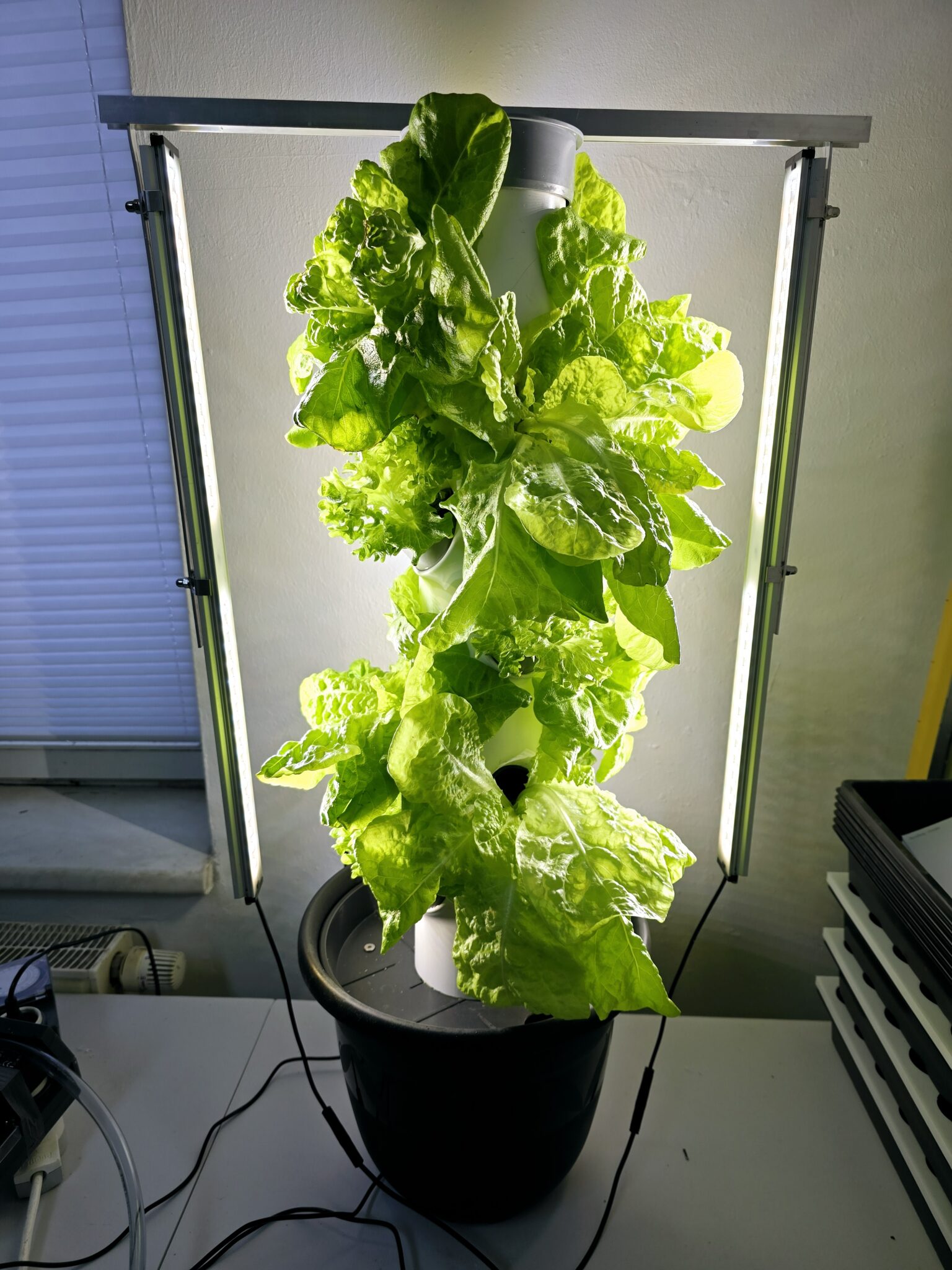
Plant tower, hydro tower and plant column mean the same thing: an upright system in which plants grow above each other instead of side by side. The pump brings the nutrient solution to the top, it trickles past the roots back into the tank. Between pumping times the roots get plenty of air. I grow lettuce, herbs, kohlrabi, strawberries and peppers in it. The HydroFlex Tower comes slim for the windowsill, with few or many segments, with reservoirs of different sizes or for wall mounting.
🌿Kratky method (passive water culture)
The Kratky method is a passive hydroponic technique in which the plant roots partly hang in a still nutrient solution. This method works without pumps and is particularly energy-efficient.
The simplest form of hydroponics, developed by Bernard A. Kratky at the University of Hawaii. The plant sits in the lid above the nutrient solution. There is no pump, no air pump and no electricity. The plant drinks, the water level drops, and above the water a moist air zone forms in which the upper roots breathe. Ideal for lettuce and herbs.
Kratky is often equated with DWC (Deep Water Culture). Both are water cultures and look similar, the difference is oxygen: Kratky works without aeration, DWC with an air pump. That’s why DWC has its own card below.
🫧DWC (Deep Water Culture)
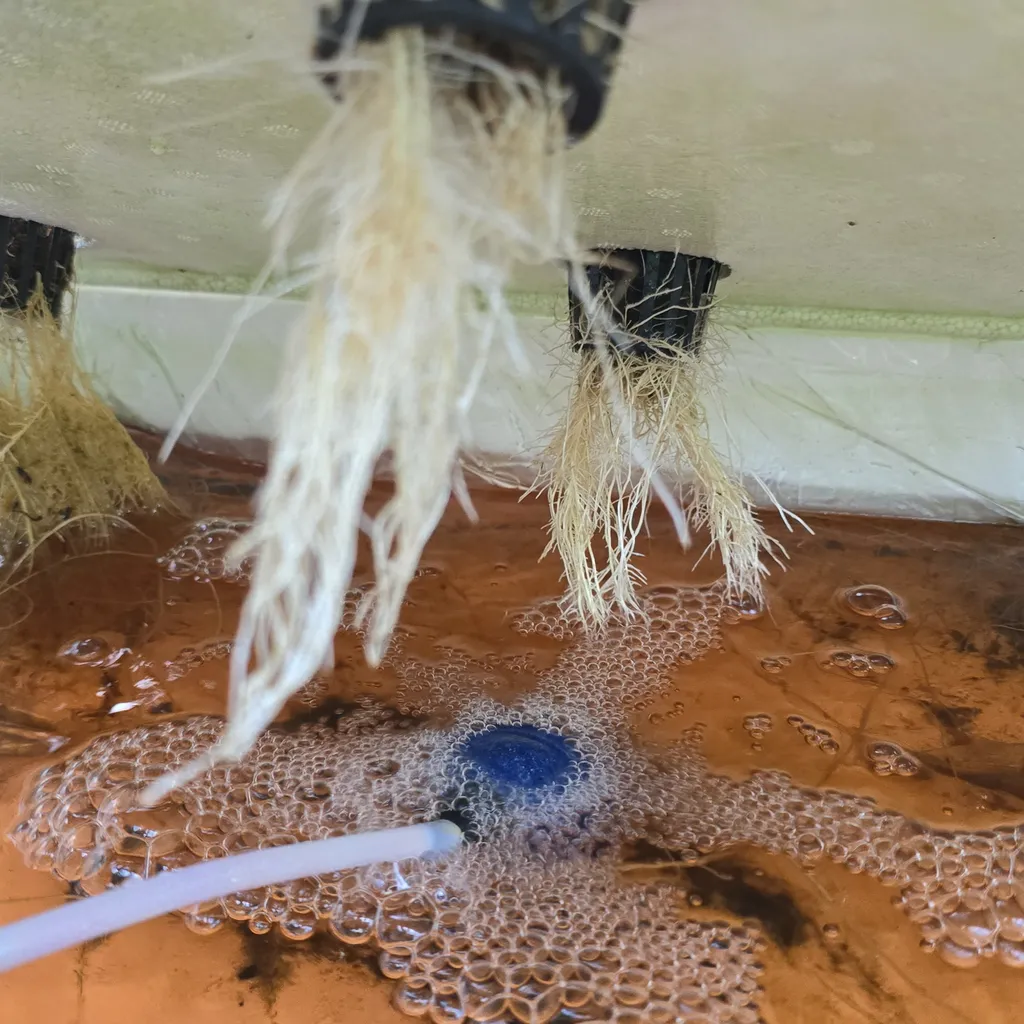
Looks like Kratky, but the roots hang permanently in the nutrient solution, and an air pump brings oxygen into the water day and night. That’s exactly how my seedling station works: the roots of the young plants hang in the water, and the air pump runs constantly.
DWC in practice: Growing zucchini in a DWC bucket (German) ›
Kratky and DWC compared ›〰️Nutrient Film Technique (NFT)
With NFT, a thin film of nutrient solution flows continuously over the plant roots. This technique ensures an ideal supply of oxygen and nutrients and is very water-efficient.
The plants sit in slightly sloping channels or pipes. A pump lets the nutrient solution flow over the roots as a thin film all the time, at the end it runs back into the tank. NFT is common in commercial lettuce and herb growing. Because the pump has to run constantly, a failure quickly becomes critical here.
Growing methods compared
| Method | Power use | Pump | Oxygen for the roots | Maintenance | Good for | Beginner-friendly |
|---|---|---|---|---|---|---|
| Hydro tower | Low (5 to 8 W) | at intervals, for me 5 on, 30 off | air between pumping times | Low | Lettuce, herbs, strawberries, peppers; tomatoes in the wide tower | Very good |
| Kratky | no electricity | none, no electricity | air zone above the falling water | Very low | Lettuce and herbs | Perfect |
| DWC | air pump, about 3 W | no water pump, but air pump | air pump day and night | Low | Lettuce, herbs, young plants | Good |
| Nutrient Film Technique (NFT) | Medium (10 to 15 W) | runs constantly | thin water film, roots partly in the air | Medium | Lettuce and herbs | Advanced |
Read more about each system on these pages:

What you can grow
You can grow an amazing variety of plants in a plant tower, hydro tower or plant column:
Tomatoes
Kohlrabi
Lettuce
Herbs
Strawberries
Leafy greens
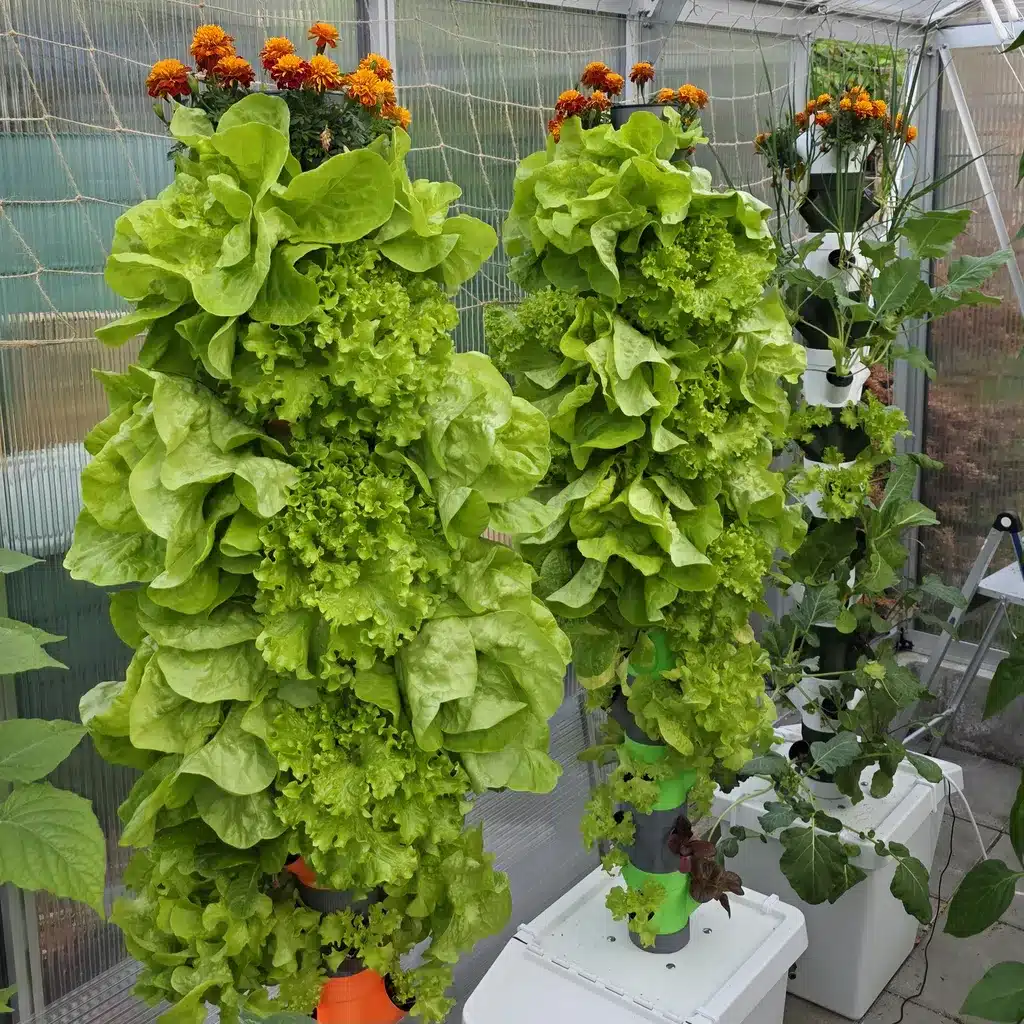
My towers have already grown 20 tomato plants in the wide tomato tower (8 watt pump), 33 kohlrabi plants and 33 lettuces as well as various herbs (just 5 watts each).
Many vegetables and herbs grow in the HydroFlex Tower. You can grow one variety or combine different plants. What matters is whether your plant is a leafy plant or a fruiting plant. Nutrients, space and light depend on that.
| Group | Examples | Which tower | Nutrients |
|---|---|---|---|
| Leafy plants | Lettuce, herbs, pak choi, kohlrabi, spinach, chard | slim vertical tower, about 10 cm | the same nutrient from sowing to harvest |
| Fruiting plants | Peppers, chilli, strawberries | also in the vertical tower | like leafy plants until flowering, then bloom nutrient |
| Large fruiting plants | Tomatoes, cucumbers, peas and everything that climbs | wide tomato tower, mine is 16 cm | from flowering more potassium and phosphorus |
Tomatoes root very strongly. In the first year I had them in the vertical tower, and the roots grew so much that the tower stopped working. Since then my tomatoes grow in the HydroFlex Tower Largo Uno with a 16 cm diameter. Cucumbers, peas and everything that climbs and can hang down grow in it too.
You don’t need special seeds. Perfectly normal vegetable and herb seeds work. The seed packet tells you whether your plant needs light or darkness to germinate, which germination temperature it likes and how long it takes. All values for every plant are in my overview Plants for hydroponics.

Build guides and buying options
Build it yourself
On my website you’ll find detailed build guides that take you through the process step by step. For example a hydro tower made from bent pipe, completely without 3D printing.
To the guides ›Ready-made systems
The shop has various vertical plant towers that are ready to use straight away. Slim HydroFlex Towers for indoors and the wide Largo Uno tomato tower.
Visit the shop ›HydroFlex Tower for indoors and outdoors, seedling box, seedling station, support rings and my own nutrient. After you buy, I’ll help you on WhatsApp.
To the shop ›Benefits of growing without soil
Fewer pests
Clean method
Controlled supply
Water-saving
Fast growth
- No weeds, no slugs: Without beds there’s no weeding, and no slug hunting either.
- Clean: No soil in your home or on the balcony.
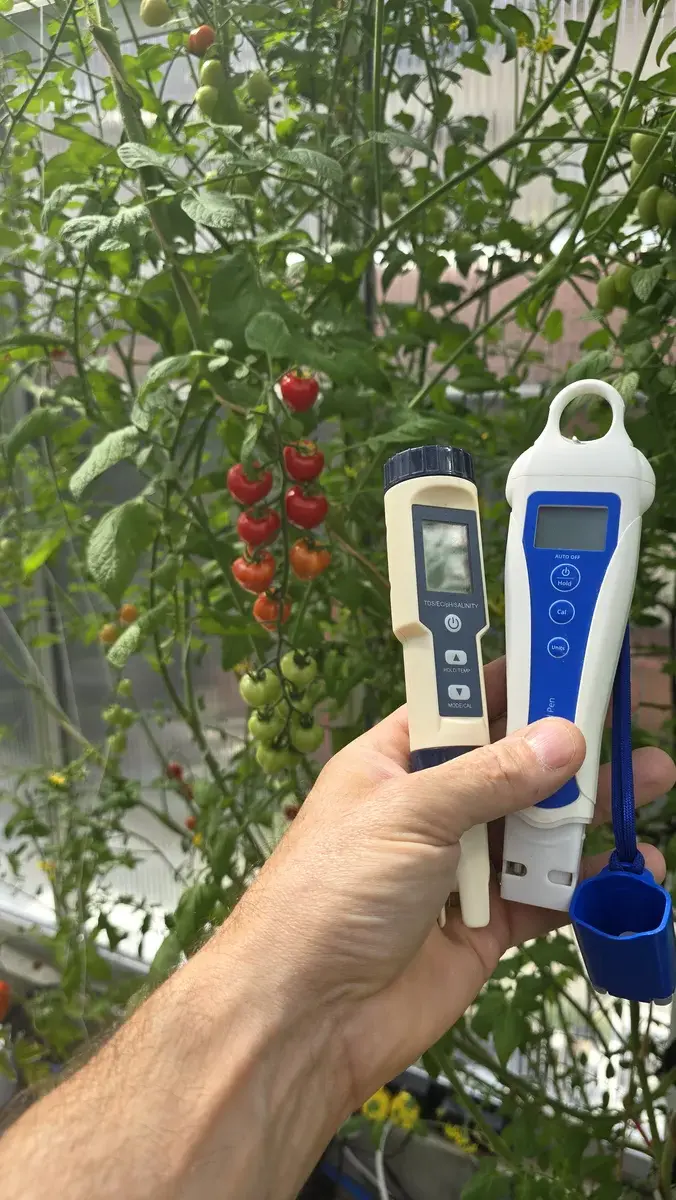
- Precisely fed: With EC and pH you decide yourself how many nutrients your plant gets.
- Water in a cycle: What the roots don’t take up flows back into the reservoir. Nothing seeps into the ground.
- Fast: My lettuce is ready to harvest after about 4 to 6 weeks in the tower.
- Space: In the tower the plants grow above each other. I grow 30 to 40 lettuces on one square metre.
Pests such as aphids or spider mites can still come, because they fly or crawl onto the plants from outside. If you look regularly, you’ll spot them early. What helps then is explained under pests and diseases.
More on the benefits and the most common myths in benefits of hydroponics and in myths and facts.
The most important values at a glance: pH, EC and water
I use these values myself and have compiled them for all plants in my book. The exact values for your plant are in the respective guide.
| What | My value | Good to know |
|---|---|---|
| pH value | 5.8 | Good range 5.5 to 6.5. At 5.8 the plant can reach all nutrients well. |
| EC value | in 4 stages | Take the plant’s highest EC: seedlings a quarter, young plants half, growth three quarters, harvest the full value. |
| EC for lettuce | up to 1.6 | With my very soft water, 1.1 to 1.2 is enough for me. |
| Measuring | first EC, then pH | The nutrient changes the pH, so you adjust it last. |
| Measure and top up | every 2 to 3 days | Don’t change by the calendar. Top up with ready-mixed nutrient solution, then check EC and pH. |
| Water hardness (EC without nutrient) | soft below 0.3 | medium 0.3 to 0.5, hard above 0.5 mS/cm; rain and RO water almost 0 |
| Water temperature | 18 to 22 °C | From 25 °C the water holds less oxygen, then an air pump is a must. |
| Light indoors | 14 to 16 hours | Light at the side of the tower, 20 to 30 cm from the plants |
In a running tower I don’t change the water by the calendar. Without a permanent meter I measure every 2 to 3 days and top up with ready-mixed nutrient solution from the watering can. If the EC is too low, a little nutrient goes in, if it’s too high, plain tap water. I only change it completely if deficiencies appear despite good values or the EC rises for no reason.
Related:pH and EC values for your plants in a table (German)›Related:How hard is your water? Look up water hardness by postcode (Germany)›📖More on this in my book (in German) in the chapter “EC und pH”. Just check the table of contents.›Roots and algae
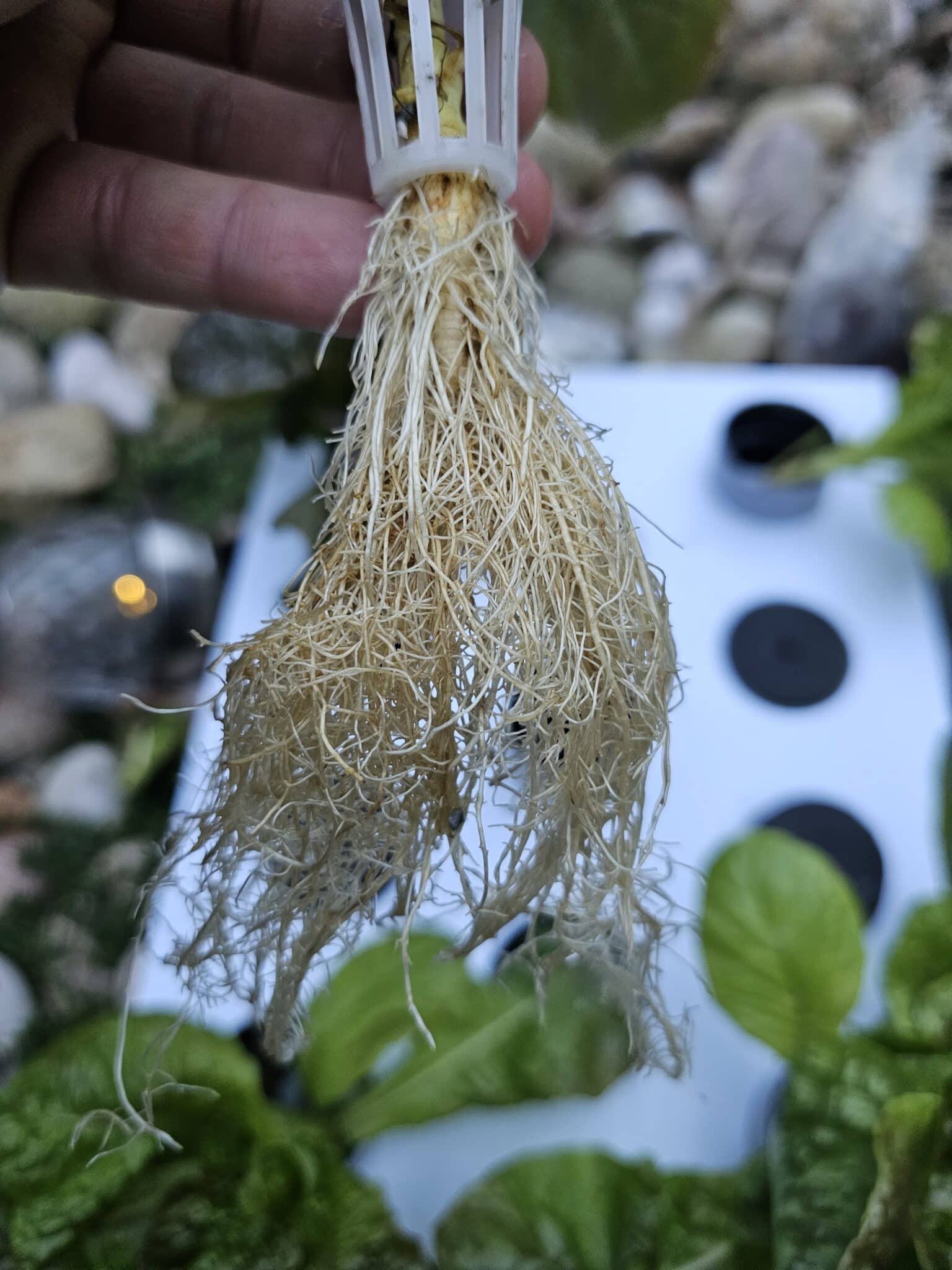
Healthy roots are white or light and strong. If they turn brown, slimy and smell rotten, that’s root rot. Usually warm or stagnant water lacking oxygen is behind it. An air pump in the tank prevents it. I didn’t have algae even at over 30 °C, because algae need light, and my reservoir is closed.
📖Why warm water takes oxygen away from the roots is explained in my book (in German) under “Wassertemperatur” and “Sauerstoff im Wasser”. Just check the table of contents.›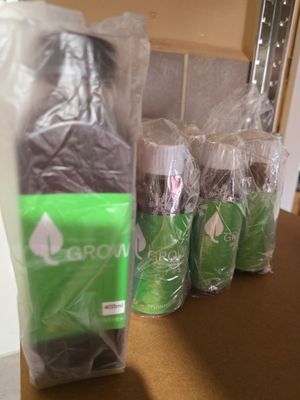
Seedling and leaf nutrient from one bottle, with calcium and magnesium, made for soft water. For all plants from sowing to the growth phase, leafy plants until harvest.
View in the shop ›Tips and tricks for your vertical garden
My tips for your start
- Start your seeds in the seedling box and only put strong young plants into the tower.
- Make sure there’s enough light. Indoors the lamp hangs at the side of the tower and shines for 14 to 16 hours.
- Use a hydroponic nutrient that contains all nutrients and set the EC to match your plant’s stage.
- Without a permanent meter, measure every 2 to 3 days, first EC, then pH.
- Take a quick look at the pump and plants every day.
- Harvest regularly and sow again, then you’ll harvest all year.
A simple combination meter is enough to start with. Calibrate it regularly, how to do that is explained under calibrating a pH meter.
Affordable, easy to use and perfectly adequate for beginners.
View on Amazon* ›* Affiliate link: I earn a commission if you buy. Your price stays the same.

* Affiliate-Link: Bei einem Kauf erhalte ich eine Provision, dein Preis bleibt gleich. Preis inkl. MwSt., zzgl. Versand, Stand 8.11.2026. Bilder: Amazon Creators API

* Affiliate-Link: Bei einem Kauf erhalte ich eine Provision, dein Preis bleibt gleich. Preis inkl. MwSt., zzgl. Versand, Stand 8.11.2026. Bilder: Amazon Creators API

* Affiliate-Link: Bei einem Kauf erhalte ich eine Provision, dein Preis bleibt gleich. Preis inkl. MwSt., zzgl. Versand, Stand 8.11.2026. Bilder: Amazon Creators API
The Amazon products on this page are affiliate links*. I earn a commission if you buy, your price stays the same.
Conclusion
Plant towers, hydro towers and plant columns are a fantastic way to grow lots of plants in a small space. Whether beginner or experienced gardener: these systems are easy to handle and very effective. With the right care and maintenance you’ll have a lot of fun with your vertical garden.
My advice: start with lettuce and herbs, set the EC first and then the pH, let the pump run 5 minutes on and 30 minutes off indoors and top up instead of changing by the calendar.
Basics: everything about hydroponics
On these pages I explain each topic individually and in detail, with values from my book and lots of questions and answers (most in German).


Guides for your own growing
Here it gets practical: from the first seedling and the right germination temperature to harvesting lettuce, tomatoes and peppers.



Learn more about hydroponics
The history of hydroponics
Benefits of hydroponics
Myths about hydroponics
The future of hydroponics
Algae in hydroponics
Questions? Write to me
Calculators and tools
Calculate the right amount of nutrient for your system, simply and precisely. With a comparison table for three-part and powder nutrients.
To the calculator ›Frequently asked questions about hydroponics
Frequently asked questions about hydroponics, answered briefly: tap a question and the answer opens.
What is hydroponics?
Which growing media are used in hydroponics?
Why do plants grow faster in hydroponics?
Does hydroponics replace the garden?
Where is hydroponics possible?
How does the cycle in a hydro tower work?
How long does the pump run indoors?
Which pump timing do I set outdoors in great heat?
Does the air pump go on the timer?
Which timer do I need for the pump?
What is the Kratky method?
What is the difference between Kratky and DWC?
What is NFT in hydroponics?
How much electricity does a hydro tower use?
Which system is good for beginners?
Are plant tower, hydro tower and plant column the same thing?
What is the difference between leafy plants and fruiting plants?
Why do my tomatoes grow in the wide tower?
Do I need special seeds for hydroponics?
Which plants are good for getting started?
Which pH value is right in hydroponics?
How do I divide the EC value into four stages?
What do I measure first, EC or pH?
How often do I need to change the nutrient solution?
How do I know whether my water is soft or hard?
Which water temperature is ideal?
How do I recognise healthy roots?
Why don’t I get algae in the tower?
Are there no pests in hydroponics?
How fast does lettuce grow in the tower?
How long do I leave the grow light on indoors?
Do I need to harden off plants for indoors?
I show new videos and tips on YouTube, Instagram, TikTok and Facebook.
Continue with your own growing
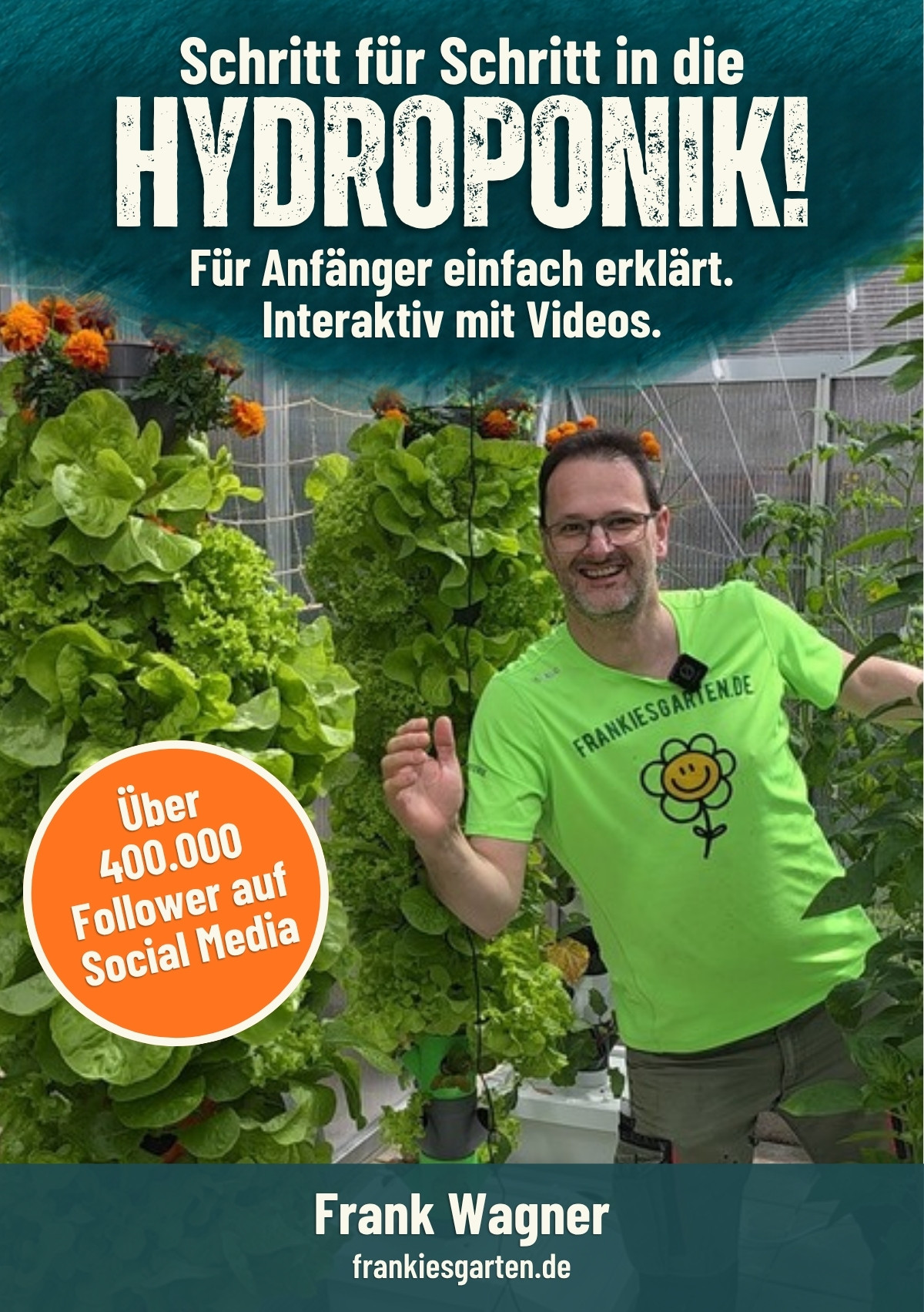
168 pages, simply explained for beginners and with videos on the topics (in German). Exactly how I grow myself: from sowing to harvest.
More about the book ›Seedling and leaf nutrient from one bottle, with calcium and magnesium, made for soft water. For all plants from sowing to the growth phase, leafy plants until harvest.
View in the shop ›Questions about your setup? Message me on WhatsApp.
Tapping opens WhatsApp (provider: WhatsApp Ireland Ltd.). More in the privacy policy.