Which plants are suitable for hydroponics? My overview for the hydro tower
What grows best in the tower, which plants go well together, which tower suits which plant, and all values for pH, EC, germination and light from my book.
My guides for individual plants
I have written detailed guides for these plants, from sowing to harvest, with all values and my experiences. More plants will be added over time.




Two groups: leafy plants and fruiting plants
Almost anything you grow in the garden can grow in hydroponics. What matters is which group your plant belongs to, because fertiliser, space and light depend on it.
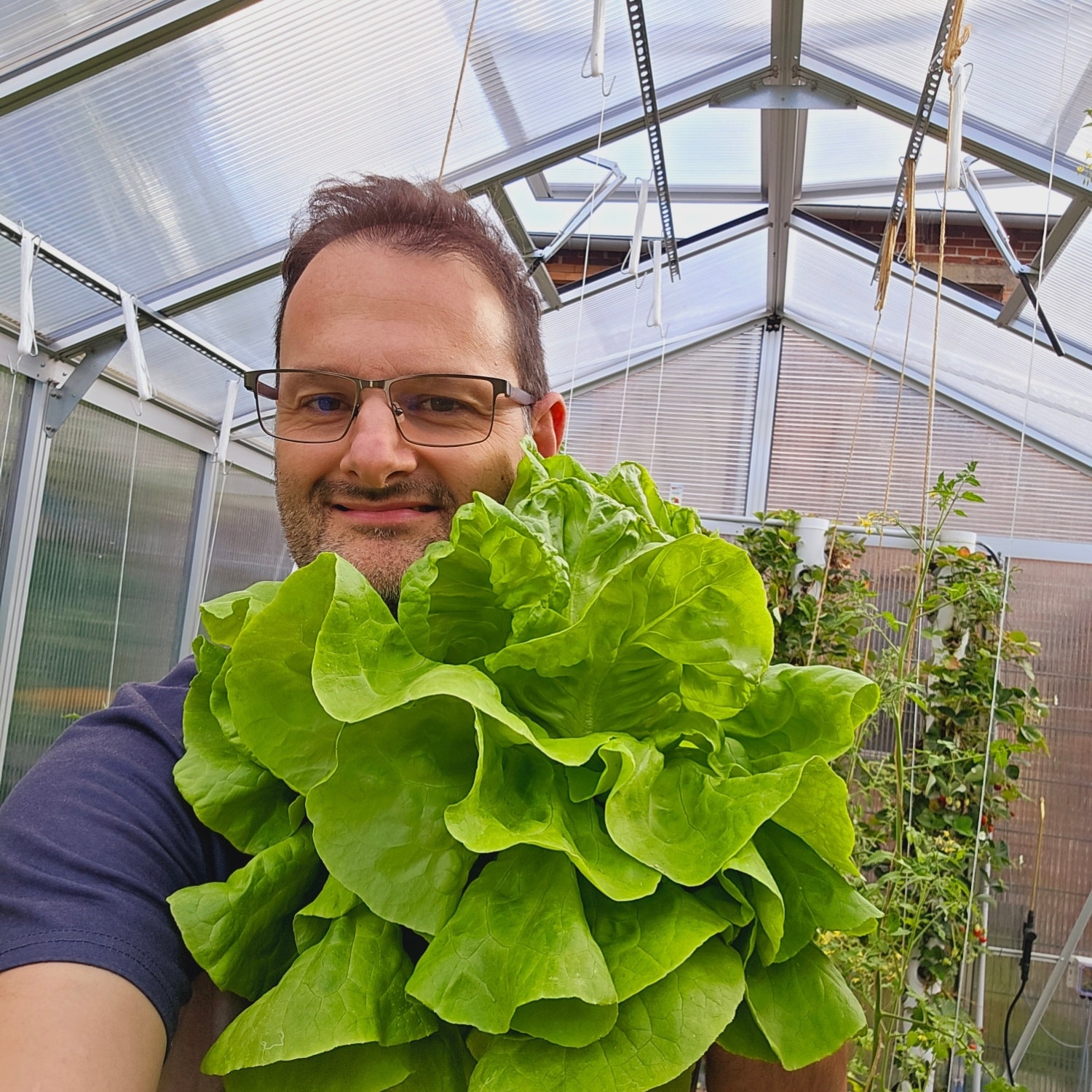
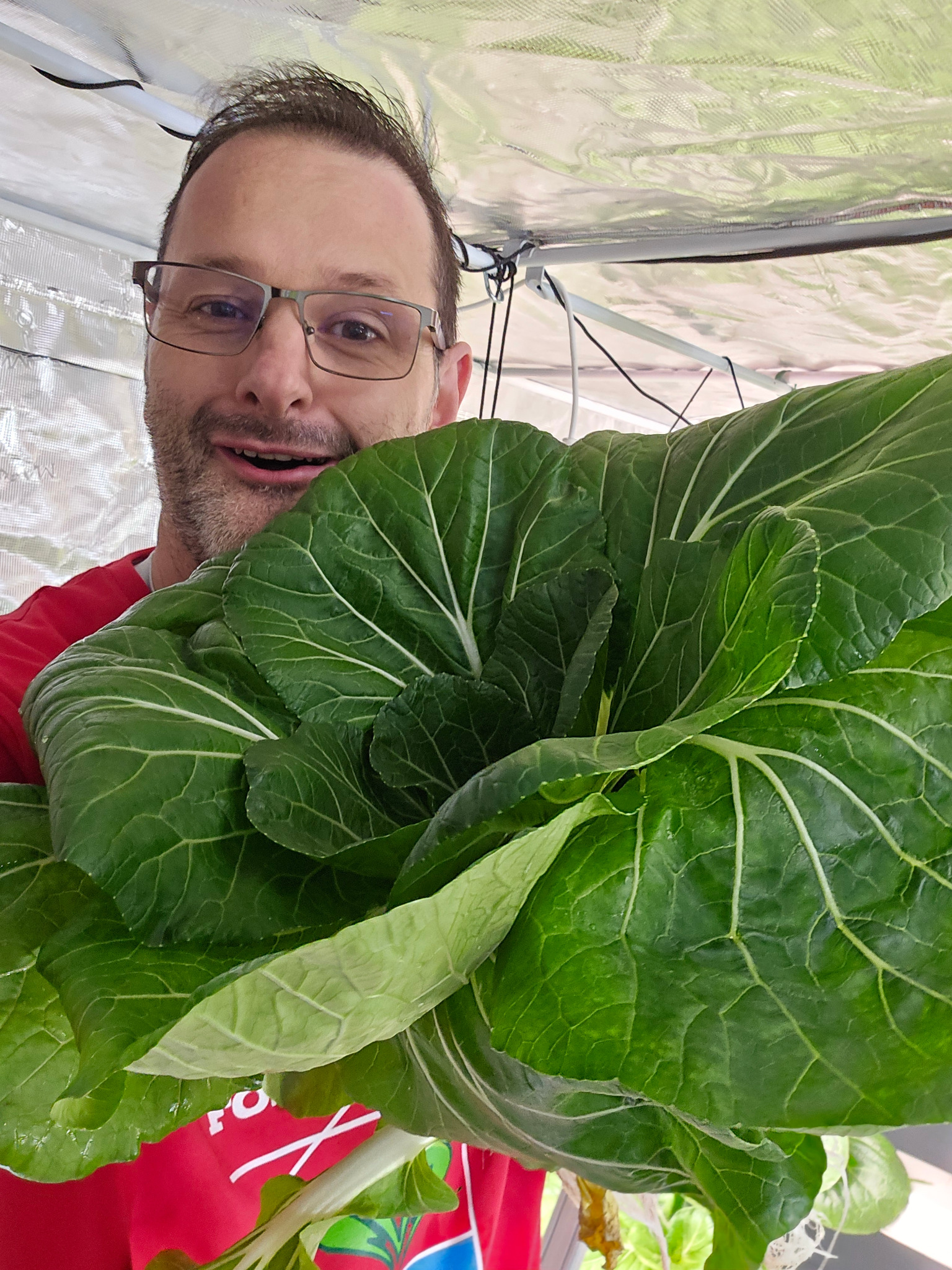
Leafy plants such as lettuce, herbs and pak choi stay in the growth phase all their lives. We harvest the leaves. They get the same fertiliser from sowing to harvest, in my case my liquid fertiliser from one bottle. That makes them the easiest start.
Fruiting plants such as tomato, pepper, cucumber, bean or strawberry form flowers after the growth phase, and the flowers turn into the fruits we harvest. They grow larger and need more root space, more water and more light. From flowering they want considerably more potassium and phosphorus, which is why I change fertiliser then.
Which tower suits which plant?
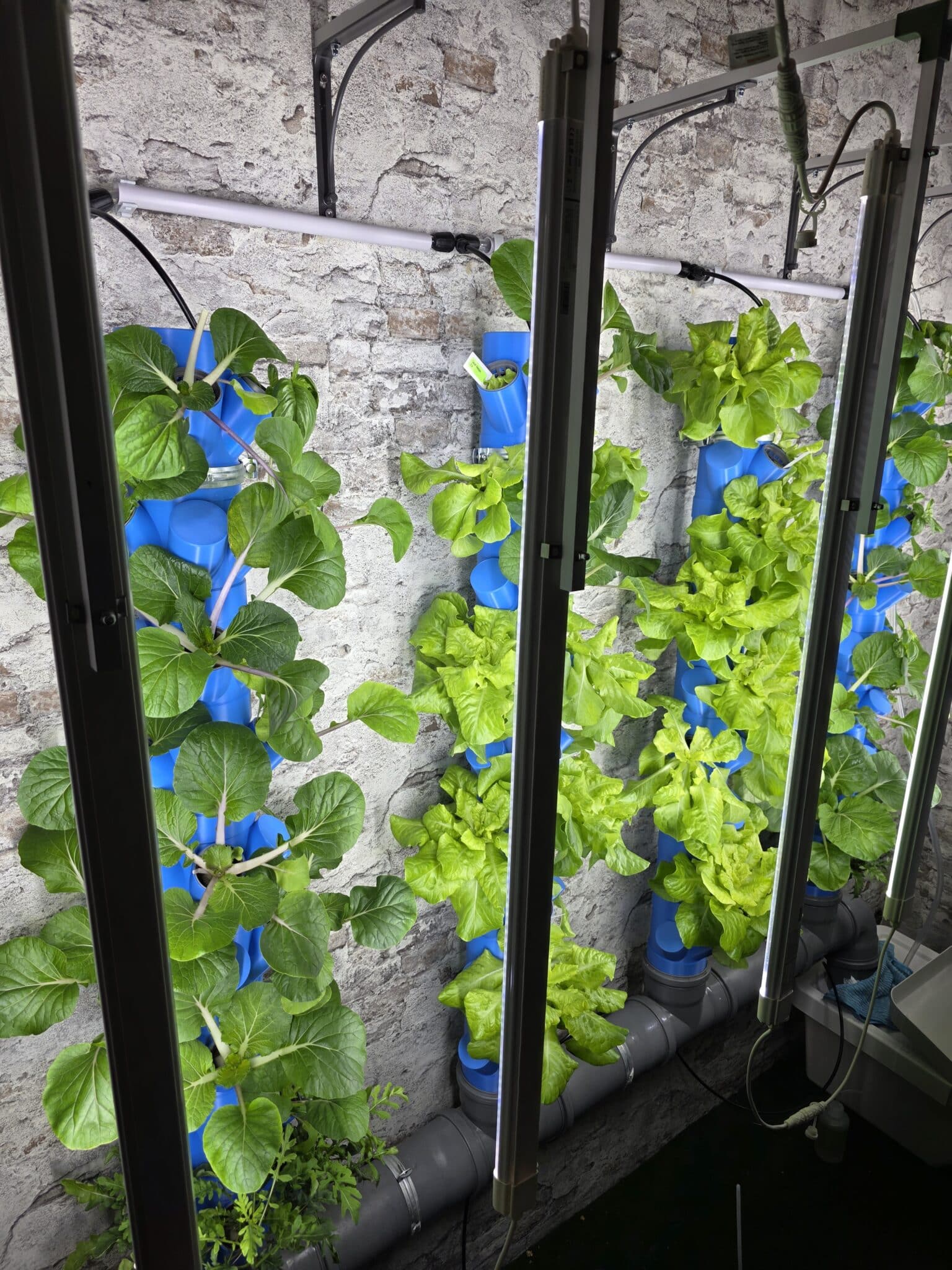
The tower helps decide what grows well. For lettuce and herbs a narrow, vertical tower about 10 cm in diameter is enough. It even fits on a windowsill, and you decide the height yourself. Tomatoes, on the other hand, want width and depth, not height.
| Plants | Which tower | Why |
|---|---|---|
| Lettuce, herbs, pak choi, kohlrabi, strawberries | slim vertical tower, about 10 cm | little root mass, many plants in a small area |
| Peppers and chillies | also in the vertical tower | drinks little, but needs a frame at the top for tying up |
| Tomatoes, cucumbers, peas and everything that climbs | wide tomato tower, mine is 16 cm with one level | a lot of root space, the roots hang in the nutrient solution |
| Potatoes and carrots | not in the tower at all | they stay in the garden, where there is now more space for them |
In the first year I put tomatoes in the vertical tower. Afterwards I threw it away. The roots grew so strongly that the tower no longer worked, and the top plants started at a height of 1.20 metres. Since then my tomatoes grow in the HydroFlex Tower Largo Uno: 16 cm in diameter, 9 plants and a 60 litre container, because tomatoes drink a lot. Indoors, 2 tomatoes are enough in it.
Peppers, on the other hand, do brilliantly in the vertical tower. My pepper tower had 15 segments with 45 plants and was 2.50 metres high. It stood against a 2 metre frame attached to the container. Peppers drink little and never caused me any problems.

This is how much fits in for me
- On just four square metres in the greenhouse I had 36 tomato plants, and the harvest was huge.
- On one square metre I grow 30 to 40 lettuces.
- One pepper tower with 15 segments held 45 plants.
- My towers have also held 100 strawberry plants.
You will find the right system for every size and station in the shop. Which tower suits your space and your harvest goals is shown by my Tower advisor.
Leafy plants: lettuce, herbs and brassicas
Lettuce
For me lettuce is the plant to start with. After about 4 to 6 weeks in the tower it is ready to harvest, much faster than in soil, and there is no slug hunting. Head lettuce, loose-leaf lettuce, oak leaf lettuce, romaine and lollo rosso are all well suited. You harvest loose-leaf lettuce from the outside in; the heart stays and keeps growing. Head lettuce you pull out with the net pot.
Lettuce prefers it cool. In heat, or if it stands too long, it bolts and turns bitter. In the greenhouse it is too warm for it in summer, but outdoors it grows superbly, even in the rain. Rain does dilute the nutrient solution, though, so measure the EC afterwards. Everything else is in my lettuce guide.

Herbs
Herbs such as basil, parsley, chives, dill, coriander and mint grow very well in the tower and need little space. They combine perfectly with lettuce. With many herbs I do not want a single little plant later but a small bunch. That is why 3 to 5 seeds go into one cube for parsley, chives, dill, coriander and rocket.
Basil is a light germinator and loves warmth. Pinch it out above a pair of leaves in good time and it becomes bushy. Parsley needs patience to germinate but then stays in the tower for a long time. You will find details in my guides to Basil and Parsley.
Pak choi, kohlrabi, spinach and Swiss chard
Pak choi grows fast and needs the least light of all the plants in my table. In heat, however, it bolts sooner. I have real success with kohlrabi in the tower. I let it grow nice and big and eat the leaves too. My tip: bake kohlrabi leaves with oil and salt at 160 °C for 15 to 20 minutes for crispy chips. Kohlrabi gets heavy; a support ring holds it securely in the pot. Spinach and Swiss chard grow well too. Spinach likes a slightly higher pH of 6.0 to 6.5.
All values for leafy plants
Here are all the leafy plants from my book. I split the highest EC into four stages: a quarter for starting seedlings, half for young plants, three quarters during growth, and the full value at harvest. All EC values in mS/cm. PPFD is the amount of light that should reach the growing plant indoors under the lamp.
| Plant | Germination type | Germinate at °C | pH | EC seedling · young plant · growth · harvest | PPFD indoors |
|---|---|---|---|---|---|
| Anise | Dark | 18 to 22 | 5.5 to 6.5 | 0.4 · 0.7 · 1.1 · 1.4 | 200 to 300 |
| Basil | Light | 20 to 25 | 5.5 to 6.5 | 0.4 · 0.8 · 1.2 · 1.6 | 200 to 300 |
| Cauliflower | Dark | 18 to 22 | 6.0 to 6.5 | 0.5 · 1.0 · 1.5 · 2.0 | 250 to 400 |
| Broccoli | Dark | 18 to 22 | 6.0 to 6.5 | 0.6 · 1.2 · 1.8 · 2.4 | 250 to 400 |
| Dill | Light | 15 to 20 | 5.5 to 6.5 | 0.4 · 0.7 · 1.1 · 1.4 | 200 to 300 |
| Fennel | Dark | 18 to 22 | 6.0 to 6.5 | 0.4 · 0.7 · 1.1 · 1.4 | 200 to 300 |
| Kohlrabi | Dark | 20 to 25 | 6.0 to 6.5 | 0.6 · 1.1 · 1.7 · 2.2 | 200 to 300 |
| Coriander | Dark | 15 to 20 | 5.5 to 6.5 | 0.5 · 0.9 · 1.4 · 1.8 | 200 to 300 |
| Leek | Dark | 15 to 20 | 6.0 to 6.5 | 0.5 · 0.9 · 1.4 · 1.8 | 250 to 400 |
| Lovage | Light | 15 to 20 | 5.5 to 6.5 | 0.4 · 0.8 · 1.2 · 1.6 | 200 to 300 |
| Chard | Dark | 15 to 20 | 5.5 to 6.5 | 0.6 · 1.2 · 1.7 · 2.3 | 200 to 300 |
| Mint | Light | 18 to 22 | 5.5 to 6.5 | 0.4 · 0.8 · 1.2 · 1.6 | 200 to 300 |
| Pak choi | Dark | 20 to 25 | 5.5 to 6.5 | 0.5 · 0.9 · 1.4 · 1.8 | 175 to 225 |
| Parsley | Dark | 15 to 20 | 5.5 to 6.0 | 0.4 · 0.8 · 1.2 · 1.6 | 200 to 300 |
| Radish | Dark | 15 to 20 | 5.5 to 6.5 | 0.4 · 0.8 · 1.2 · 1.6 | 250 to 350 |
| Rhubarb | Dark | 15 to 20 | 6.0 to 6.5 | 0.6 · 1.1 · 1.7 · 2.2 | 200 to 300 |
| Brussels sprouts | Dark | 18 to 22 | 6.0 to 6.5 | 0.8 · 1.5 · 2.3 · 3.0 | 250 to 400 |
| Beetroot | Dark | 15 to 20 | 6.0 to 6.5 | 0.4 · 0.8 · 1.2 · 1.6 | 250 to 350 |
| Rocket | Light | 15 to 20 | 5.5 to 6.5 | 0.3 · 0.6 · 0.9 · 1.2 | 200 to 300 |
| Lettuce | Light | 15 to 20 | 5.5 to 6.5 | 0.4 · 0.8 · 1.2 · 1.6 | 200 to 300 |
| Sage | Light | 18 to 22 | 6.0 to 6.5 | 0.4 · 0.8 · 1.1 · 1.5 | 250 to 400 |
| Chives | Dark | 15 to 20 | 5.5 to 6.5 | 0.5 · 0.9 · 1.4 · 1.8 | 200 to 300 |
| Celery | Light | 18 to 22 | 6.0 to 6.5 | 0.6 · 1.2 · 1.8 · 2.4 | 200 to 300 |
| Spinach | Dark | 15 to 20 | 6.0 to 6.5 | 0.6 · 1.2 · 1.7 · 2.3 | 200 to 300 |
| Thyme | Light | 18 to 22 | 5.5 to 6.5 | 0.4 · 0.8 · 1.2 · 1.6 | 250 to 400 |
| Onion | Dark | 15 to 20 | 6.0 to 6.5 | 0.5 · 0.9 · 1.4 · 1.8 | 250 to 400 |
HydroFlex Tower for indoors and outdoors, seedling box, seedling station, support rings and my own nutrient. After you buy, I’ll help you on WhatsApp.
To the shop ›Fruiting plants: tomatoes, peppers, cucumbers and more
Fruiting plants need more of everything: more space, more water, more light and a different fertiliser from flowering onwards. Until flowering I give them the same liquid fertiliser as lettuce. Then I switch to a three-part fertiliser of Grow, Bloom and Micro or to powder fertiliser. For fruiting plants the highest EC applies to the period when they bear fruit. So increase the EC step by step as soon as the first flowers appear.
Tomatoes
Tomatoes are dark germinators: keep them dark and warm, on the radiator or a heat mat. For me they grow in the tomato tower and only move into the greenhouse after the last frosts in mid-May. They grow up to 2 metres tall. So place them where they do not take the sun from anything else. Everything step by step is in my tomato guide.
Peppers and chillies
Peppers and chillies prefer to germinate warm at 24 to 30 °C and need a lot of light. Peppers pollinate themselves; indoors a gentle shake helps. What I have learned in my pepper years you can read in the pepper guide.
Cucumbers and peas
To be honest: cucumbers are demanding. It is not the hydroponics; fertiliser and values are right. The problems are spider mites and powdery mildew, and everyone has those, in soil too. On top of that cucumbers like it more humid than tomatoes. I start them directly in the seed-starting cube, because their sensitive roots do not like having soil rinsed off. Cucumbers and peas climb and belong in the wide tomato tower. With my peas the powdery mildew was once faster than me. So provide plenty of air movement.
Strawberries
Strawberries are light germinators and manage with an EC of up to 1.4, as little as hardly any other fruiting plant. It is important that the crown of the plant stays dry. For me it sits above the support ring. Indoors I therefore let the pump run for only 5 minutes and pause for 30 minutes. At 15 on and 15 off, strawberries stay wet too long.
All values for fruiting plants
| Plant | Germination type | Germinate at °C | pH | EC seedling · young plant · growth · fruit | PPFD indoors |
|---|---|---|---|---|---|
| Aubergine | Dark | 24 to 30 | 5.5 to 6.5 | 0.6 · 1.3 · 1.9 · 2.5 | 350 to 500 |
| Beans | Dark | 20 to 25 | 6.0 to 6.5 | 0.6 · 1.3 · 1.9 · 2.5 | 300 to 450 |
| Chilli | Dark | 24 to 30 | 5.5 to 6.5 | 0.8 · 1.5 · 2.3 · 3.0 | 350 to 500 |
| Peas | Dark | 10 to 20 | 6.0 to 6.5 | 0.5 · 0.9 · 1.4 · 1.8 | 250 to 400 |
| Strawberry | Light | 18 to 22 | 5.5 to 6.5 | 0.4 · 0.7 · 1.1 · 1.4 | 300 to 350 |
| Cucumber | Dark | 20 to 25 | 5.5 to 6.0 | 0.6 · 1.3 · 1.9 · 2.5 | 300 to 500 |
| Pumpkin | Dark | 20 to 25 | 5.5 to 6.5 | 0.6 · 1.2 · 1.8 · 2.4 | 350 to 500 |
| Sweetcorn | Dark | 20 to 25 | 5.5 to 6.5 | 0.6 · 1.2 · 1.8 · 2.4 | 400 to 600 |
| Melon | Dark | 24 to 30 | 5.5 to 6.0 | 0.5 · 1.0 · 1.5 · 2.0 | 350 to 500 |
| Peppers | Dark | 24 to 30 | 5.5 to 6.0 | 0.5 · 1.0 · 1.5 · 2.0 | 350 to 500 |
| Tomato | Dark | 22 to 28 | 5.5 to 6.5 | 0.6 · 1.3 · 1.9 · 2.5 | 350 to 500 |
| Watermelon | Dark | 24 to 30 | 5.5 to 6.5 | 0.5 · 1.0 · 1.5 · 2.0 | 350 to 500 |
| Zucchini | Dark | 20 to 25 | 5.5 to 6.5 | 0.6 · 1.2 · 1.8 · 2.4 | 350 to 500 |
The grams for powder fertiliser and the millilitres for the three-part fertiliser are calculated for you by my Nutrient calculator . There you will also find a comparison table.

* Affiliate-Link: Bei einem Kauf erhalte ich eine Provision, dein Preis bleibt gleich. Preis inkl. MwSt., zzgl. Versand, Stand 7.11.2026. Bilder: Amazon Creators API
Combining plants: what goes together?
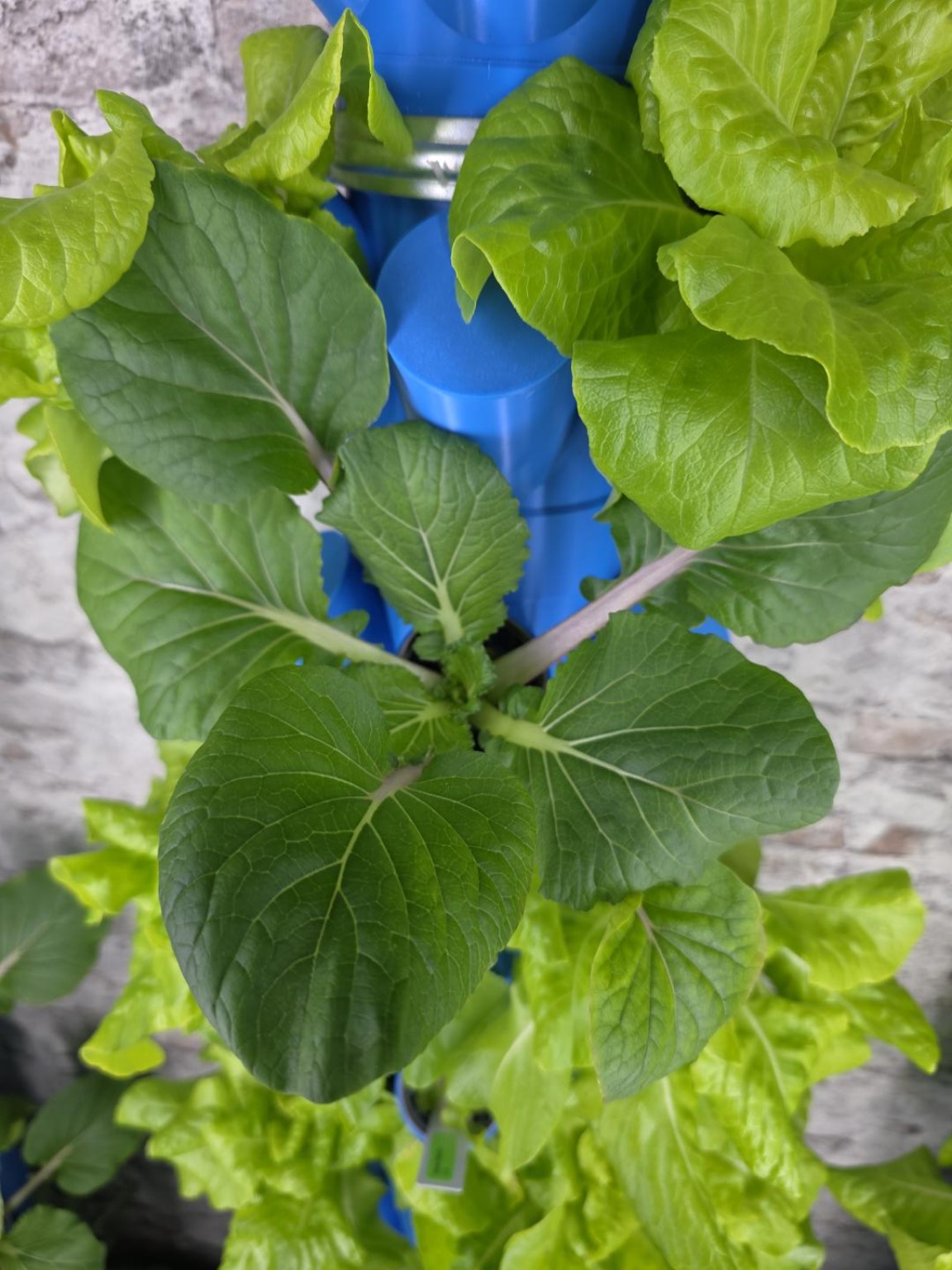
In the HydroFlex Tower you can grow one variety or combine different plants. Lettuces such as head lettuce, loose-leaf lettuce or oak leaf lettuce go well with herbs such as basil, parsley or chives. They have similar needs and get the same fertiliser until harvest.
Tomatoes, cucumbers and peppers grow much larger and need a different fertiliser from flowering onwards. That is why I grow them in separate systems. If young and large leafy plants are in the same tower, I set all of them to an EC of about 1.1 to 1.2. The young ones tolerate that well. Only the reverse is bad: if large plants get a solution for young plants, they lack nutrients.
Location and light: what does each plant need?
Outdoors
Outdoors the sun provides the light, and from mid-May it is entirely enough. Before that, harden the plants off, otherwise the leaves burn. Fruiting plants such as tomatoes and peppers need full sun. I have seen for myself how much difference that makes: one year my pepper stood in full sun and grew 2.50 metres tall. The year after, the tomatoes stood in front of it, the pepper was in the shade until 1 pm and stayed much smaller. So put the tallest plants at the back on the north side.
Leafy plants manage with less light than fruiting plants. Parsley and mint are among the herbs with medium light requirements; basil, coriander and dill want more. Outdoors the water warms up faster: from 25 °C an air stone is a must, and in great heat the pump runs 15 minutes on and 15 minutes off.
Indoors
At the window the glass swallows light, and it only comes from one side. In autumn and winter the days are also short. If you want to harvest all year round, you need a grow light indoors. Because a tower grows upwards, my lamps hang at the side of the tower, 20 to 30 cm from the plants. From above, the light hardly reaches the lower levels.
| Plants | Light under the lamp (PPFD) |
|---|---|
| Seedlings, all plants | 100 to 150 |
| Pak choi | 175 to 225 |
| Lettuce and most herbs | 200 to 300 |
| Brassicas, sage, thyme, leek | 250 to 400 |
| Tomato, pepper, cucumber, chilli | 300 to 500 |
You measure PPFD at leaf height with a light meter; phone apps only show approximate values. The amount of light per day is called DLI: PPFD times hours times 0.0036. Lettuce needs about 12 to 17, tomato, cucumber and pepper 20 to 30. With a strong lamp 14 hours are enough; with a weaker one let it shine for 16 hours, but never longer. After that the plant needs its night.
My lamp recommendations
For lettuce and herbs on the tower, long light bars hung at the side work well. For fruiting plants and starting seedlings on a shelf, use a strong panel. More on this on my page about lighting.

* Affiliate-Link: Bei einem Kauf erhalte ich eine Provision, dein Preis bleibt gleich. Preis inkl. MwSt., zzgl. Versand, Stand 8.11.2026. Bilder: Amazon Creators API

* Affiliate-Link: Bei einem Kauf erhalte ich eine Provision, dein Preis bleibt gleich. Preis inkl. MwSt., zzgl. Versand, Stand 8.11.2026. Bilder: Amazon Creators API
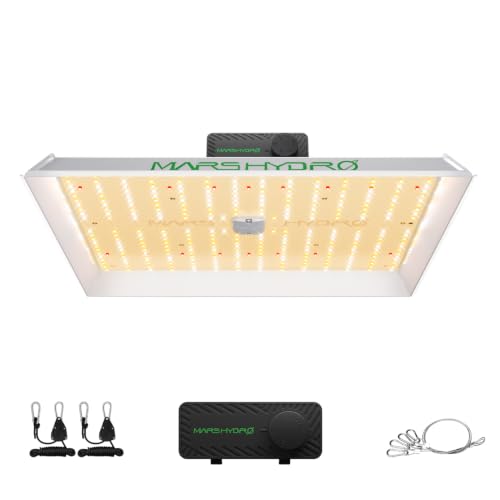
* Affiliate-Link: Bei einem Kauf erhalte ich eine Provision, dein Preis bleibt gleich. Preis inkl. MwSt., zzgl. Versand, Stand 8.11.2026. Bilder: Amazon Creators API

* Affiliate-Link: Bei einem Kauf erhalte ich eine Provision, dein Preis bleibt gleich. Preis inkl. MwSt., zzgl. Versand, Stand 8.11.2026. Bilder: Amazon Creators API

* Affiliate-Link: Bei einem Kauf erhalte ich eine Provision, dein Preis bleibt gleich. Preis inkl. MwSt., zzgl. Versand, Stand 8.11.2026. Bilder: Amazon Creators API
The Amazon products on this page are affiliate links*. I earn a commission if you buy, your price stays the same.
Seed starting: how to start each plant
You do not need special seeds for hydroponics. Perfectly normal vegetable and herb seeds work. The seed packet tells you whether your plant is a light or dark germinator, which germination temperature it likes and how long it takes.
- Light germinator such as lettuce, basil or strawberry stay on top of the cube and are not covered.
- Dark germinator such as tomato, pepper, parsley or pak choi you cover, for example with the lid of the propagation box.
- 1 seed per cube for plants that grow individually: lettuce, pak choi, kohlrabi, tomato, pepper, chilli, cucumber and basil.
- 3 to 5 seeds per cube for herbs that should form a bunch: parsley, chives, dill, coriander and rocket.
| Plant | How long it takes for me (21 to 23 °C) |
|---|---|
| Lettuce, basil | about 3 days |
| Kohlrabi, borage | about 5 days |
| Lemon balm, dill, summer savory | about 6 days |
| Parsley, rosemary, peppermint | about 7 days |
If it is cooler, it takes longer. Some herbs need two to three weeks. If your seed germinates poorly, do a germination test: 10 seeds on damp kitchen paper, cover, keep warm and count after a few days. If 8 out of 10 germinate, your seed has an 80 percent germination rate. If fewer than half germinate, better put 2 seeds per cube or buy new seed. You will find all germination temperatures on my page Germination temperatures and times.
What I use for this: my seedling box with lid and 25 cubes and for many plants the Foam mat for 100 seeds. Bought young plants from soil work too: carefully rinse off the soil, put them into the net pot and secure them with a Support ring .

* Affiliate-Link: Bei einem Kauf erhalte ich eine Provision, dein Preis bleibt gleich. Preis inkl. MwSt., zzgl. Versand, Stand 8.11.2026. Bilder: Amazon Creators API
Recommended LED grow lights
Indoors your plants need enough artificial light. LED grow lights are ideal for this: a broad light spectrum and low power consumption. I can recommend these lamps:
- Hoch-effiziente, energiesparende LED-Leuchte: Die Mars Hydro VG40 Grow Light bringt 292 LEDs mit nur 40W Verbrauch, was eine optimale Alternative zu herkömmlichen Pflanzenwachstumsleuchten darstellt...
* Affiliate-Link: Bei einem Kauf erhalte ich eine Provision, dein Preis bleibt gleich. Preis inkl. MwSt., zzgl. Versand, Stand 8.11.2026. Bilder: Amazon Creators API
* Advertising links: I earn a commission if you buy, your price stays the same.
Frequently asked questions about plants for hydroponics
Which plants are best for getting started in hydroponics?
What is the difference between leafy plants and fruiting plants?
Do I need special seeds for hydroponics?
Can tomatoes grow in the vertical hydro tower?
Do peppers grow in the vertical tower?
Where do cucumbers and peas grow best?
Which plants can I grow together in one tower?
What EC do I set if young and large plants are in the same tower?
Which pH value suits most plants?
How do I divide the EC value into four stages?
Which plant needs the least light indoors?
How much light do seedlings need?
How long can the grow light stay on?
How do I hang the lamp on the tower?
What is DLI and how do I calculate it?
Does lettuce need light or darkness to germinate?
How many seeds go into a seed-starting cube?
Why is my lettuce bolting?
How do I care for strawberries in the tower?
Why are cucumbers demanding in hydroponics?
Which fertiliser do fruiting plants need from flowering?
Which plants do I not grow in the tower?
Can I use bought young plants from soil in the tower?
What do I do with kohlrabi and its leaves?
You’ll find more vegetables without soil under vegetable growing in the hydro tower.
Continue with your own growing
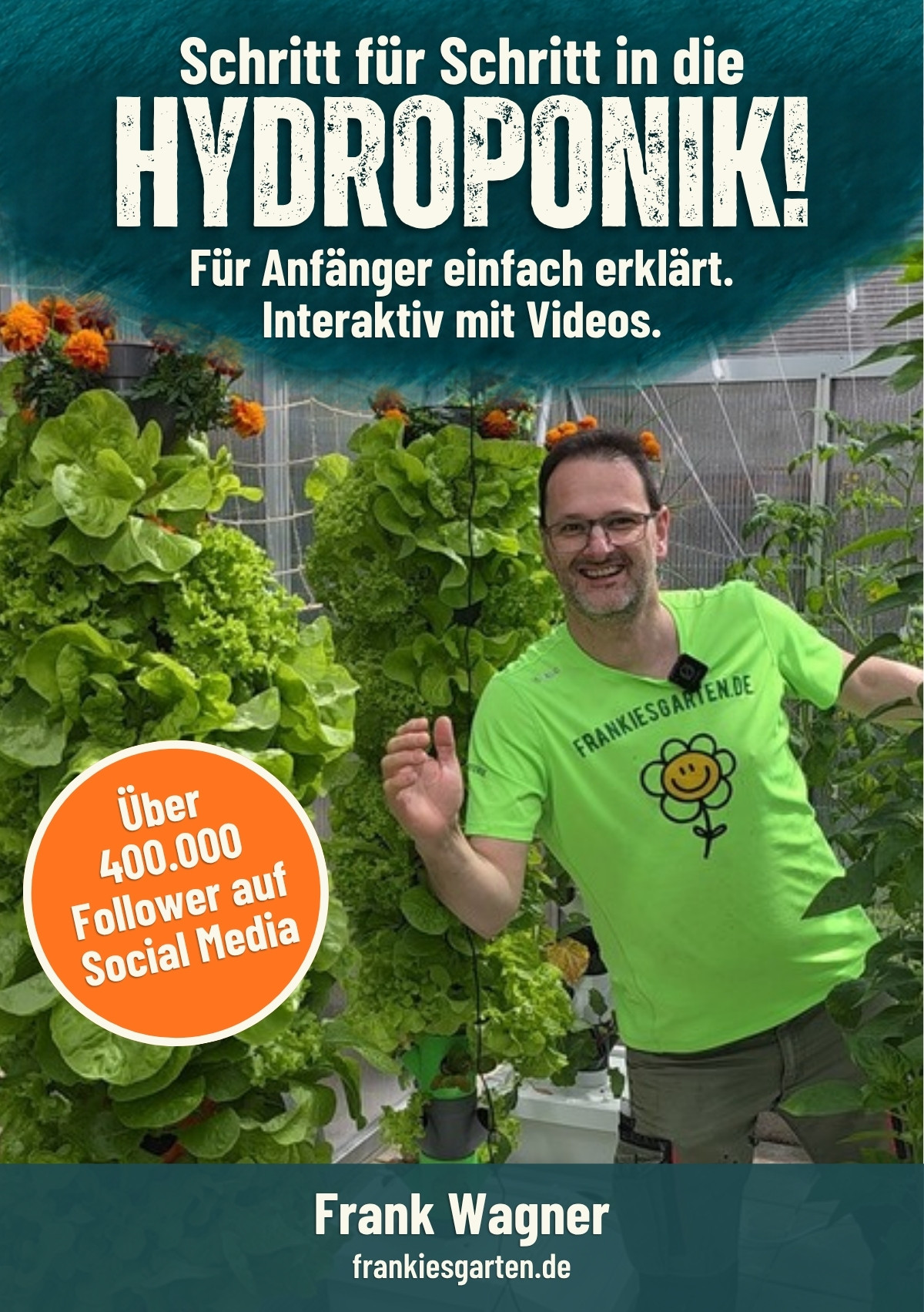
168 pages, simply explained for beginners and with videos on the topics (in German). Exactly how I grow myself: from sowing to harvest.
More about the book ›A few questions about space, location and what you want to harvest, and you get a recommendation.
To the tower advisor ›Questions about your setup? Message me on WhatsApp.
Tapping opens WhatsApp (provider: WhatsApp Ireland Ltd.). More in the privacy policy.