Growing bush beans in a hydro tower: beans without soil
Tender beans from your own tower: how I grow bush beans without soil, support them with a trellis and harvest fresh again and again.
Bush beans at a glance: my values
Why bush beans in a hydro tower?
Bush beans stay compact, produce lots of beans and grow quickly. In the tower they get water and nutrients evenly, without soil or weeds.
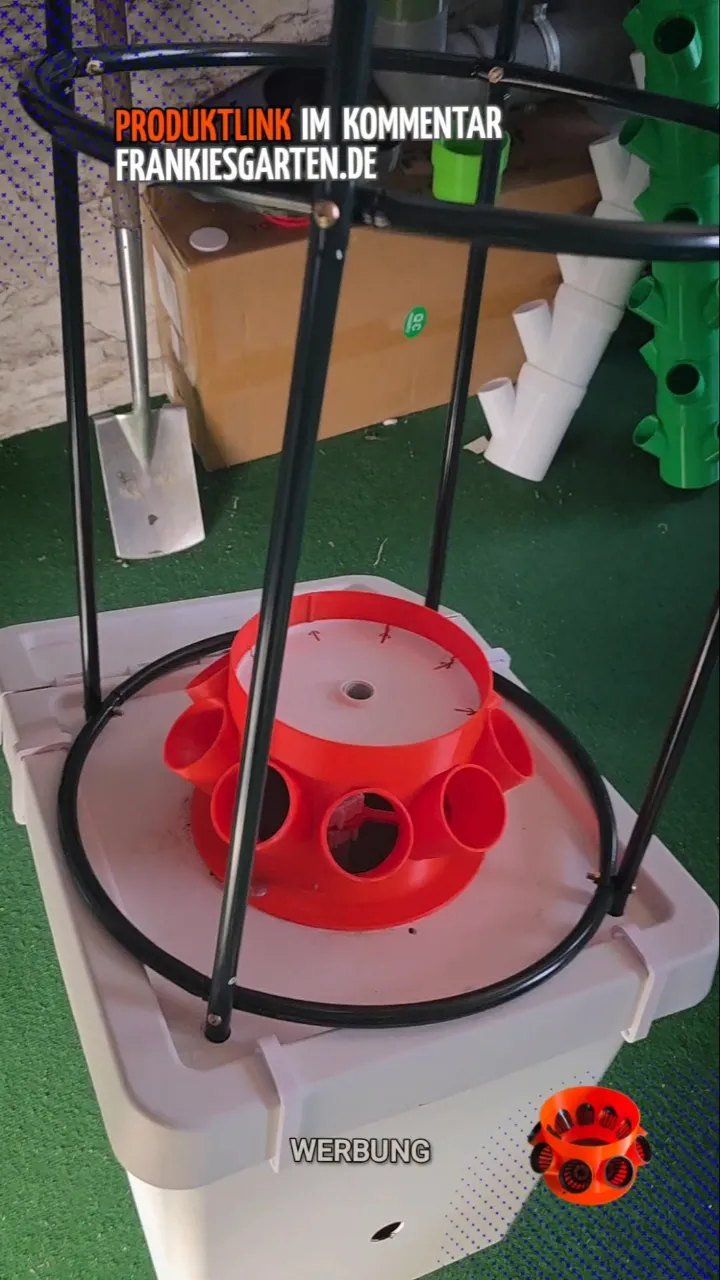
I put them into the wide Largo. With lots of beans the plants get heavy, so they get a trellis. That way they stand upright, get more light, and harvesting is easy.
Your printable growing card
The card fills an A4 sheet. Print it, hang it next to your tower and note down what you observe.
| Sorte: | Hersteller: |
Fertiliser, EC and pH
| Phase | EC (mS/cm) | Frankie’s fertiliser | pH |
|---|---|---|---|
| Seedling (first leaves) | 0.6 | 1 ml per litre | 6.0 to 6.5 |
| Young plant | 1.3 | 2.5 ml per litre | 6.0 to 6.5 |
| Growth in the tower | 1.9 | about 4 ml per litre | 6.0 to 6.5 |
| Flowering to harvest | 2.5 | Bloom fertiliser by EC | 6.0 to 6.5 |
Schedule and observations
Pflege
- Samen in den Würfel, Deckel drauf: Bohnen keimen im Dunkeln.
- Beans love warmth: do not keep them below 15 °C.
- Put up a trellis before the plants topple.
- Erst EC messen, dann pH.
- Harvest young, then they stay tender and new ones grow.
- Outdoors in heat: pump 15 on / 15 off.
Schwarze Bohnenlaus:dense colonies on the shoot tips. Rinse off with water.
Spinnmilben:fine webbing and pale dots, often indoors in heat. Raise the humidity.
Whitefly:small white flies under the leaves. Hang up yellow sticky traps.
Bohnenfliege:Maden fressen an den Keimlingen. Drinnen vorziehen hilft.
My tip for outdoors:I start beans indoors, then pests hardly stand a chance.
Water changes and readings
| Date | Fresh water | EC | pH |
|---|---|---|---|
| ☐ | |||
| ☐ | |||
| ☐ | |||
| ☐ | |||
| ☐ | |||
| ☐ |
| Date | Fresh water | EC | pH |
|---|---|---|---|
| ☐ | |||
| ☐ | |||
| ☐ | |||
| ☐ | |||
| ☐ | |||
| ☐ |
Bush beans profile
| What | Value |
|---|---|
| Plant group | Legumes, flowering |
| pH | 6.0 to 6.5 |
| EC | 0.6 to 2.5 |
| Germination temperature | 20 to 25 °C |
| Germination | Needs darkness |
| Best tower | Largo (16 cm) with trellis |
| Difficulty | medium |
1 Sowing
Beans have large seeds. I place one seed in each foam cube or in vermiculite in my seedling box. Lid on, because beans germinate in the dark, and keep them warm: between 20 and 25 °C is fastest.
Once the first leaves open, the young plants go into net pots and then into the tower.
2 Into the tower and add support
My bush beans go into the wide Largo. As soon as the plants get bigger, I fix a trellis. With all the beans they would otherwise tip over.
Pole beans grow much taller. For them I use a frame with a net, about 2 metres high.
▶ In the video:
Trellis on the Largo for bush beans
Trellis on the pepper tower
Matching my videos
 Tomato hooks with stringHang them at the top and unroll the string as needed. Ideal for tomatoes and cucumbers.Preis nicht verfügbarView on Amazon*To Amazon*
 Plant clips, 200 piecesHold the stem to a string, net or stake. Quickly moved as the plant grows.Preis nicht verfügbarView on Amazon*To Amazon*
* Affiliate link: if you buy, I earn a commission, your price stays the same.
3 Feeding
Beans are hungrier than peas. I start with 1 ml of Frankie’s liquid nutrient per litre and increase to an EC of about 2.0 during growth.
At flowering I switch to a bloom nutrient. Measure EC first, then pH. The pH should be between 6.0 and 6.5.
Related:Working with liquid nutrient›4 Harvest
Harvest the beans young, before the seeds show through the pod. Then they are tender and stringless. Pick regularly and new beans keep coming.
5 Pests: what I watch for
The black bean aphid likes the shoot tips, and indoors in heat spider mites can appear. I check under the leaves regularly and simply rinse aphids off with water.
Related:Recognising pests and diseases›My bean videos
You can find more videos on my YouTube channel @frankiesgarten.
The wide tower with a 16 cm diameter is ideal for bush beans, tomatoes and cucumbers. Holes for the climbing frame are pre-drilled.
To the shop ›You can find more about flowering plants in my book* „Schritt für Schritt in die Hydroponik“. Questions? Just message me on WhatsApp.


Did you enjoy this topic? Is anything missing, or do you see something differently? I keep learning all the time and I would love to hear your question and your experience. Just write it in the comments below, no sign-up needed.
Write your question or experience