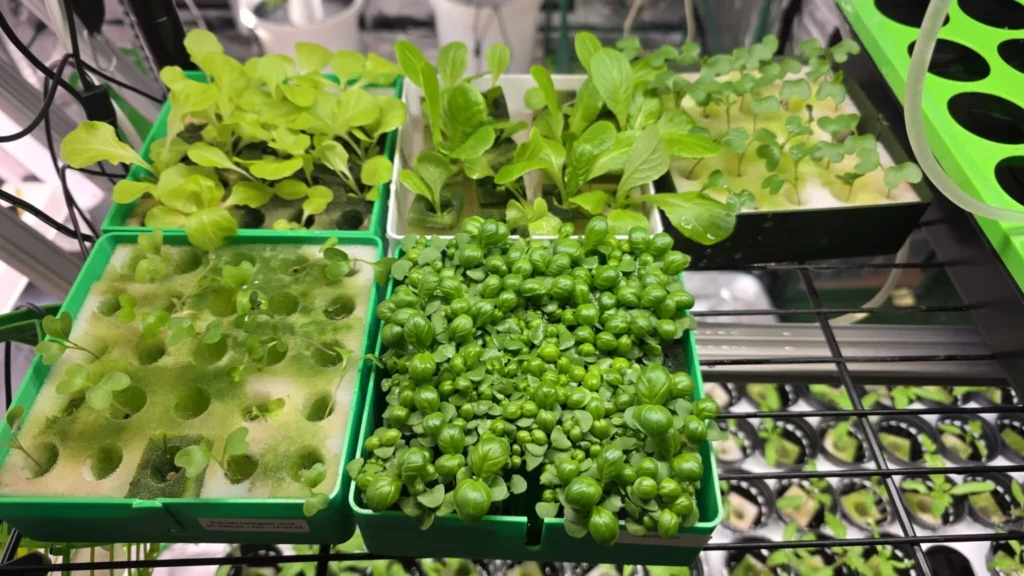
Growing media for the plant tower: cubes, coco and net pots
What I start my seedlings in before they go into the tower, and why I use support rings instead of clay pebbles for heavy plants.
Growing media in the plant tower
The perfect foundation for your plants
The key to successful hydroponic growing lies in choosing the right growing medium. Especially in a plant tower, where the roots need a lot of oxygen and nutrients, growing media play a decisive role.
pH neutral
Easy care
Optimal aeration
📘Introduction to growing media
Choosing the right growing medium is an important factor for success in hydroponics. A good growing medium must stabilise the roots, ensure good aeration and provide efficient drainage. It should also be able to store water and nutrients and release them to the plants when needed.
Why the growing medium matters in hydroponics
In hydroponics the growing medium plays a central role, because it replaces soil and makes sure the plants get the best supply of water, nutrients and oxygen. A suitable medium encourages healthy root growth and prevents problems such as root rot or nutrient deficiency.
Key properties of a good growing medium
- ✓Good drainage: Excess water must be able to drain quickly to avoid root rot.
- ✓Air circulation: The roots must be well aerated to get enough oxygen.
- ✓Stability: The medium should give the plants a stable hold.
- ✓Nutrient storage: It should be able to store nutrients and release them to the roots as needed.
- ✓Reusability: Ideally the medium can be used several times without losing its properties.
In a plant tower there is one more point: the material must not change the pH value or release anything into the water, because the nutrient solution circulates past all the plants.
Why soil does not belong in the tower
In the tower, water and nutrients circulate. Soil would clog the pump and the lines, compacts, lets hardly any air reach the roots and can bring in pests. The growing medium therefore has only one job: to hold the plant at the start until the roots grow into the water themselves.
📖All seed-starting media are compared in my book in the section “Worin ziehe ich meine Samen an?” (What do I start my seeds in?). Just check the table of contents.›⭐Foam mats: my favourite for the plant tower
Foam is the ideal growing medium for hydroponic systems, especially in plant towers. I have had the best experience with it, and for good reason:
pH neutral
Space-saving
Easy care
Foam mats give the plant roots a safe and stable base without restricting them. A big advantage is that foam stores only a little moisture and does not cause waterlogging; it guides the water straight to the roots.
Foam cubes: my first choice
For most plants I use foam cubes. They are cheap, clean and pH neutral, nothing dissolves out of them and they do not crumble into the system.
- Rinse the mat in hot water first, then rinse it cold.
- Only stand the cubes about one third deep in water.
- In the propagation box, the cubes of a 25-cube mat keep each other moist.
I show how I start seedlings step by step in the post Seedlings in foam cubes.
Related:Starting seeds in foam cubes: step by step to a young plant›My seed-starting mat with pre-cut cubes that fit the net pots.
View in the shop ›With 25 foam cubes. Under the lid the cubes stay moist and the seeds germinate evenly.
View in the shop ›🧺Net pots: the perfect match for foam
Net pots, also called net baskets, are designed specifically for hydroponic growing and fit perfectly into the openings of my plant tower. They are permeable and give the roots the aeration they need for the plants to develop healthily.
Root aeration
Stability and hold
Reusable
Net pots and propagation station
In the propagation station, each cube sits in its own net pot. A plate with openings stops the pots from floating. I only lower the water once 2 to 3 centimetres of roots stick out at the bottom. After that about 1 centimetre of air remains, and after transplanting the pot dips in by half a centimetre at most. The air stone runs day and night in the station.
The advantage of the station: you do not have to prick out. In return it needs about three times as much space as the propagation box.
Fits my plant towers and the propagation station, with optional support rings.
View in the shop ›A few questions about space, location and what you want to harvest, and you get a recommendation.
To the tower advisor ›🥥Coco fibre: natural water storage for leafy greens
Coco fibre is a natural choice made from coconut husks. It works for leafy greens such as lettuce and spinach, but I mainly use it to start tomatoes, peppers and cucumbers. The fibres hold water well. They bring hardly any nutrients; in hydroponics those come from the nutrient solution.
Water storage
Micronutrients
Natural raw material
Coco fibre works well in net pots. It only goes into the plant tower when well rinsed, because leftovers clog the pump. For beginners, foam cubes are the easier choice.
Coco: ideal for tomatoes and peppers
To start tomatoes, peppers and cucumbers I like to use coco, because it rinses off easily. I sow tomatoes directly into a 5 centimetre net pot with coco. At 6 to 7 centimetres I rinse the roots with water at about 20 degrees and put them into the propagation station with a support ring.
The downsides: coco needs more space, crumbles, can attract fungus gnats and leftovers can clog the pump. So rinse it well before it goes into the tower.
📖Cubes or coco for tomatoes? I explain that in my book in the chapter “Aussaat und Umzug” (Sowing and moving). Just check the table of contents.›🌱EasyPlugs: ideal for starting seedlings for the plant tower
EasyPlugs are small seed-starting plugs that are perfect for germinating and raising young plants for the plant tower. They store water especially well, which makes care easier in the first growth phase, and give the young plants a stable structure.
Simple to handle
Good water storage
Perfect fit
EasyPlugs are seed plugs made from pressed, bound material. They are a good choice if you do not want to use foam. Keep them moist but not wet, and like the cubes, only stand them about one third deep in water.
⚪Perlite: for excellent drainage
Perlite is a light, porous material that supports drainage and aeration in your plant tower. Perlite is a good choice especially for plants with demanding root systems.
Airy structure
Excellent drainage
Combinable
Perlite is expanded volcanic rock, pH neutral and releases nothing into the water. But it is so light that it floats. So it does not belong loose in the tower, where it would be washed out and end up in the pump. It works best mixed into coco in the net pot, about one part perlite to three parts coco. It gets dusty when you transfer it, so moisten it first.
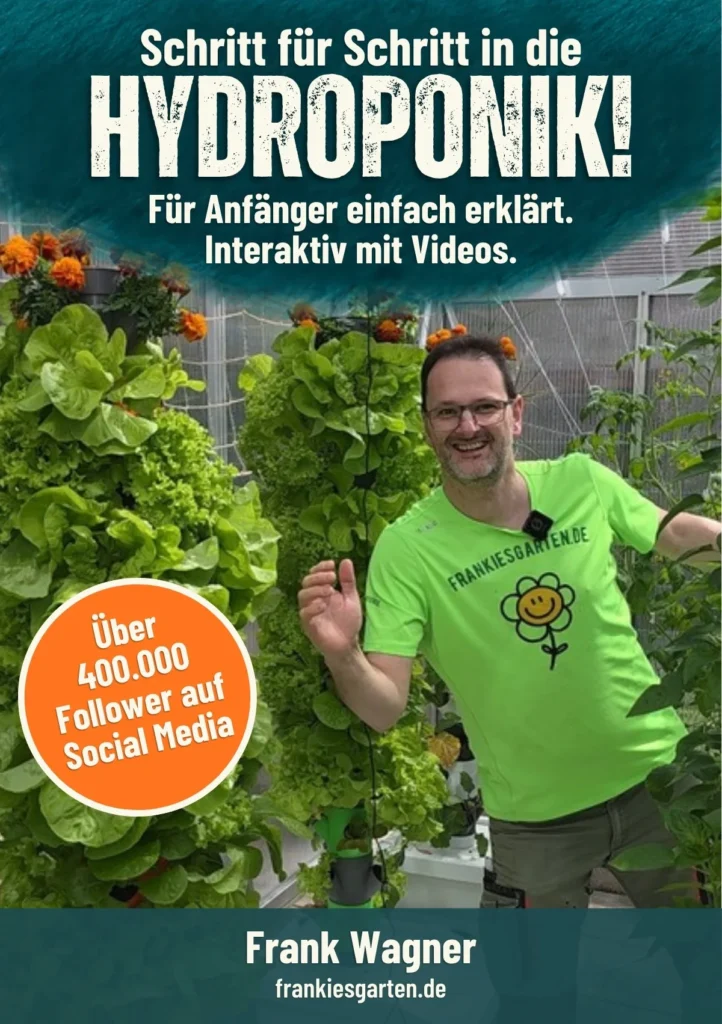
168 pages, simply explained for beginners and with videos on the topics (in German). Exactly how I grow myself: from sowing to harvest.
More about the book ›🪨Rockwool: a professional medium
Rockwool is made from molten basalt rock that is spun into fine fibres and formed into blocks or cubes. It is known for its excellent air and water handling.
Excellent drainage
Stable structure
Reusable
Rockwool, seed plugs and clay pebbles
| Material | What you should know |
|---|---|
| Rockwool | Used in professional growing. I do not use it. Untreated it can raise the pH value, so rinse it thoroughly first. |
| Seed plugs | Also work, but can crumble in the system. |
| Clay pebbles | Wash well first, otherwise they change the water values. They tend to roll out when you move plants. |
⭕Support rings instead of neoprene collars: 3D-printed holders without substrate
Neoprene collars are a popular and efficient aid in hydroponics, especially in systems that work without substrate. They offer many advantages, mainly because they are easy to handle and hold plants stable and secure.
Simple to handle
Stability
Reusable
Instead of foam neoprene collars, I use my own support rings from the 3D printer. They do the same job and fit my net pots exactly.
Support rings for heavy plants
For heavy plants such as kohlrabi, strawberries, tomatoes and cucumbers I use my support rings. They cover the pot against light, so fewer algae form. They are thin, adapt to the stem and can be opened at the predetermined breaking point to insert the stem from the side. They also hold plants you have freed from soil. With strawberries, the crown stays above the ring.
For heavy vegetable plants, a precise fit for the 5 cm net pot from my shop.
View in the shop ›I use these to start everything myself. I print the box and the station myself, and the support rings are only available from me.
View in the shop ›Moving plants from soil
You can also put plants from the garden centre into the tower. Rinse off the soil thoroughly with the spray jet and put the plant into the net pot with a support ring or clay pebbles. At the start I let the pump run longer until water roots have formed.
🏁Conclusion
The perfect combination in the plant tower for successful plant growth
For successful hydroponic growing in a plant tower, the choice of growing medium is decisive. Foam and net pots offer an optimal combination of stability, aeration and easy care. Coco fibre and perlite complement the system for an even water supply and root aeration.
With these materials you create ideal conditions for your plants, entirely without soil. Start your hydroponics project in the plant tower and look forward to healthy, fresh harvests straight from your own hydroponic garden!
My way is simple: start seedlings in foam cubes, tomatoes and peppers preferably in coco, move them into the net pot and secure heavy plants with a support ring. Loose substrate never goes into my tower.
The helpers I use
 Spider Farmer Heizmatte Pflanzen mit ThermostatHeat mat with thermostat for seeds that like it warm, for example tomatoes and peppers.35,99 EURView on Amazon*To Amazon*
 Spider Farmer 4 Stock Growzelt KleinFour-tier grow shelf with lamp.179,99 EURView on Amazon*To Amazon*
 AquaForte – Hi-Flow V-30 Luftpumpe Alu 25WAir pump for the air stone in the propagation station.51,94 EURView on Amazon*To Amazon*
* Affiliate link: if you buy through it, I earn a small commission. Your price stays the same. Prices incl. VAT, as of 9.11.2026.
* Affiliate links: I earn a commission if you buy, your price stays the same.


Frequently asked questions about growing media
Which substrate is best for a hydroponic tower?
Can I use soil in a hydroponic tower?
Do I need to rinse foam cubes before use?
How deep do I stand the cubes in water?
Is rockwool good for beginners?
Why do you use coco for tomatoes?
What do I need net pots for?
Clay pebbles or support ring?
Can I move plants from soil into the tower?
When do I lower the water in the propagation station?
What properties does a good growing medium need?
Does coco bring nutrients for the plant?
What is perlite good for?
What are EasyPlugs?
How do I prepare rockwool?
What is the difference between a neoprene collar and a support ring?
Can I reuse net pots?
What goes into your plant tower?
Continue with your own growing
HydroFlex Tower for indoors and outdoors, seedling box, seedling station, support rings and my own nutrient. After you buy, I’ll help you on WhatsApp.
To the shop ›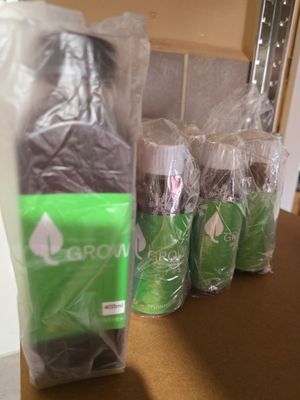
Seedling and leaf nutrient from one bottle, with calcium and magnesium, made for soft water. For all plants from sowing to the growth phase, leafy plants until harvest.
View in the shop ›Questions about your setup? Message me on WhatsApp.
Tapping opens WhatsApp (provider: WhatsApp Ireland Ltd.). More in the privacy policy.