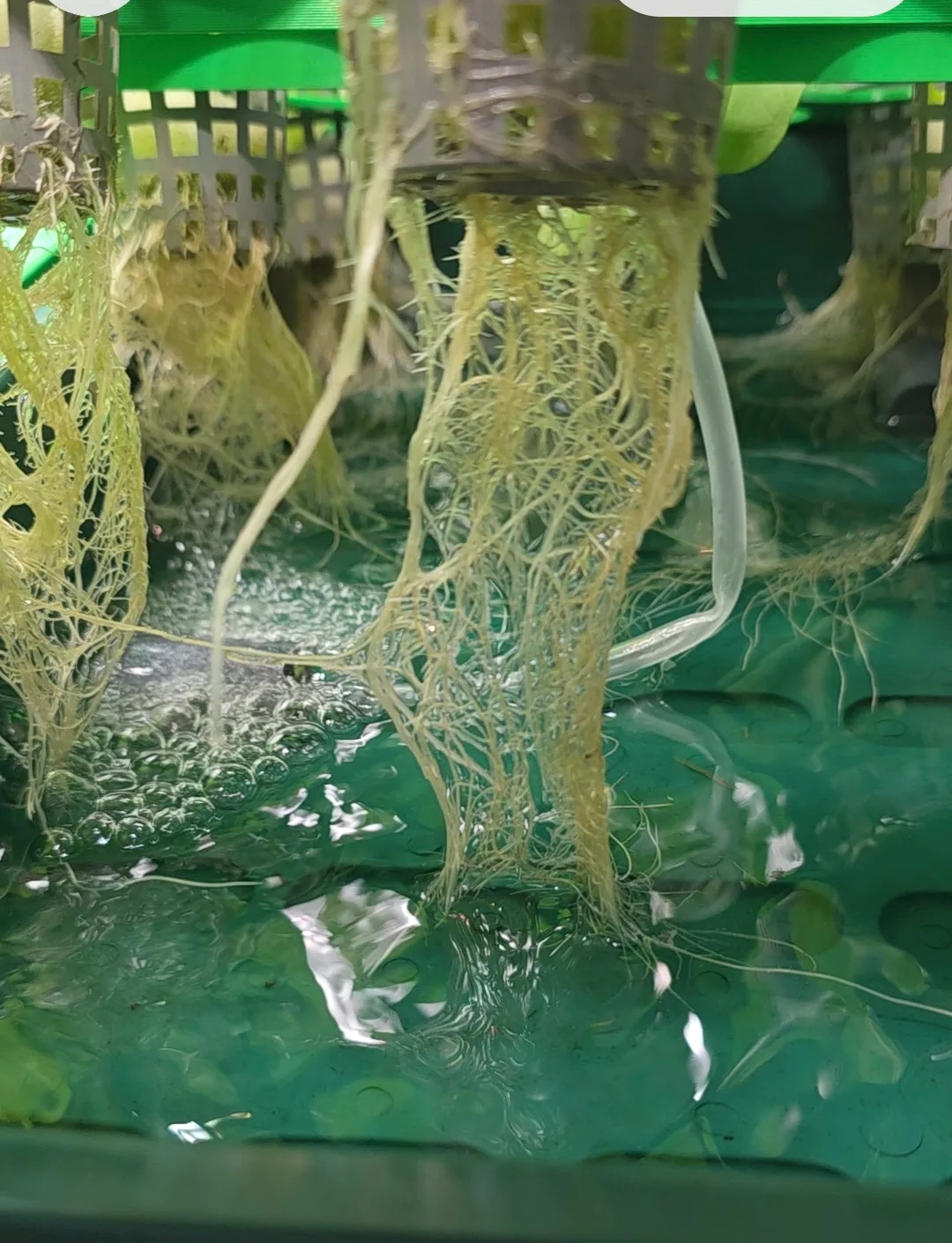
Air Stones in Hydroponics: Why They Matter So Much
For years everything ran smoothly. Then I had root rot for the first time. What I learned from it and when my air stone always runs.
In short: moving water keeps your roots healthy
Roots breathe. They take their oxygen from the water, day and night. An air stone adds oxygen and keeps the water moving. It is the simplest and cheapest insurance against root rot.
Why roots need oxygen in the water
Leaves make their energy from light. Roots cannot do that: they need oxygen, and they take it from the water. This happens all the time, at night too. Without enough oxygen the roots get weak, and bacteria and fungi have an easy time.
Temperature matters as well: the warmer the water, the less oxygen it can hold. Above 24 °C water temperature the risk rises clearly. Light and dirt in the reservoir make it even worse.
More on the right temperature: Water temperature in hydroponics
My case: root rot for the first time
Outdoors, all my reservoirs are connected. The water flows back and forth all the time, the pumps run, and everything keeps moving. In all those years I never had root rot there, not even in the heat of the greenhouse.
Indoors I then had a tower with a single reservoir. The pump ran for 5 minutes and paused for 30. I had no air stone in it, because I thought the pump moved the water enough. A mistake. During the long pauses the water stood still, the oxygen ran low, and bacteria spread in the reservoir.
At first I did not notice. Then the water changed: it turned cloudy and no longer smelled fresh. Brown deposits from dying roots collected in the drain, and the roots were no longer white but brown. That really annoyed me, because everything had gone well for years.
With hydrogen peroxide and an air stone added, I had the problem under control in a short time. Since then my rule is: a single reservoir with long pump pauses always gets an air stone.
My rule of thumb:
Standing water is bacteria’s best friend. Moving water is your roots’ best friend.
How to spot root rot
Not every brown root is sick: some fertilizers stain roots slightly brown. The difference is in the feel and the smell. Stained but healthy roots stay firm and do not smell.
A case from my customer questions: Lettuce roots brown and slimy
When the air stone has to run
Wherever roots hang in standing water, the air stone is a must. In the tower it makes sense from day one. This is how I do it:
| Where | Air stone | Why |
|---|---|---|
| Seedling station | 12 hours, at night | the roots hang in standing water |
| HydroFlex Tower indoors | continuously, useful from day one | the water stands still between pump cycles |
| Single reservoir with long pump pauses | a must, at least 12 hours a day | exactly where I got my root rot |
| Tomato tower | always, one per reservoir | the roots hang directly in the nutrient solution |
| outdoors from 25 °C water temperature | a must | warm water holds less oxygen |
The pump goes on the timer, the air pump does not. It plugs straight into the socket so it runs continuously. Roots breathe at night too.
Pump times and timer: How often does the water run?
My air pump
I use a strong air pump* with a manifold, so one device supplies several reservoirs at once.

* Affiliate link: If you buy, I earn a commission. Your price stays the same.
And the electricity? An air pump uses about 3 to 4 watts. Around the clock that is roughly 35 kWh a year.
Root rot: what I did
- Cut off sick, brown roots with clean scissors. White roots stay.
- Clean the reservoir, pump and tubing thoroughly and rinse well.
- Mix fresh nutrient solution: EC first, then pH.
- Add hydrogen peroxide (see below).
- Let the air stone run around the clock.
- Top up every 2 to 3 days and watch the roots until the water stays clear.
Hydrogen peroxide: what it can and cannot do
Hydrogen peroxide breaks down by itself into water and oxygen and leaves no residue. It kills bacteria, fungal spores and algae in the water, loosens slime on roots and in the reservoir, and briefly releases oxygen as it breaks down. I use the 3 percent solution from the pharmacy, for treatment 2 to 3 ml per liter of water in the reservoir. For 20 liters that is 40 to 60 ml. Because it breaks down within 1 to 2 days, I add more every 2 to 3 days.
It is a help for treatment, not an everyday product: too much damages the fine root tips, and it does not mix with organic fertilizers. Wear gloves, keep it in the original bottle, cool, dark and out of reach of children, and never mix it with other cleaners or acid.
Prevention is better
- Keep the water moving: single reservoirs with long pump pauses get an air stone.
- Keep the reservoir dark and closed.
- Keep the water below 24 °C if you can.
- Check the roots regularly and smell the water.
My rule of thumb:
Oxygen, movement, darkness and cool water. Then root rot has no chance.
My book „Schritt für Schritt in die Hydroponik!“ covers my whole case in the root rot chapter, plus how I use hydrogen peroxide safely and when my air stone runs.
View the book on Amazon*Frequently asked questions about air stones
Does an air stone have to run in hydroponics?
Wherever roots hang in standing water, yes: in the seedling station, the tomato tower, single reservoirs with long pump pauses and from 25 °C water temperature. In the HydroFlex Tower it makes sense from day one; mine runs there continuously.
Does the air pump go on the timer?
No. The pump goes on the timer, the air pump plugs straight into the socket. Roots breathe at night too.
How long does the air stone run in the seedling station?
Mine runs there 12 hours at night, from the start.
Doesn’t the pump add enough oxygen?
I thought so too. With 5 minutes on and 30 off, the water stands still during the pauses. That is exactly how I got root rot in a single reservoir.
How do I recognize root rot?
The water turns cloudy and smells rotten, brown residue collects in the drain, the roots turn brown, slimy and soft, and the plant wilts although there is enough water. Often the pH rises clearly every day.
At what water temperature does it get critical?
18 to 24 °C is ideal. Above that the risk rises clearly, and from 25 °C an air stone is a must.
What helps against root rot?
Cut off sick roots, clean everything thoroughly, mix fresh nutrient solution, add hydrogen peroxide and let the air stone run around the clock.
How much hydrogen peroxide do I use?
I use 2 to 3 ml of the 3 percent solution per liter of water and add more every 2 to 3 days until the water stays clear. It is a treatment, not a permanent additive.
How much electricity does an air pump use?
About 3 to 4 watts. Around the clock that is roughly 35 kWh a year.
Are brown roots always root rot?
No. Some fertilizers stain roots slightly brown. If they stay firm and do not smell, they are healthy.