18 to 22 °C: the comfort zone for your roots
Why water temperature matters so much, what happens with water that is too cold or too warm, and how I keep the water warm in winter and cool in summer. With my values from the book.
The right water temperature is crucial for the success of your hydroponic setup. It affects plant growth and nutrient uptake. Find out which temperatures are optimal, what effects deviations have and how to control the temperature effectively. If you have questions, I am happy to help you create optimal conditions together. The quickest way to reach me is via WhatsApp.
Influence of water temperature on nutrient uptake in hydroponics
Water temperature is a crucial factor in Hydroponics, growing plants in water-based solutions instead of soil. In this system, plants are supplied with everything they need for growth directly via the water. Water temperature plays a central role, because it affects not only the plants‘ nutrient uptake but also the microbial environment and the oxygen content of the water. An optimal water temperature promotes plant growth, strengthens root health and minimises the risk of disease. Temperatures that are too high or too low, however, can cause various problems, from slowed growth to root rot.
That is why it is essential for hydroponics enthusiasts and professionals alike to have a deep understanding of the importance of water temperature and the challenges that come with it.
Why water temperature matters so much
In hydroponics your plants get everything via the water: nutrients, water and also oxygen for the roots. Water temperature is often underestimated. It helps decide how well the roots work, how much oxygen is in the water and how quickly pathogens multiply.
Roots breathe day and night
Roots do not photosynthesise. They take their oxygen from the water and breathe around the clock, including at night. Only with enough oxygen do they stay healthy and can take up nutrients. And this is where temperature comes in: the warmer the water, the less oxygen it can hold.
| Water temperature | Oxygen in water, at most about |
|---|---|
| 15 °C | 10.1 mg per litre |
| 20 °C | 9.1 mg per litre |
| 25 °C | 8.3 mg per litre |
| 30 °C | 7.6 mg per litre |
These are values for pure water at full saturation, as given in technical tables. At the same time, roots breathe harder in warmth and need more oxygen. So less supply meets more demand. From about 25 °C it gets tight.
📖Why warm water robs the roots of oxygen, I explain in my book in the chapters “Wassertemperatur” (Water temperature) and “Sauerstoff im Wasser” (Oxygen in water). Just check the table of contents.›The perfect water temperature
The optimal water temperature is crucial for the success of your hydroponic system. For most hydroponic plants the ideal water temperature is between 18 and 22 degrees Celsius. In this range the plants can efficiently take up nutrients and use oxygen from the water.
Less oxygen
Temperatures that are too warm can reduce the oxygen content of the water, which can suffocate the plant roots.
Slow metabolism
Temperatures that are too cold, on the other hand, slow down the plants‘ metabolism, leading to slow growth and poor health.
It is important to consider the specific requirements of your plant species. Some plants prefer slightly warmer or cooler water, so it is advisable to research the ideal conditions for each plant and use heating or cooling systems if necessary to maintain the optimal water temperature.
My values for water temperature
| Water temperature | What it means | What I do |
|---|---|---|
| below 18 °C | too cold: roots work more slowly, less nutrient uptake | help out with a heater in winter |
| 18 to 22 °C | good: the comfort zone for the roots | nothing, just measure regularly |
| up to 24 °C | still fine | let the air stone run, shade the tank |
| from 25 °C | too warm: little oxygen, root rot develops faster | air stone is a must, cool the tank |
For most hydroponic crops the range of 18 to 22 °C is ideal. Specialist sources from commercial growing give very similar values for the root zone. For my tomatoes in the tomato tower I keep the water at 18 to 24 °C, and the air stone always runs there.
📖My values for water temperature are in my book in the chapter “Wassertemperatur” (Water temperature), the values for tomatoes in the chapter “Dein Sommer-Rhythmus” (Your summer rhythm). Just check the table of contents.›A few questions about space, location and what you want to harvest, and you get a recommendation.
To the tower advisor ›Water temperature too high in the hydroponic system
Water temperature in hydroponic systems plays a crucial role in the growth and health of plants. An inappropriate water temperature can bring various risks:
Too warm: from 25 °C. The more common problem in summer.
Warm water holds less oxygen. Stress for the roots increases, and root rot can develop faster. In summer especially I therefore check the water temperature regularly, because a tank in the sun heats up quickly.
| Where | Air pump | Why |
|---|---|---|
| Seedling station | continuously, day and night | the roots hang in standing water |
| HydroFlex Tower indoors | can, does not have to | the trickling water picks up air |
| outdoors from 25 °C water temperature | must | warm water holds less oxygen |
| DWC and Kratky with aeration | always, continuously | the roots stand in the nutrient solution |
| Tomato tower | always, each container its own | the roots hang directly in the nutrient solution |

* Affiliate-Link: Bei einem Kauf erhalte ich eine Provision, dein Preis bleibt gleich. Preis inkl. MwSt., zzgl. Versand, Stand 7.11.2026. Bilder: Amazon Creators API

* Affiliate-Link: Bei einem Kauf erhalte ich eine Provision, dein Preis bleibt gleich. Preis inkl. MwSt., zzgl. Versand, Stand 7.11.2026. Bilder: Amazon Creators API

* Affiliate-Link: Bei einem Kauf erhalte ich eine Provision, dein Preis bleibt gleich. Preis inkl. MwSt., zzgl. Versand, Stand 8.11.2026. Bilder: Amazon Creators API
* Affiliate links (Amazon): if you buy, I receive a commission; your price stays the same.
Related:Kratky method and DWC: when the roots stand in water›3 % hydrogen peroxide against algae and pathogens such as bacteria: only for cleaning the empty system
To fight algae and bacteria in your hydroponic setup, you can clean the empty system with 3 % hydrogen peroxide (H₂O₂). For cleaning, the dosage is about 3 to 5 ml of hydrogen peroxide per litre of water. It does not belong in the nutrient solution with the plants.
Important notes on use:
- Dosage: use 3 to 5 ml of 3 % hydrogen peroxide per litre of water, in the empty system without plants.
- Hazard warning: Hydrogen peroxide can damage your plants‘ roots, even in small amounts in the nutrient solution. So make sure not to exceed the dosage, distribute the hydrogen peroxide evenly in the water and only add it to the empty system.
- Application: Add the hydrogen peroxide slowly to the water in the empty container to ensure even distribution, and let the pump run briefly so it also reaches the hoses and segments. Then rinse everything thoroughly with clean water before the plants go back in. With correct use you can fight algae and bacteria effectively while protecting the health of your plants.

* Affiliate-Link: Bei einem Kauf erhalte ich eine Provision, dein Preis bleibt gleich. Preis inkl. MwSt., zzgl. Versand, Stand 7.11.2026. Bilder: Amazon Creators API

* Affiliate-Link: Bei einem Kauf erhalte ich eine Provision, dein Preis bleibt gleich. Preis inkl. MwSt., zzgl. Versand, Stand 7.11.2026. Bilder: Amazon Creators API

* Affiliate-Link: Bei einem Kauf erhalte ich eine Provision, dein Preis bleibt gleich. Preis inkl. MwSt., zzgl. Versand, Stand 7.11.2026. Bilder: Amazon Creators API
* Affiliate links (Amazon): if you buy, I receive a commission; your price stays the same.
Related:Algae in hydroponics: recognising causes and keeping the tank clean›📖How I keep an eye on roots and tank and stop algae from forming in the first place is in my book in the chapter “Wurzeln, Algen und Pannen” (Roots, algae and mishaps). Just check the table of contents.›Root rot
Healthy roots are white or pale and strong. Rotten roots are brown, slimy and smell musty. The cause is usually water above 24 °C, light or dirt in the container, or too much fertiliser. Pathogens such as Pythium like warm, oxygen-poor water, which is why root rot is more common in summer.
If it has caught you, cut off the brown roots, clean the container, mix fresh nutrient solution and let the air stone run. Also provide plenty of air movement. Lots of white roots are a good sign; never cut those off. With an air stone root rot hardly ever occurs for me, even at 38 to 39 °C in my greenhouse.
📖What I do about root rot is in my book in the chapter “Probleme lösen” (Solving problems) under “Wurzelfäule” (Root rot). Just check the table of contents.›It is therefore important to keep an eye on the water temperature and take measures to prevent overheating. These measures include using water chillers, insulating the water tank and ensuring good ventilation of the growing room.
HydroFlex Tower for indoors and outdoors, seedling box, seedling station, support rings and my own nutrient. After you buy, I’ll help you on WhatsApp.
To the shop ›Water temperature too low in the hydroponic system
Low water temperatures can be just as problematic for hydroponic systems as temperatures that are too high. Here are the main problems caused by water that is too cold:
Too cold: below 18 °C. No drama, but the plants grow more slowly.
If the water is too cold, the roots work more slowly. The plant takes up fewer nutrients and grows slowly, even if EC and pH are right. In winter the water cools down quickly, for example in an unheated room. In winter my meter has shown 17 °C before. That is no drama yet, but already a little cooler than my comfort zone.
Slow growth
Cold water slows down the plants‘ metabolic processes, because enzymatic activity depends on temperature. This leads to slower growth overall and a longer time to harvest.
Root damage
Extremely cold water temperatures can cause physical damage to the roots. The roots become less efficient at taking up water and nutrients, which can lead to growth disorders and disease.
Impaired nutrient uptake
Low temperatures can hinder the uptake of certain nutrients. Nutrients such as phosphorus and potassium in particular are taken up less efficiently at colder temperatures, which can lead to deficiency symptoms.
Increased susceptibility to disease
Cold water can weaken the plants‘ defences because the roots work more slowly, making them more susceptible to diseases and pests. But root rot develops much more often in warm, oxygen-poor water above 24 °C.
Mottled leaves in spring
In spring the leaves sometimes discolour or become mottled. That is due to the water temperature: at night the nutrient solution is often only 11 to 12 °C, and then the roots do not take up all nutrients. If the leaves discolour in May, it is usually the cold water and not the fertiliser. So do not add more fertiliser. As soon as it gets warmer, everything recovers and grows back wonderfully.
To avoid these problems, it is important to keep the water temperature constantly within an optimal range. This can be achieved by using water heaters, insulating the water tank and controlling the room temperature.
How to keep the water warm
In winter I keep the water constantly at 18 to 20 °C with an aquarium heater. It has a thermostat and switches itself off when the set temperature is reached. To keep its electricity use low, wrap the container well, for example in polystyrene. That way little heat is lost.
Water temperature also matters when moving outdoors. The water should be between 18 and 22 °C, roughly room temperature. That is why I only move the tower outdoors from mid-May. Before that the water cools down too much at night.
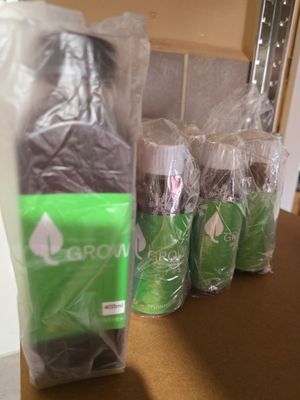
Seedling and leaf nutrient from one bottle, with calcium and magnesium, made for soft water. For all plants from sowing to the growth phase, leafy plants until harvest.
View in the shop ›Stabilising the water temperature
The right water temperature is crucial for plant growth and health in a hydroponic system. Here are various methods to regulate the water temperature effectively and keep it in the ideal range of 18 to 22 degrees Celsius:

* Affiliate-Link: Bei einem Kauf erhalte ich eine Provision, dein Preis bleibt gleich. Preis inkl. MwSt., zzgl. Versand, Stand 7.11.2026. Bilder: Amazon Creators API

* Affiliate-Link: Bei einem Kauf erhalte ich eine Provision, dein Preis bleibt gleich. Preis inkl. MwSt., zzgl. Versand, Stand 7.11.2026. Bilder: Amazon Creators API
* Affiliate links (Amazon): if you buy, I receive a commission; your price stays the same.

* Affiliate-Link: Bei einem Kauf erhalte ich eine Provision, dein Preis bleibt gleich. Preis inkl. MwSt., zzgl. Versand, Stand 8.11.2026. Bilder: Amazon Creators API
* Affiliate links (Amazon): if you buy, I receive a commission; your price stays the same.

* Affiliate-Link: Bei einem Kauf erhalte ich eine Provision, dein Preis bleibt gleich. Preis inkl. MwSt., zzgl. Versand, Stand 7.11.2026. Bilder: Amazon Creators API

* Affiliate-Link: Bei einem Kauf erhalte ich eine Provision, dein Preis bleibt gleich. Preis inkl. MwSt., zzgl. Versand, Stand 7.11.2026. Bilder: Amazon Creators API
* Affiliate links (Amazon): if you buy, I receive a commission; your price stays the same.

* Affiliate-Link: Bei einem Kauf erhalte ich eine Provision, dein Preis bleibt gleich. Preis inkl. MwSt., zzgl. Versand, Stand 7.11.2026. Bilder: Amazon Creators API
* Affiliate links (Amazon): if you buy, I receive a commission; your price stays the same.

* Affiliate-Link: Bei einem Kauf erhalte ich eine Provision, dein Preis bleibt gleich. Preis inkl. MwSt., zzgl. Versand, Stand 8.11.2026. Bilder: Amazon Creators API
* Affiliate links (Amazon): if you buy, I receive a commission; your price stays the same.

* Affiliate-Link: Bei einem Kauf erhalte ich eine Provision, dein Preis bleibt gleich. Preis inkl. MwSt., zzgl. Versand, Stand 7.11.2026. Bilder: Amazon Creators API
* Affiliate links (Amazon): if you buy, I receive a commission; your price stays the same.

* Affiliate-Link: Bei einem Kauf erhalte ich eine Provision, dein Preis bleibt gleich. Preis inkl. MwSt., zzgl. Versand, Stand 7.11.2026. Bilder: Amazon Creators API
* Affiliate links (Amazon): if you buy, I receive a commission; your price stays the same.
By combining these methods you can ensure a stable water temperature in your hydroponic system, which is essential for the growth and health of your plants. Regular checking and adjustment to the needs of your specific system are the key to long-term success.
My checklist for great heat
In summer a few minutes a day are enough. Every day I check the water level and water temperature, whether the pump and air stone are running, and look at the leaves. When it gets really hot, I go through this list:
- Set the pump to 15 minutes on, 15 minutes off. Normally mine runs 5 minutes on and 30 minutes off.
- Top up water more often, container in the shade.
- Let the air stone run continuously, straight from the socket.
- Cooler again? Back to 5 minutes on, 30 off.
At an air temperature of 35 to 38 °C growth stops, and tomatoes already set less fruit from about 30 °C. That is why my greenhouse is completely open in summer and the side panels come out. A through-draught is the best thing against heat and humidity.
Related:How often does the water run? My pump times indoors, outdoors and in heat›📖The full summer checklist for every day, every week and great heat is in my book in the chapter “Dein Sommer-Rhythmus” (Your summer rhythm), and more about heat under “Hitze und Luft” (Heat and air). Just check the table of contents.›Measure instead of guess
A thermometer in the container shows you immediately whether you need to act. Many pH and EC meters also measure the temperature. That way you have all three values that belong together at once. In summer I look at the water level and water temperature every day; it only takes a moment.
Affordable, easy to use and perfectly adequate for beginners.
View on Amazon* ›* Affiliate link: I earn a commission if you buy. Your price stays the same.
| When | What I check |
|---|---|
| every day in summer | water level and water temperature, are pump and air stone running? |
| every few days | EC and pH, always EC first, then pH |
| at night in spring | does the water cool below 18 °C? Then I wait before moving outdoors |
| with problems | always all three: EC, pH and water temperature |
Do not change the nutrient solution by the calendar
Even in warm weather I do not change the nutrient solution by the calendar. I measure every 2 to 3 days, EC first, then pH, and top up with ready-mixed nutrient solution. It only has to come out completely when the EC rises for no reason or deficiencies appear even though pH and water temperature are right.
| Water without fertiliser | EC in mS/cm |
|---|---|
| soft | below 0.3 |
| medium | 0.3 to 0.5 |
| hard | above 0.5 |
| Rainwater or reverse osmosis water | almost 0 |
How often the pump needs to run in heat, you can read in my article How often does the water run in hydroponics?. In the NFT system the nutrient solution lies as a thin film in the channels and reacts particularly quickly to sun; more on this under the Nutrient Film Technique. With the Kratky method a polystyrene box keeps the temperature nicely stable.
Frequently asked questions about water temperature in hydroponics
What water temperature is ideal in hydroponics?
Up to what water temperature is it still fine?
From what temperature is the water too cold?
From what temperature is the water too warm?
Why does warm water hold less oxygen?
What helps first with water that is too warm?
Why do EC, pH and water temperature belong together?
Why do leaves sometimes become mottled in spring?
What do dark, purple-tinged leaves show with cold water?
Do I add more fertiliser if the water is cold?
How do I keep the water warm in winter?
When does the tower go outdoors?
How do I protect the water tank from the sun?
Why does a small container heat up faster?
Can I put ice in the water?
When is a water chiller worthwhile?
Why does root rot develop faster with warm water?
How do I recognise root rot?
What do I do about root rot?
Do more algae grow with warm water?
Does the air stone only run during the day?
What do I measure the water temperature with?
How often do I check the water temperature in summer?
What water temperature do tomatoes need in the tomato tower?
Can I add hydrogen peroxide to the nutrient solution against algae?
Do I need an air stone in the hydro tower indoors?
How long does the pump run in great heat?
Does a circulation pump help against algae?
Do I have to change the nutrient solution more often in warm weather?
Is my tap water soft or hard?
You will find more basics in my guide to hydroponics, on Types of water, on EC value and the pH value.
Continue with your own growing

168 pages, simply explained for beginners and with videos on the topics (in German). Exactly how I grow myself: from sowing to harvest.
More about the book ›A few questions about space, location and what you want to harvest, and you get a recommendation.
To the tower advisor ›Questions about your setup? Message me on WhatsApp.
Tapping opens WhatsApp (provider: WhatsApp Ireland Ltd.). More in the privacy policy.