Is mineral fertiliser “pure chemistry”? A factual look at nutrients, control and water use
Understand the science behind nutrient supply and why mineral fertiliser is no less natural than soil nutrients. Plants always take up nutrients as dissolved ions, no matter where they come from: the same nutrients, just targeted.
“That is pure chemistry!” I often hear this when I talk about my fertiliser. One thing is clear: everything a plant needs to grow is a chemical element. That applies in the garden bed just as much as in the tower. Here I explain factually how plants take up nutrients, what is in a nutrient solution and why it makes no difference to the plant whether a nutrient comes from compost or from a bottle.
The “pure chemistry” myth: what is behind it?
The term “pure chemistry” is often misunderstood. Plants need these nutrients regardless of whether they come from the soil or from a nutrient solution. For the plant it is chemically identical.
In hydroponics plants get their nutrients from a precisely balanced solution with all essential mineralsthat also occur naturally in the soil.
What is in the nutrient solution?
Macronutrients: N, P, K, Ca, Mg, S
Micronutrients: Fe, Mn, Cu, Zn, Mo, B, Cl, Ni
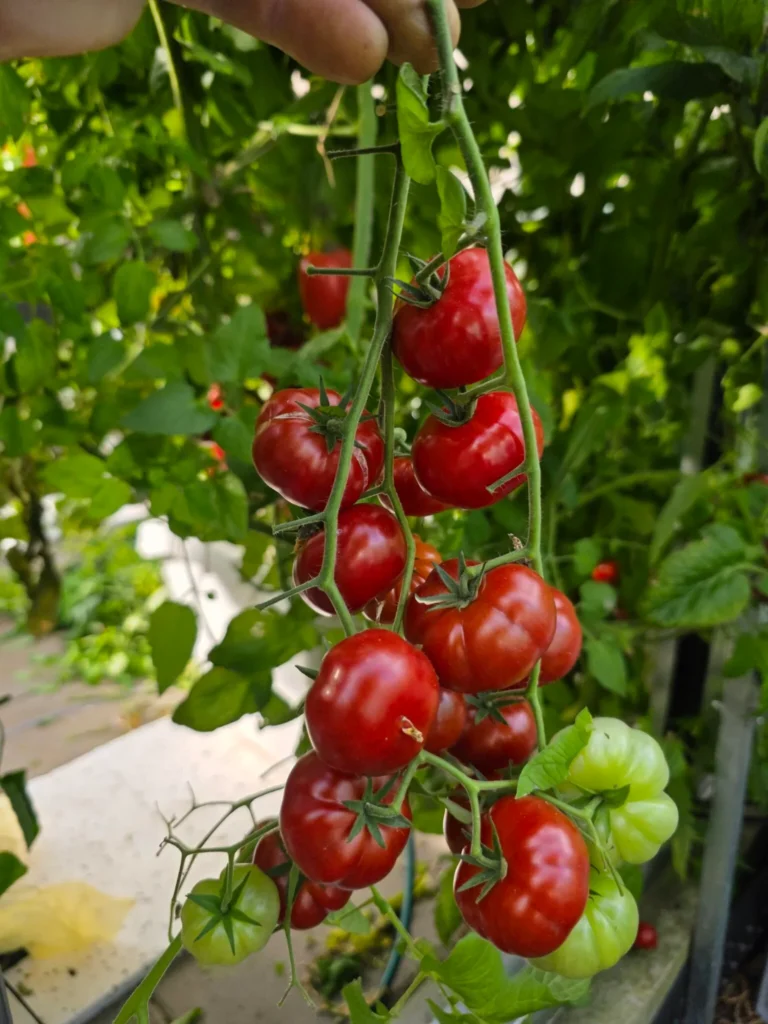
How plants take up nutrients
A root cannot take up pieces, only what is dissolved in water. The nutrients are present there as tiny, electrically charged particles, as ions. Colorado State University describes it like this: roots take up nutrients as ions dissolved in water, and the plant cannot tell whether they come from a manufactured fertiliser or from a natural source.
Nutrients from compost, manure or horn shavings are initially bound up in plant residues or protein. In the soil, soil organisms first have to break them down and convert them into the dissolved, mineral form. Only then can the root reach them. Kansas State University calls this mineralisation and stresses: plants only take up nutrients in the right form, no matter what source they come from. In hydroponics you add them to the water in this form straight away. The detour via the soil disappears.
| Nutrient | How the root takes it up |
|---|---|
| Nitrogen (N) | as nitrate or ammonium |
| Phosphorus (P) | as phosphate |
| Potassium (K) | as potassium ion |
| Calcium (Ca) | as calcium ion |
| Magnesium (Mg) | as magnesium ion |
| Sulphur (S) | as sulphate |
| Iron (Fe) | as iron ion, well protected in fertiliser as chelate |
Advantages of precise nutrient control
Controlled nutrient supply
Exactly matched to plant needs
Immediate availability
Nutrients are present directly in dissolved form
Fewer losses
Fewer nutrient losses, hardly any nutrient salts in the groundwater, because the water stays in the loop
Scientifically based
Identical nutrients to those in nature
Soil or hydroponics: the difference in fertilising
Soil already contains nutrients. But you never know exactly how much of it reaches the plant. That depends on how warm and moist the soil is and how busy the soil organisms are. With hydroponics you decide yourself what goes into the water. It is like baking a cake: read the recipe, measure, done.
| Fertiliser from compost or manure in soil | Mineral fertiliser in hydroponics | |
|---|---|---|
| Form | firmly bound, must be converted first | already dissolved, immediately available |
| Amount | hard to estimate | precisely measurable via the EC value |
| Control | hardly possible | adjustable by plant and phase |
| in the tower | not suitable, residues clog pump and lines | made exactly for this |
That is why mineral fertiliser is used in hydroponics. It dissolves completely, leaves the pump alone and you can measure how much is in the water at any time via the EC value.
Which fertiliser is due from seedling to fruit, I explain in my book in the chapter “Die Düngung” (Fertilising). Just check the table of contents.›Macro- and micronutrients at a glance
The plant gets carbon, hydrogen and oxygen itself from air and water. In the tower it gets the twelve most important other nutrients from the fertiliser. Experts classify them by the amount the plant needs. They are all equally important. They are the same substances a plant also takes from the soil.
At the top is the function and deficiency sign in brief; below in small print, as I describe it in my book.
The plant also needs chlorine and nickel, but in such tiny amounts that water and fertiliser practically always supply enough. Imagine a barrel made of wooden staves, each stave a nutrient. If one stave is shorter, the water overflows exactly there. Your plant also only grows as well as the scarcest nutrient allows. That is why you always give a complete fertiliser. You can read more about each nutrient under nutrients in hydroponics.
All nutrients with their tasks and deficiency signs are covered in detail in my book (in German) in the chapter “Nährstoffe und ihre Aufgaben”. Just check the table of contents.›How natural is the nutrient solution?
Identical nutrients
Precise dosing
Why iron is in fertiliser as chelate
Iron is the trace element that is most often lacking. Usually there is enough in the water, but the plant cannot get at it. Free iron readily reacts with phosphate and other substances in the solution and then precipitates as an insoluble compound. A chelate is a kind of protective shell around the iron. That way it stays dissolved longer and available to the plant, even if the pH drifts. Good fertilisers contain iron as chelate. That is the case in my liquid fertiliser.
How I fertilise with my own fertiliser
My Frankies liquid fertiliser is a seedling and leaf fertiliser from one bottle, with calcium and magnesium. I made it for soft water, because I myself prefer working with soft water. There is hardly anything in it, so I know exactly what my plants get: only what I put in with the fertiliser. It is for all plants from sowing to the growth phase; leafy plants get it until harvest.
These amounts only apply to Frankies liquid fertiliser and soft water. With a different fertiliser, follow its instructions and the EC value. Fruiting plants such as tomatoes switch to a different fertiliser for flowering, but not at the first flowers, rather at about 75 cm above the tower. Then I use a three-part fertiliser or powder fertiliser with calcium nitrate and Epsom salt. Which fertiliser is due when, I explain in the article Grow fertiliser or bloom fertiliser?. The exact amounts are calculated for you by my Nutrient calculator .
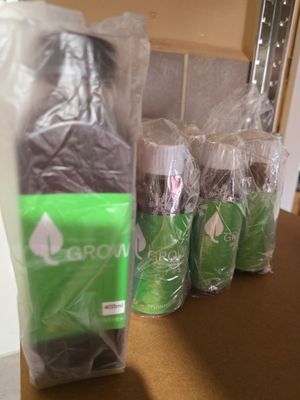
Seedling and leaf nutrient from one bottle, with calcium and magnesium, made for soft water. For all plants from sowing to the growth phase, leafy plants until harvest.
View in the shop ›pH and EC value: control and meaning
For nutrients to be taken up optimally, controlling pH and EC is crucial. Only then are all elements sure to stay available to the plant.
pH value control
Optimal range for nutrient uptake
Outside this range nutrients can be blocked. My target is 5.8.
EC value measurement
Electrical conductivity shows nutrient concentration
Too high: burning; too low: deficiency. How high depends on plant and growth stage: lettuce up to 1.6, tomatoes up to 2.5.
Water quality
Source water should have few dissolved substances
Clean water is the basis for precise nutrient control. It is soft below 0.3, medium 0.3 to 0.5, hard above 0.5 mS/cm.
Regular adjustment
Values can change due to plant uptake
Continuous monitoring prevents problems. With a continuous monitor you see the values at any time.
The best fertiliser does not help if the plant cannot get at it. The pH value decides that. Below pH 5.5 calcium, magnesium and molybdenum become scarce; above 6.5 phosphorus, iron, manganese, zinc, copper and boron. At 5.8 the plant can reach all nutrients well, which is why I always aim for 5.8. By the way, my fertiliser lowers the pH itself, and the more you add, the stronger the effect.
Related:pH value: measuring and adjusting correctly, target 5.8›With the EC value you measure how much nutrient salt is in the water. Too much salt harms the roots; they can then hardly take up water. Always measure the EC first and then set the pH. Without a continuous monitor, every 2 to 3 days is enough. If the EC is too high, dilute with water; if it is too low, add fertiliser. Lower the pH in small steps with pH Down or a few drops of phosphoric acid, stir and measure again.
Measuring and adjusting correctly
| Your tap water | EC without fertiliser (mS/cm) | What it means |
|---|---|---|
| soft | below 0.3 (my water: 0.25) | lots of room for fertiliser; calcium and magnesium must come via the fertiliser |
| medium | 0.3 to 0.5 | already brings some calcium and magnesium |
| hard | above 0.5 | little room for fertiliser; dilute with rainwater or reverse osmosis water |
In a running tower I only top up what the plants have drunk, straight away with ready-mixed nutrient solution. I only change it completely when the EC rises for no reason or a deficiency appears. You will find all values for your plants under pH and EC values, and everything about water under Types of water.
At which pH which nutrient becomes scarce, I show in my book in the chapter “pH und Nährstoffe” (pH and nutrients). Just check the table of contents.› BudgetPious 5-in-1 meterAffordable, easy to use and perfectly adequate for beginners.39,99 EURView on Amazon*To Amazon*
 ProBluelab OnePenShows right after mixing whether the EC suits the growth stage. Every reading is saved in the app for comparison. Pro meter: the app analyses your readings and keeps measurement logs.203,15 EURView on Amazon*To Amazon*
* Affiliate link: if you buy through it, I earn a small commission. Your price stays the same. Prices incl. VAT, as of 26.11.2026.
Further information
A few questions about space, location and what you want to harvest, and you get a recommendation.
To the tower advisor ›Water, area and loop: hydroponics compared
Hydroponics with mineral fertiliser is not only efficient but also more economical with water, fertiliser and area than many traditional growing methods.
Less water and fertiliser loss
Precise dosing and closed systems minimise inputs into the environment.
Reduced pesticide use
Closed systems are less susceptible to pests and diseases. Without soil, many pests that live in the soil are absent. Keep the water clean and cool so no root rot spreads through the loop.
Regional production
Hydroponics enables fresh harvests right in the city and reduces transport routes. Indoors with a grow light you harvest even in winter.
Circular approach
Nutrient solutions can be recycled and reused. In the tower you only top up what the plants have drunk.
Smaller area required
Vertical growing uses space more efficiently than traditional agriculture.
Preserving soil
No overexploitation of natural soils, no erosion or degradation.
Less water, less loss
In the tower the water runs in a loop. Nothing seeps away, and nutrient salts the plant does not take up stay in the container instead of reaching the groundwater. A study by Arizona State University (Barbosa and colleagues, 2015) calculated about 20 litres of water per kilogram harvested for lettuce, compared with about 250 litres in the field. That is around 92 % less. About eleven times as much lettuce grew per square metre as in the field.
Comparison: traditional agriculture vs. hydroponics

HydroFlex Tower for indoors and outdoors, seedling box, seedling station, support rings and my own nutrient. After you buy, I’ll help you on WhatsApp.
To the shop ›Do hydroponic vegetables have fewer nutrients?
Not as a generalisation. Studies show a mixed picture: sometimes vegetables from soil contain more of one substance, sometimes hydroponic vegetables do. Variety, light, ripeness at harvest and the nutrient solution are what decide. A review by Rouphael and Kyriacou (2018) even shows that the content of substances such as vitamin C or lycopene can be influenced via the precisely controlled nutrient solution. My advantage at home: I only harvest when the vegetables are ripe. You will find more misconceptions in the fact check under myths and facts.
Conclusion
Hydroponics is not “pure chemistry” in a negative sense, but an advanced, scientifically based method of feeding plants efficiently, economically and in a targeted way. The nutrients used are exactly the same ones every plant also needs in soil, just supplied in a targeted and controlled way.
Mineral fertiliser is no less natural than the nutrients in the soil. They are the same ions every plant takes up through its roots. In hydroponics you just give them in a targeted way and in the right amount. What matters is a complete fertiliser with calcium and magnesium, a pH around 5.8 and an EC that suits your plant.
Fertiliser in the shop ›What I use for precise fertilising
 Advanced Hydroponics Dutch Formula 1 x 3LThree-part fertiliser Grow, Bloom and Micro for fruiting plants from flowering. Add each bottle to the water separately.46,40 EURView on Amazon*To Amazon*
 stonylab 1er Pack MesszylinderGlass measuring cylinder for precise measuring.13,25 EURView on Amazon*To Amazon*
* Affiliate link: if you buy through it, I earn a small commission. Your price stays the same. Prices incl. VAT, as of 26.11.2026.
The Amazon products on this page are affiliate links*. I earn a commission if you buy, your price stays the same.
Further reading

Did you enjoy this topic? Is anything missing, or do you see something differently? I keep learning all the time and I would love to hear your question and your experience. Just write it in the comments below, no sign-up needed.
Write your question or experienceFrequently asked questions about mineral fertiliser
Is mineral fertiliser pure chemistry?
Is mineral fertiliser harmful in hydroponics?
What is the difference from organic fertiliser?
In what form do plants take up nutrients?
Does the plant recognise whether a nutrient comes from compost or from fertiliser?
What is mineralisation?
Why do you not use compost or manure in hydroponics?
Which macronutrients are in the nutrient solution?
Which primary nutrients does a plant need?
Which secondary nutrients does a plant need?
Which trace elements are in the fertiliser?
Where does the plant get carbon, hydrogen and oxygen from?
What does the image of the barrel of wooden staves mean?
Why is iron in fertiliser as chelate?
How do I recognise iron deficiency?
How do I recognise magnesium deficiency?
What does calcium deficiency show in tomatoes?
Why is controlling pH and EC important?
Which pH value is best for nutrient uptake?
Which EC value is right?
What do you measure first, EC or pH?
How often should I measure EC and pH?
How often should I change the nutrient solution?
Can I use tap water for the nutrient solution?
From what EC is tap water considered soft?
How much Frankies liquid fertiliser do I use per litre?
Which additional minerals does Frankies liquid fertiliser contain?
Does Frankies liquid fertiliser lower the pH value?
How much water does hydroponics save with lettuce?
How much area does hydroponics save?
Do you need pesticides in hydroponics?
Are plants from hydroponics less nutritious?
Sources
- Colorado State University Extension: Plant Nutrition (roots take up nutrients as dissolved ions; the plant does not recognise the source).
- Kansas State University Research and Extension (MF3713): Fertilizer Sources of Nutrients Needed by Plants (mineralisation, the right form regardless of source).
- Science in Hydroponics: Iron Sources in Hydroponics (why chelated iron stays dissolved).
- Ohio State University Extension (HYG-1437): nutrient solutions for tomatoes (pH 5.5 to 6.5, chelated iron).
- Barbosa, G. L. et al. (2015): Comparison of Land, Water, and Energy Requirements of Lettuce Grown Using Hydroponic vs. Conventional Agricultural Methods. Int. J. Environ. Res. Public Health 12, 6879–6891 (water and area).
- Rouphael, Y. and Kyriacou, M. C. (2018): Enhancing Quality of Fresh Vegetables Through Salinity Eustress (…) Facilitated by Soilless Cultivation. Frontiers in Plant Science 9, 1254.
- Marschner, H.: Mineral Nutrition of Higher Plants (roles of calcium and the other nutrients).
- Resh, H. M.: Hydroponic Food Production (nutrient solutions and essential nutrients).
- Frank Wagner: my hydroponics book (German), parts 1 and 2 (chapters on fertilising, fertiliser for hard and soft water, nutrients and their jobs, pH and nutrients).
Continue with your own growing
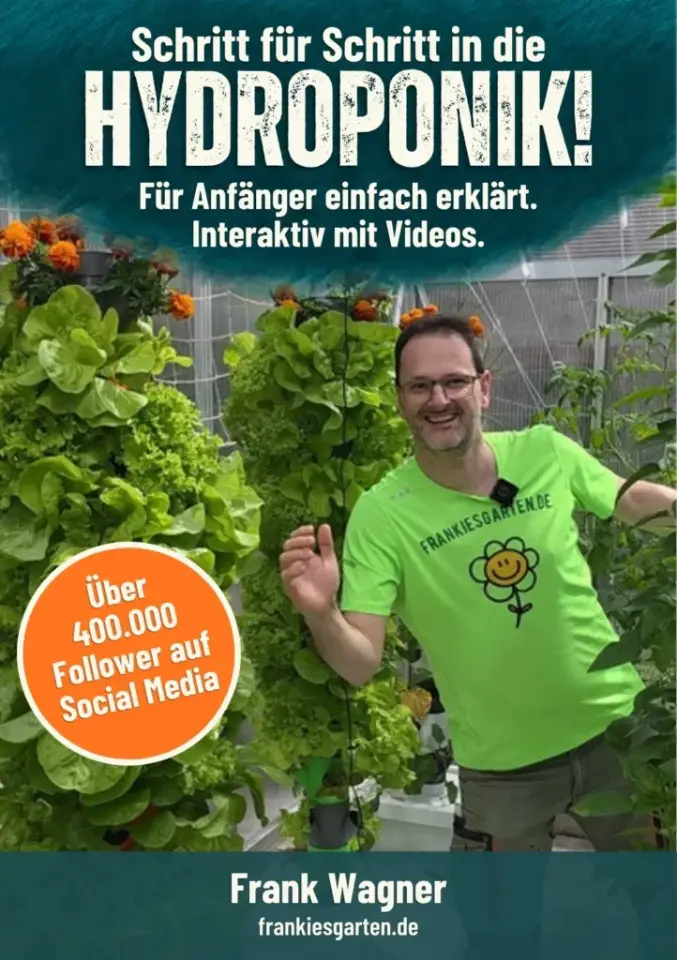
212 pages, now available on Amazon, simply explained for beginners and with videos on the topics (in German). Exactly how I grow myself: from sowing to harvest.
View the book on Amazon* ›A few questions about space, location and what you want to harvest, and you get a recommendation.
To the tower advisor ›Blausocke: She wanted to know whether different vegetables need different values. My answer with a table: Do different vegetables need different values? ›
Do you have a question too? Here is how to ask it ›
Tapping opens WhatsApp (provider: WhatsApp Ireland Ltd.). More in the privacy policy.
Questions and comments
Ask your question here, even without a name. I will answer as soon as I can.