Grow fertiliser or bloom fertiliser: what your plant needs and when
Lettuce stays on grow fertiliser; tomatoes, peppers and cucumbers later switch to bloom and fruit fertiliser. I show you how to recognise the fertiliser and when the right moment is.
Grow fertiliser or bloom fertiliser? I get asked this all the time. The answer depends on what you harvest. With lettuce and herbs you harvest leaves; with tomatoes, peppers and cucumbers the fruits. The fertiliser follows from that. Here I show you how I do it myself: which fertiliser is due when, how to recognise it on the pack and why you should not switch too early with fruiting plants.
Leaf-forming or flower-forming?
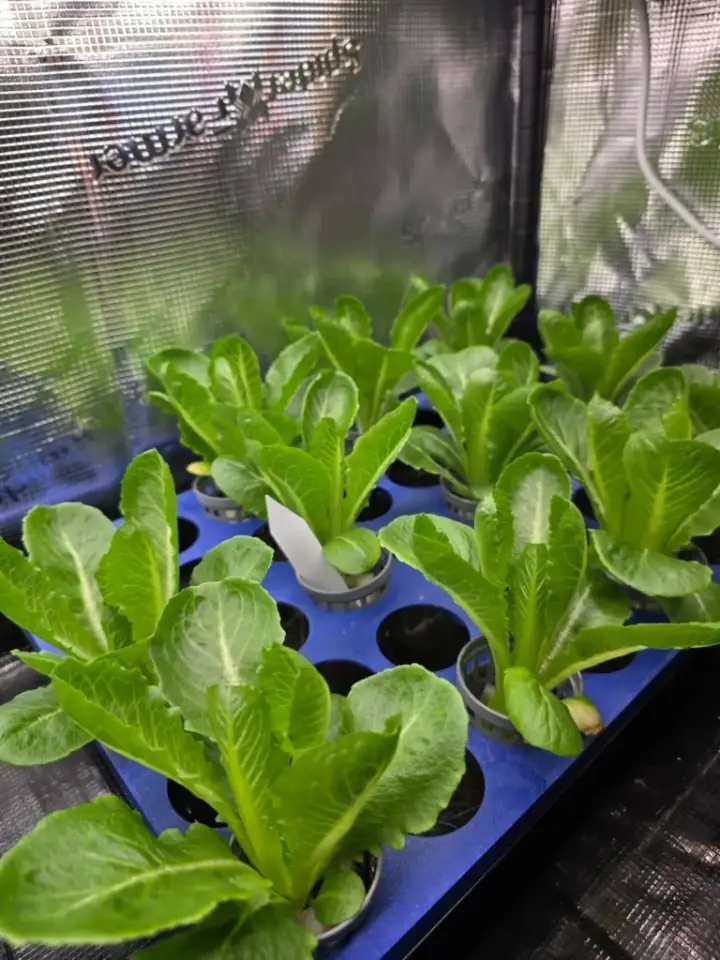
Leaf-forming plants such as lettuce, herbs and pak choi stay in the growth phase all their lives. You harvest the leaves, so they need a grow fertiliser until the end, a leaf fertiliser with lots of nitrogen. Flower-forming plants such as tomato, pepper, cucumber, bean or strawberry grow first and then form flowers. The flowers turn into the fruits you harvest. For flowering and fruit they need more potassium and phosphorus.
| Group | Plants (according to my book) | Nutrient |
|---|---|---|
| Leafy plants | Anise, basil, cauliflower, broccoli, dill, fennel, kohlrabi, coriander, leek, lovage, Swiss chard, mint, pak choi, parsley, radish, rhubarb, Brussels sprouts, beetroot, rocket, lettuce, sage, chives, celery, spinach, thyme, onion | Grow fertiliser from the first leaves to harvest |
| Fruiting plants | Aubergine, beans, chilli, peas, strawberry, cucumber, pumpkin, sweetcorn, melon, pepper, tomato, watermelon, courgette | grow fertiliser until about 75 cm above the tower, then bloom and fruit fertiliser |
What the three numbers on the nutrient mean
Almost every fertiliser shows three numbers, for example 4-2-4. They always stand in the same order for nitrogen (N), phosphorus (P) and potassium (K), in percent. So 4-2-4 means 4 % nitrogen, 2 % phosphorus and 4 % potassium. Nitrogen builds leaves and shoots and makes the plant green. Phosphorus is important for roots, flowers and fruits. Potassium regulates the water balance and provides sugar, colour and flavour in the fruits.
What matters is the ratio, not the size of the numbers. Divide all three by the smallest: 4-2-4 becomes 2:1:2, and so does 8-4-8. Both fertilisers have the same make-up; the second is just twice as strong. That is why my millilitre figures only apply to my own fertiliser. With a different fertiliser, follow its instructions and the EC value.
| Grow fertiliser (leaf) | Bloom fertiliser | Universal fertiliser | |
|---|---|---|---|
| Example | 4-2-4 | 2-4-6 or 15-5-30 | 4-4-4 |
| emphasises | Nitrogen | Potassium, plus phosphorus | everything about equal |
| for | Lettuce, herbs, brassicas and all plants until flowering | Tomatoes, peppers, cucumbers from about 75 cm above the tower | convenient, but a compromise |
| Verdict | strong, green leaves | lots of flowers and large, aromatic fruits | with fruiting plants often lots of foliage and few fruits |
A universal fertiliser sounds practical. But fruiting plants often form lots of leaves and few fruits with it. Too much nitrogen makes soft leaves and, in tomatoes, lots of foliage but few flowers. For fruiting vegetables it is therefore worth switching to a proper bloom and fruit fertiliser. I explain all nutrients and their jobs in detail on my page nutrients in hydroponics.
1From sowing to the growth phase
One fertiliser for all plants
During germination there is no fertiliser yet; the seed brings its own reserve. As soon as the seed leaves are open, the plant needs nutrients from the water. But young roots do not tolerate much salt yet, and fertiliser consists of salts. That is why I start with just 0.5 ml of Frankies liquid fertiliser per 1 litre of water and increase in four stages as the plant grows.
My liquid fertiliser is a seedling and leaf fertiliser from one bottle. Calcium and magnesium are already in it, and it is made for soft water. I use it for all plants from sowing to the growth phase; leafy plants get it until harvest. My tomatoes, peppers and cucumbers also get it until they are really big.
The millilitres are only a starting value and apply to my fertiliser and soft water. The meter decides: add the fertiliser gradually, stir and measure. If the EC is too high, dilute with water; if it is too low, add a little fertiliser. By the way, my fully grown lettuces run at EC 1.1 to 1.2 instead of 1.6 and grow just as well. You will find the values for each plant under the EC values.
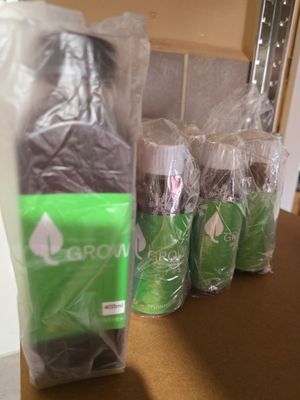
Seedling and leaf nutrient from one bottle, with calcium and magnesium, made for soft water. For all plants from sowing to the growth phase, leafy plants until harvest.
View in the shop ›Two complete fertilisers in one pack: a main fertiliser to suit your water plus a balancing fertiliser you can use to balance the pH yourself. Every water is different: start with a little balancing fertiliser and slowly find your ratio.
2Fruiting plants: when to switch
Not at the first flowers
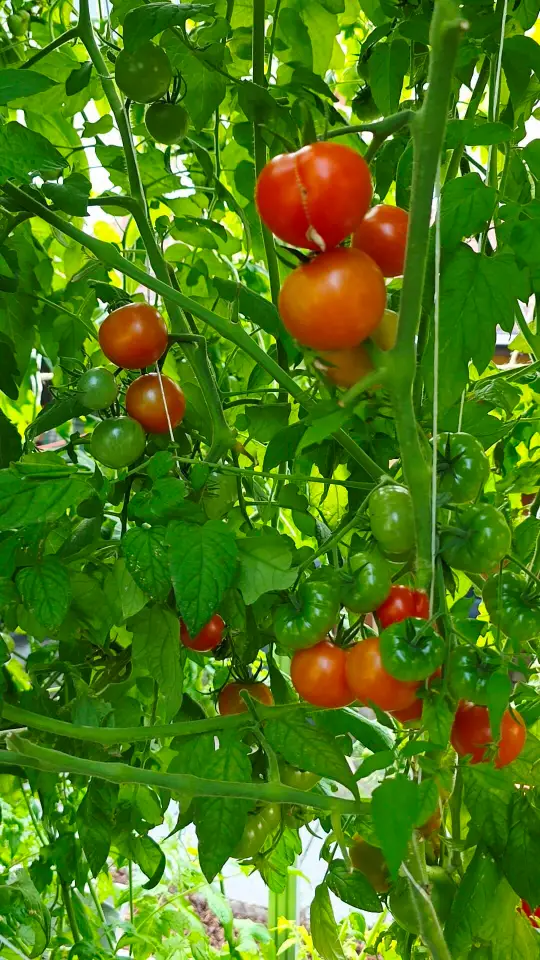
This is where most mistakes happen. The first flowers are not yet a reason to switch. If the plants are still small, they keep getting grow fertiliser so they become big and strong. They form flowers anyway. With my tomatoes I only switch once they have grown about 75 cm above the tower. What counts is the size of the plant, not the date. In warmer regions it often starts earlier.
The bloom fertiliser then stays until about 1.5 m. By then fruits are already hanging, but more flowers should keep coming at the top. Only when the first fruits are growing do I switch to the fertiliser for fruiting and ripening. When I once switched too early, noticeably fewer new flowers came.
Why a one-bottle fertiliser is not enough for flowering
For flowering a tomato needs much more potassium and phosphorus. That is hardly possible in a single bottle, because calcium precipitates with phosphate and sulphate in the concentrate. That is why liquid bloom fertilisers almost only come as two or three bottles, or you mix powder yourself. In commercial growing, too, calcium and the sulphates and phosphates are therefore prepared in separate tanks.
Option 1: three-part fertiliser from three bottles
Before I switched to powder, I fed with three bottles for years. They are usually called Grow, Bloom and Micro. Grow brings lots of nitrogen for leaves and growth, Bloom brings phosphorus and potassium for flowering and fruit, Micro brings calcium and the trace elements. With them you feed lettuce just like tomatoes; you only change the ratio.
| Phase | Grow · Bloom · Micro per 10 litres | Ratio |
|---|---|---|
| Seedlings, first weeks | 10 · 5 · 5 ml | 2 : 1 : 1 |
| Growth to harvest | 20 · 10 · 10 ml | 2 : 1 : 1 |
| Transition to flowering | 10 · 20 · 10 ml | 1 : 2 : 1 |
| Flowering and fruit | 0 · 30 · 10 ml | 0 : 3 : 1 |
Measure each bottle with a syringe or measuring cylinder and add them to the water separately, in the order on the label. Stir well in between and never pour the bottles straight together, otherwise the calcium flocculates. Then measure EC and adjust pH. The amounts are guidelines; depending on your water you need a little more or less. For exact amounts and a comparison of fertilisers, use my Nutrient calculator.
 Advanced Hydroponics Dutch Formula 1 x 3LThree-part fertiliser Grow, Bloom and Micro for flowering and fruiting. The 1 litre bottles lasted me exactly one year.46,40 EURView on Amazon*To Amazon*
 stonylab 1er Pack MesszylinderGlass measuring cylinder so each bottle is measured exactly.13,25 EURView on Amazon*To Amazon*
* Affiliate link: if you buy through it, I earn a small commission. Your price stays the same. Prices incl. VAT, as of 26.11.2026.
Option 2: powder fertiliser to mix yourself
Bottles are convenient, but you are mainly buying water. My 36 tomatoes drink around 200 litres a week in summer, so the bottles are empty quickly. If you grow lots of tomatoes, you should switch to powder. Powder fertiliser always consists of three parts: Epsom salt supplies magnesium and sulphur, calcium nitrate supplies calcium and nitrogen, and then there is the main fertiliser. You only change the main fertiliser.
| Phase | Main nutrient | why |
|---|---|---|
| Flowering (from about 75 cm) | 15-5-30 | still lots of nitrogen so new flowers keep coming at the top |
| Fruiting and ripening, soft or medium water | 9-10-38 (Polka) | nitrogen as nitrate, lots of potassium for large, sweet fruits |
| Fruiting and ripening, hard water | 8-12-24 (Tardo) | lots of ammonium, keeps the pH down |
This is my feeding plan for flowering. Epsom salt and calcium nitrate are fixed, always the same amount per litre. You dose the main fertiliser by EC; the target is 2.0 to 2.5 mS/cm at a pH of 5.8 to 6.2.
| Your water (EC without fertiliser) | Epsom salt | Calcium nitrate | 15-5-30 (starting value) |
|---|---|---|---|
| soft, below 0.3 | 1 g / 10 l | 6 g / 10 l | 9 g / 10 l |
| medium, 0.3 to 0.5 | 1 g / 10 l | 4 g / 10 l | 9 g / 10 l |
| hard, above 0.5 | 0.5 g / 10 l | 3 g / 10 l | 7 g / 10 l |
Mix in this order: fill with water, stir in calcium nitrate until fully dissolved, dissolve Epsom salt separately in a little water and add it, measure EC, then slowly add the main fertiliser and finally measure EC and pH. Calcium nitrate and Epsom salt must never meet undiluted, otherwise gypsum forms and drops out as white flakes. For weighing you need a precision scale that weighs to 0.1 g, or a suitable dosing spoon. Store powder fertiliser in tins with lids, cool and dry, because calcium nitrate draws water from the air.
I show this in detail with all amounts for fruiting and ripening and my mix of 70 % Polka and 30 % Tardo on my page Tomatoes in hydroponics. The calculator works out the grams for any number of litres.
 50g / 0.001g Feinwaage mit 6 WiegeeinheitenPrecision scale for the small amounts of Epsom salt, calcium nitrate and main fertiliser.16,99 EURView on Amazon*To Amazon*
* Affiliate link: if you buy through it, I earn a small commission. Your price stays the same. Prices incl. VAT, as of 26.11.2026.
Hard or soft water: what does it mean for the fertiliser?
First measure your tap water without fertiliser with the EC meter. Then you know how much lime is in it. Soft water brings hardly any calcium and magnesium, so both have to come via the fertiliser. Hard water already brings part of it and keeps pushing the pH up.
| Your water | EC without fertiliser (mS/cm) |
|---|---|
| soft | below 0.3 (my water: 0.25) |
| medium | 0.3 to 0.5 |
| hard | above 0.5 |
| Rainwater or reverse osmosis water | almost 0 |
Nitrogen comes in fertiliser in two forms: as nitrate and as ammonium. Fertilisers for soft water have lots of nitrate and little ammonium. Fertilisers for hard water have more ammonium, because ammonium pushes the pH down. How much of each form is in it is on the pack. If you mix hard water half and half with rainwater or reverse osmosis water, you roughly halve the hardness. More on this under Types of water.
First EC, then pH
Whatever the fertiliser: always measure the EC first and then set the pH, because the fertiliser changes the pH. My liquid fertiliser lowers it, and the more you add, the stronger the effect. The iron in it is chelated. That way it stays available to the plant even if the pH drifts. My target value is 5.8, where the plant can reach all nutrients well. Without a continuous monitor, measuring every 2 to 3 days is enough.
If the leaves turn pale, fertiliser is usually missing, so add a little more. If the leaves discolour in May, it is often the cold water and not the fertiliser. I explain how to set the pH correctly under the pH value.
 BudgetPious 5-in-1 meterAffordable, easy to use and perfectly adequate for beginners.39,99 EURView on Amazon*To Amazon*
 ProBluelab OnePenShows right after mixing whether the EC suits the growth stage. Every reading is saved in the app for comparison. Pro meter: the app analyses your readings and keeps measurement logs.203,15 EURView on Amazon*To Amazon*
* Affiliate link: if you buy through it, I earn a small commission. Your price stays the same. Prices incl. VAT, as of 26.11.2026.
The Amazon products on this page are affiliate links*. I earn a commission if you buy, your price stays the same.

Did you enjoy this topic? Is anything missing, or do you see something differently? I keep learning all the time and I would love to hear your question and your experience. Just write it in the comments below, no sign-up needed.
Write your question or experienceFrequently asked questions about grow fertiliser and bloom fertiliser
What’s the difference between leaf nutrient and bloom nutrient?
Which plants only need grow fertiliser?
Which plants need bloom fertiliser?
Do broccoli and cauliflower need bloom fertiliser?
When do I switch to bloom nutrient for tomatoes?
What happens if I switch to bloom fertiliser too early?
Can I also use bloom fertiliser for lettuce?
What do the three numbers on the fertiliser mean?
Is a fertiliser with 8-4-8 made up differently from one with 4-2-4?
Why is a universal fertiliser not ideal for tomatoes?
When do seedlings get fertiliser?
How much Frankies liquid fertiliser do I use per litre?
Which plants is Frankies liquid fertiliser intended for?
What water is Frankies liquid fertiliser made for?
Why does bloom fertiliser usually come in two or three bottles?
What do Grow, Bloom and Micro stand for in a three-part fertiliser?
How do I mix a three-part fertiliser correctly?
What three parts does powder fertiliser consist of?
Which powder fertiliser suits soft water and which suits hard water?
Why must calcium nitrate not come into direct contact with Epsom salt?
What EC do my tomatoes have with bloom fertiliser?
From what EC is tap water soft?
What do I do with the old nutrient solution when switching fertiliser?
Does Frankies liquid fertiliser lower the pH value?
Sources
- Ohio State University Extension (HYG-1437): nutrient solutions for greenhouse tomatoes by growth stage (more potassium for fruit quality, prepare calcium separately, pH 5.5 to 6.5).
- Penn State Extension: Hydroponics Systems, calculating nutrient solutions (prepare calcium separately from sulphates and phosphates).
- Colorado State University Extension: Plant Nutrition (roots take up nutrients as dissolved ions).
- Resh, H. M.: Hydroponic Food Production (nutrient solutions, nitrate and ammonium, stock solutions A and B).
- Frank Wagner: my hydroponics book (German), part 1 and part 2.
Continue with your own growing

212 pages, now available on Amazon, simply explained for beginners and with videos on the topics (in German). Exactly how I grow myself: from sowing to harvest.
View the book on Amazon* ›A few questions about space, location and what you want to harvest, and you get a recommendation.
To the tower advisor ›Blausocke: She wanted to know whether different vegetables need different values. My answer with a table: Do different vegetables need different values? ›
Do you have a question too? Here is how to ask it ›
Tapping opens WhatsApp (provider: WhatsApp Ireland Ltd.). More in the privacy policy.
Questions and comments
Ask your question here, even without a name. I will answer as soon as I can.