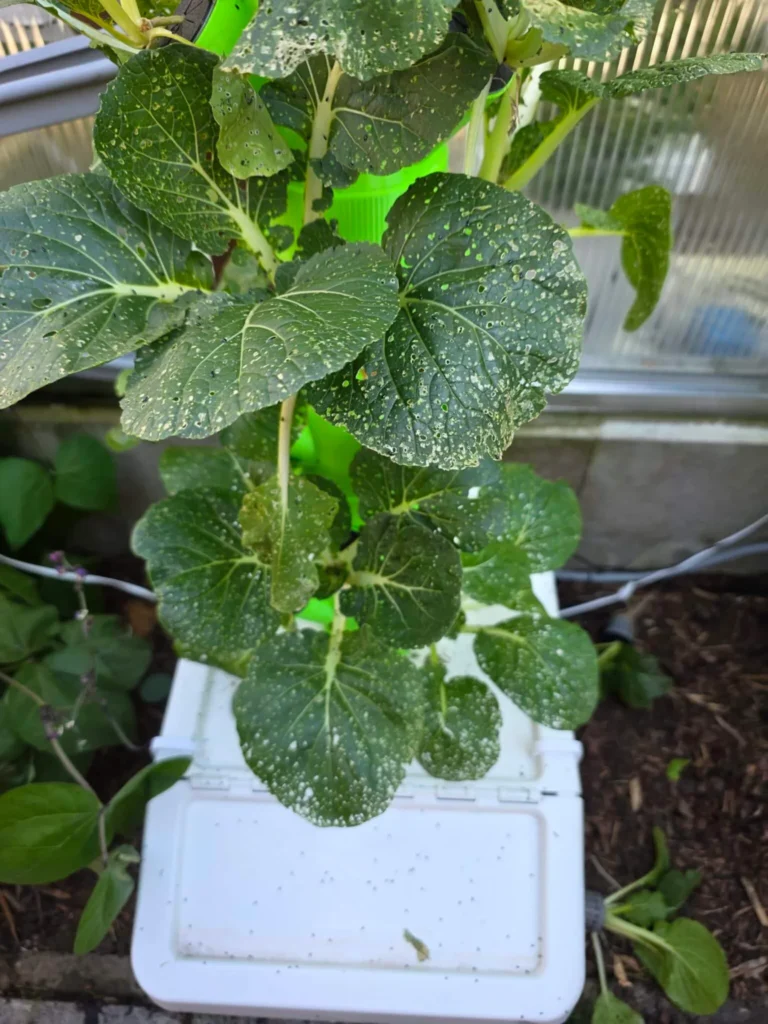
Hydroponic problems: recognise and solve them
Yellow leaves, brown edges, no fruit or limp plants: how to find the cause and how I solve it myself in the hydro tower. With a deficiency table, problems by plant and the values from my book.
Things do not always run smoothly in hydroponics either. The good news: most problems announce themselves, and almost all have a simple cause. On this page I show you how to find it. First the readings, then the leaves, then the individual plant.
Pests, powdery mildew, root rot, algae, pH and EC have their own detailed pages on my site. Here you will find the essentials in brief and the link to read more.
1Measure first, then act
Most problems are solved once pH and EC are right again.
If something is wrong, measure pH and EC first. Often that is the cause, not the fertiliser. Pale leaves do not always mean too little fertiliser. If the pH or water temperature is off, the plant cannot reach the nutrients, even if there is enough in the water.
- Measure EC: does it suit the plant and the phase?
- Measure pH: is it between 5.5 and 6.5? My target value is 5.8.
- Check water temperature: 18 to 22 °C is ideal.
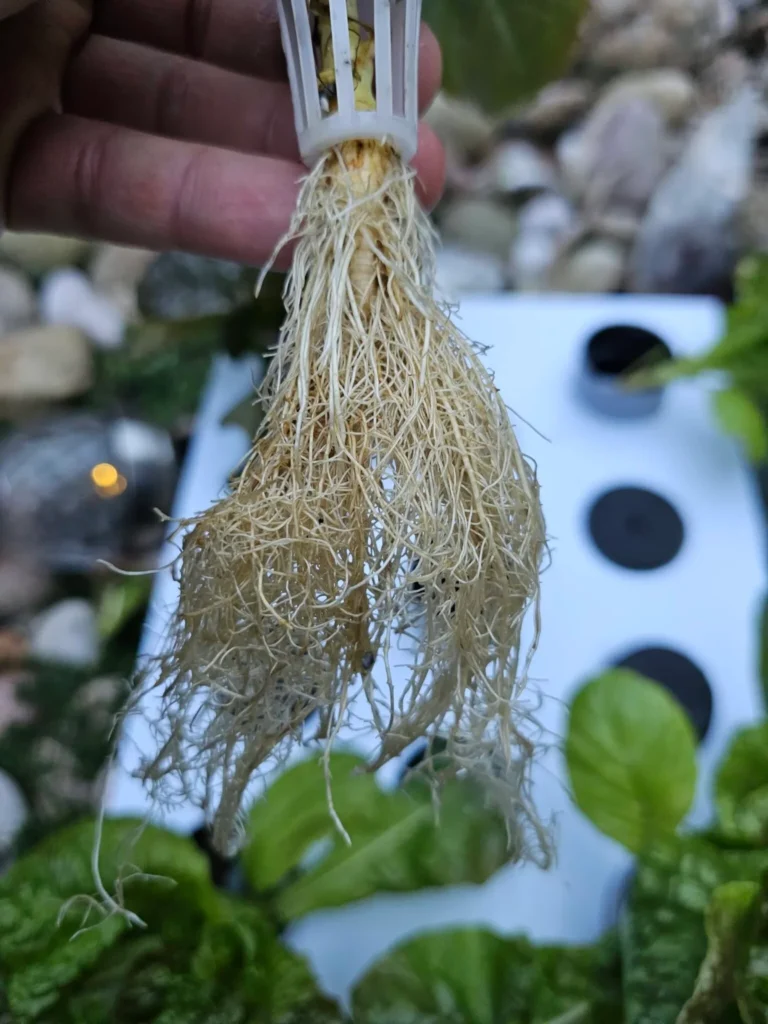
- Look at the roots: white and strong is good, brown and slimy is root rot.
- Is the pump running, is the air stone running, is the water level right?
- Only now do you look at the leaves more closely.
How to measure and adjust correctly is explained in detail on my pages about pH value and the EC value. Without a continuous monitor, measure every 2 to 3 days, always EC first, then pH.
 BudgetPious 5-in-1 meterAffordable, easy to use and perfectly adequate for beginners.39,99 EURView on Amazon*To Amazon*
 ProBluelab OnePenRobust pen for advanced growers: fast, steady readings, replaceable probe and history in the app. Pro meter: the app analyses your readings and keeps measurement logs.239,00 EURView on Amazon*To Amazon*
 Pro, in the tankBluelab Guardian MonitorThe pro solution: measures constantly in the reservoir and sends alerts to your phone, even when you are away.399,00 EURView on Amazon*To Amazon*
* Affiliate link: if you buy through it, I earn a small commission. Your price stays the same. Prices incl. VAT, as of 9.11.2026.
 Continuous monitor for pHStays in the container. You see pH, EC and water temperature at any time and notice immediately if something drifts.52,34 EURView on Amazon*To Amazon*
 pH calibration solution 4.00 and 7.00Use it to calibrate your pH meter regularly. Only a correctly calibrated device shows you real values.21,95 EURView on Amazon*To Amazon*
* Affiliate link: if you buy through it, I earn a small commission. Your price stays the same. Prices incl. VAT, as of 8.11.2026.
2Recognising deficiency: old or young?
Where it starts already gives you half the answer.
If your plant looks deficient, first look at which leaves it starts on. The plant can redistribute some nutrients internally, others not. That tells you which direction to search in.
It starts at the bottom on the old leaves
Nitrogen, phosphorus, potassium and magnesium are mobile. If they are missing, the plant takes them from the old leaves and passes them on to the young ones. That is why this deficiency shows first at the bottom.
It starts at the top on the young leaves
Calcium, iron, sulphur and most trace elements stay where they are. If they are missing, the young leaves and shoot tips suffer first.
| What you see | Where it starts | What is usually behind it |
|---|---|---|
| evenly light green to yellow, slow growth | old leaves | Nitrogen |
| yellow between the veins, veins stay green | old leaves | Magnesium |
| edges first yellow, then brown and dry | old leaves | Potassium |
| dark, often with a purple tinge, plant stays small | old leaves | Phosphorus, often with cold water |
| yellow between the veins, veins green, later almost white | young leaves | Iron, usually pH above 6.5 |
| brown edges, blossom end rot in tomatoes | young leaves, fruits | Calcium is not getting through |
| pale overall, evenly | young leaves | Sulphur |
| stunted shoot tips, crooked thick leaves | Shoot tips | Boron |
| small, narrow leaves, short gaps, compressed | young leaves | Zinc, often due to too much phosphorus or high pH |
pH and nutrients
| pH value | What happens |
|---|---|
| below 5.5 | calcium, magnesium and molybdenum become scarce, iron and manganese too available |
| 5.5 to 6.5 | good range, most nutrients get through well, my target is 5.8 |
| above 6.5 | phosphorus, iron, manganese, zinc, copper and boron become scarce, pale young leaves are typical |
You can read more about adjusting and lowering the pH correctly on the page pH value in hydroponics.
3The nutrients one by one
What each nutrient does and how you notice it is missing.
The plant gets carbon, hydrogen and oxygen itself from air and water. In the tower it gets the twelve most important other nutrients from the fertiliser. It needs the macronutrients nitrogen, phosphorus and potassium in large amounts, the secondary nutrients calcium, magnesium and sulphur in medium amounts, and the trace elements only in tiny amounts. They are all equally important.
Main nutrients
| Nutrient | Job | How deficiency shows | Good to know |
|---|---|---|---|
| Nitrogen (N) | engine of growth, protein and green pigment | old leaves evenly light green to yellow, slow growth | too much makes soft leaves and, in tomatoes, lots of foliage and few flowers |
| Phosphorus (P) | energy carrier, for roots, flowers and fruits | old leaves dark, often purple, plant stays small | cold water slows uptake; above pH 6.5 it precipitates with calcium |
| Potassium (K) | regulates water balance, sugar and flavour in fruits | edges of old leaves yellow, then brown and dry | too much potassium slows the uptake of calcium and magnesium |
Secondary nutrients
| Nutrient | Job | How deficiency shows | Good to know |
|---|---|---|---|
| Calcium (Ca) | building material for strong cell walls | young leaves with brown edges, blossom end rot | only travels with the water flow, scarce below pH 5.5; with soft water it must come from the fertiliser |
| Magnesium (Mg) | sits at the centre of the green pigment | old leaves yellow between the veins, veins green | scarce below pH 5.5; tomatoes need a lot in the fruiting phase, Epsom salt covers this |
| Sulphur (S) | for protein and aroma, for example in rocket and brassicas | young leaves evenly pale | rare in hydroponics, comes as sulphate with many fertilisers |
Trace elements
| Nutrient | Job | How deficiency shows | Good to know |
|---|---|---|---|
| Iron (Fe) | for forming green pigment | young leaves yellow between the veins, later almost white | the most common deficiency, usually because of pH above 6.5; good fertilisers contain iron as chelate |
| Manganese (Mn) | photosynthesis, defence | young leaves pale between the veins, small spots | scarce above pH 6.5, can become too much below pH 5 |
| Zinc (Zn) | growth substances for shoot and leaf length | small, narrow leaves, compressed growth | a lot of phosphorus can trigger zinc deficiency |
| Copper (Cu) | metabolism, firm tissue | young leaves wilt, pale shoot tips | too much harms the roots, for example from old copper pipes |
| Boron (B) | cell division, flowers and fruits | shoot tips die off, young leaves crooked and thick | there is only a small range between enough and too much |
| Molybdenum (Mo) | helps use nitrogen | looks like nitrogen deficiency, leaf edges curl in | scarce below pH 5.5; the amount in the fertiliser is always enough |
You will find more about the individual nutrients on the page nutrients in hydroponics.
4Top up with fertiliser or change the water?
Mix fresh instead of topping up.
The plant only takes up the nutrients it needs at that moment. I am the same with Brussels sprouts: I do not like them, so they stay on the plate. It is similar in the nutrient solution. What the plant does not take stays in the water and builds up over time.
Your meter only shows how much salt there is in the water in total, but not which. So the EC can look fine or even rise although the plant has long been lacking something. If you then simply add fertiliser, some nutrients are far too plentiful. And too much of one nutrient slows the uptake of another. So deficiency appears again despite a full tank.
How I decide
| Situation | What I do |
|---|---|
| plants growing healthily, water level dropping | just top up, in a running tower with ready-mixed nutrient solution |
| deficiency, but pH or water temperature is off | fix pH and temperature first, then observe |
| deficiency even though pH and water temperature are right | change the nutrient solution completely |
| EC rises for no reason | change the nutrient solution completely |
How I change the water
- Let the plants drink the tank almost empty.
- Pump out the rest with the spare pump.
- Fill with fresh water.
- Mix a new batch: EC first, then pH.
The old nutrient solution is still full of fertiliser. I use it to water my houseplants or the garden. But do not tip it all onto a single pot plant, otherwise it gets too salty for it. Better to spread it well.
 Spare pump 600 l/hA matching spare pump is always part of my setup. If the main pump fails, you switch over, and when changing the water it pumps the rest into the watering can.17,99 EURView on Amazon*To Amazon*
* Affiliate link: if you buy through it, I earn a small commission. Your price stays the same. Prices incl. VAT, as of 9.11.2026.
5Feed correctly instead of feeding problems
A complete fertiliser is the best prevention.
Many deficiency problems arise because something is missing from the fertiliser. Many fertilisers, for example, contain no calcium and magnesium, because manufacturers assume your tap water brings both. But soft water like mine in Falkenstein contains almost none. So always check the label.
Until flowering I use my own fertiliser from one bottle. It already brings calcium, magnesium and iron as chelate, and you add as much as needed until the EC is right. From flowering, tomatoes, peppers and cucumbers need much more potassium and phosphorus. Then you switch to a bloom fertiliser, for example three bottles or powder with calcium nitrate and Epsom salt.
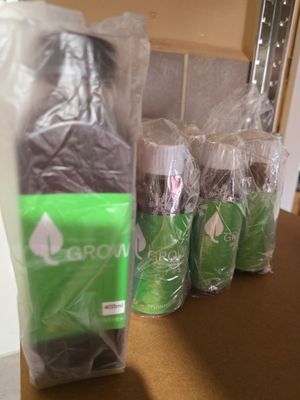
Seedling and leaf nutrient from one bottle, with calcium and magnesium, made for soft water. For all plants from sowing to the growth phase, leafy plants until harvest.
View in the shop ›Three bottles: Grow, Bloom, Micro
Before I switched to powder, I fed with three bottles for years. Grow brings lots of nitrogen for leaves and growth, Bloom brings phosphorus and potassium for flowering and fruit, Micro brings calcium and the trace elements. You do not change the amounts according to symptoms, but the ratio according to phase. Lettuce stays on the growth mix until harvest. For tomatoes, Grow drops out from flowering, Bloom goes up and Micro stays the same.
| Phase | Grow · Bloom · Micro per 10 litres | Ratio |
|---|---|---|
| Seedlings, first weeks | 10 · 5 · 5 ml | 2 : 1 : 1 |
| Growth to harvest (leafy plants) | 20 · 10 · 10 ml | 2 : 1 : 1 |
| Transition to flowering | 10 · 20 · 10 ml | 1 : 2 : 1 |
| Flowering and fruit | 0 · 30 · 10 ml | 0 : 3 : 1 |
The amounts for three-part fertiliser and powder are calculated for you by my Nutrient calculator , where you will also find a comparison table.
 Advanced Hydroponics Dutch FormulaThree-part fertiliser for the flowering and fruiting phase. With the ratio for each phase and my nutrient calculator you hit your target EC.47,57 EURView on Amazon*To Amazon*
* Affiliate link: if you buy through it, I earn a small commission. Your price stays the same. Prices incl. VAT, as of 8.11.2026.
6Too much or too little fertiliser
The EC shows you how much fertiliser is in the water.
| What it looks like | What you do | |
|---|---|---|
| EC too high | burnt leaf tips and edges, growth stalls, roots are weakened | dilute with water until the target EC is right again |
| EC too low | pale, yellowish leaves, the plant weakens | add fertiliser in small steps, stir, measure again |
Plants take up more water than fertiliser. When the water level drops, the EC therefore rises. That is normal and no reason to worry. What matters is that you set the EC to suit the plant and the phase. The EC rises with the plant, step by step.
My EC stages from the book
| Plant | pH | EC seedling / young plant / growth / harvest or fruit (mS/cm) |
|---|---|---|
| Lettuce | 5.5 to 6.5 | 0.4 / 0.8 / 1.2 / 1.6 |
| Basil | 5.5 to 6.5 | 0.4 / 0.8 / 1.2 / 1.6 |
| Parsley | 5.5 to 6.0 | 0.4 / 0.8 / 1.2 / 1.6 |
| Kohlrabi | 6.0 to 6.5 | 0.6 / 1.1 / 1.7 / 2.2 |
| Tomato | 5.5 to 6.5 | 0.6 / 1.3 / 1.9 / 2.5 |
| Peppers | 5.5 to 6.0 | 0.5 / 1.0 / 1.5 / 2.0 |
| Cucumber | 5.5 to 6.0 | 0.6 / 1.3 / 1.9 / 2.5 |
| Zucchini | 5.5 to 6.5 | 0.6 / 1.2 / 1.8 / 2.4 |
| Strawberry | 5.5 to 6.5 | 0.4 / 0.7 / 1.1 / 1.4 |
These are maximum values you do not have to exceed. I run my lettuce with soft water at only 1.1 to 1.2, and it grows brilliantly. All values and plants are on the page EC value in hydroponics.
7Brown leaf edges
Almost always nothing is missing in the water.
Brown, dry leaf edges are also called tipburn. They mostly appear on lettuce, often on pak choi too. The calcium is there; it just does not arrive where the plant needs it: in the edges of the young leaves.
Calcium only travels through the plant with the water flow. The leaves create this flow themselves by evaporating water. Young leaves in the centre evaporate little and so are the first to get too little. Lettuce grows fast and constantly forms new leaves, which is why it is affected so often.
| Cause | What happens |
|---|---|
| Heat | the outer leaves evaporate so much that hardly anything is left for the young ones in the centre |
| very dry air | the delicate edges dry out faster than water arrives |
| stagnant air | the leaves hardly evaporate, too little calcium arrives |
| fan blowing directly onto the plants | the edges dry out |
| lamp hanging too close | the edges dry out |
| EC too high | the tips burn |
| starts on old, lower leaves | then potassium is more likely to be missing |
My brown edges indoors
Indoors on my four towers my lettuce suddenly got brown edges. At first I thought the air in the room was too humid and the moisture was settling on the leaf edges. But for me it was exactly the opposite: the edges were drying out.
My fan stands centrally between the four towers. On the lettuce in the middle, the leaf edges on the left and right had dried out. The lettuce in the right tower was only dry on its left side, where the fan blows. On its right side the wind did not reach directly, and there the leaves were healthy. That made it clear to me: the fan was too close. It was not calcium deficiency, because my fertiliser brings extra calcium, and outdoors I had no brown edges with the same fertiliser.
- Move the fan further away or use one with several speeds. The leaves should only move slightly.
- Hang the lamps higher. Long, strong lamps dry out the edges even more.
- Reduce the light from 16 to 14 hours. That does not cure it, but it helps.
- Check EC, pH and roots first before you change anything about the fertiliser.
 AC Infinity clip fan with several speedsGentle, oscillating airflow. With several speeds you can set it so the leaves only move slightly.85,99 EURView on Amazon*To Amazon*
 Digital thermo-hygrometerShows you temperature and humidity. So you notice whether the air is too dry or too humid.12,99 EURView on Amazon*To Amazon*
* Affiliate link: if you buy through it, I earn a small commission. Your price stays the same. Prices incl. VAT, as of 9.11.2026.
More about air and humidity is on the page Humidity and air circulation.
8Too little or too much light
Light is food for your plants.
With light the plant builds sugar in its leaves, which is its energy for growing. Without enough light it becomes leggy: long, thin stems and large gaps between the leaves. Such stems bend over easily and never get shorter again. In autumn and winter the window is often not enough; the light is weak and only comes from one side.
| Problem | How to recognise it | What helps |
|---|---|---|
| too little light | long, thin stems, pale leaves, seedlings bend towards the window | grow light, 14 to 16 hours, at the side 20 to 30 cm from the tower |
| lamp too close or too strong | dry, brown leaf edges | hang the lamp higher or further away |
| light on too long | stress, the plant needs its night | at most 16 hours, with a timer |
What matters is the amount of light per day: how strong the lamp is and how long it shines. If the light is weaker, let it shine longer, but at most 16 hours. In my pepper experiment, 35 plants stood under a stronger lamp and 35 under a weaker one, same distance, same timer. Under the stronger one they grew bigger.
 Mars Hydro VG40 LED grow lightLong bars that I mount at the side of the tower, about 20 to 30 cm from the plants.59,99 EURView on Amazon*To Amazon*
 Timer with intervalSwitches the lamp or pump reliably. So the plant gets at most 16 hours of light and its night.14,99 EURView on Amazon*To Amazon*
* Affiliate link: if you buy through it, I earn a small commission. Your price stays the same. Prices incl. VAT, as of 9.11.2026.
Which lamp suits you is explained on the page lighting.
9Water, lime and pump
What is already in the water counts too.
Hard water
Tap water contains dissolved calcium and magnesium, in other words lime. Lime already counts towards the EC before you add fertiliser and pushes the pH up. With hard water you therefore need pH Down more often. Soft water, on the other hand, brings hardly any calcium and magnesium; then the fertiliser has to supply them.
| Water | Hardness | EC without nutrient |
|---|---|---|
| soft | below 8.4 °dH | below 0.3 mS/cm |
| medium | 8.4 to 14 °dH | 0.3 to 0.5 mS/cm |
| hard | above 14 °dH | above 0.5 mS/cm |
- If you mix tap water 1:1 with reverse osmosis water or rainwater, you halve the hardness and starting EC.
- A reverse osmosis unit filters out almost all salts. Then your fertiliser must supply calcium and magnesium.
- Hands off the water softener: it swaps lime for sodium. That builds up in the tank and harms the roots.
- White crusts on the tower or net pots are limescale and harmless. At the end of the season wipe them off with vinegar or citric acid.
 OsmoFresh reverse osmosis unitFor very hard water. Use it to soften your tap water by mixing or to build the nutrient solution entirely yourself.79,00 EURView on Amazon*To Amazon*
* Affiliate link: if you buy through it, I earn a small commission. Your price stays the same. Prices incl. VAT, as of 9.11.2026.
Water level and pump
Indoors my pump runs for 5 minutes, then pauses for 30 minutes. That is enough: the roots stay moist. If the tower stands outdoors in full sun, set it to 15 minutes on and 15 minutes off. If the lettuce leaves droop, water is missing. The air stone never goes on the timer; it runs continuously.
I do not cut the roots. If the water level drops and only the air stone is running, shortened roots no longer reach the water. If the water is missing for 6 hours in heat, the leaves droop badly. No panic: let the water run continuously, and most plants recover. Without a spare pump, park the plants in the propagation station.
10Problems by plant
The most common questions, sorted by vegetables and herbs.
Here you will find the typical problems of the plants I grow myself. Almost always: measure first, then use the table above on old and young leaves, and only then adjust the fertiliser.
Tomatoes
| Problem | Common cause | Solution |
|---|---|---|
| pale leaves, slow growth | EC too low, nitrogen missing, pH off | check EC and pH, increase fertiliser in small steps |
| lots of foliage, few flowers or fruits | too much nitrogen, heat above about 30 °C | switch to bloom fertiliser from flowering, ventilate well |
| flowers drop off | heat, also warm nights above 21 °C, very humid air | remove side panels, ventilate, shake gently indoors |
| brown, leathery spot at the bottom of the fruit | blossom end rot, calcium is not getting through | even water supply, fertiliser with calcium, calcium nitrate from flowering |
| leaves curl up | heat and lots of sun | usually harmless, the harvest does not suffer |
| fruits do not turn properly red | above about 30 °C hardly any red pigment forms | pick when they start colouring, ripen indoors at 20 to 25 °C |
| old leaves yellow between the veins | magnesium; tomatoes need a lot in the fruiting phase | check pH, Epsom salt according to the feeding plan |
| grey, furry coating, brown spots | grey mould, late blight from wet leaves | roof over the tomatoes, remove side shoots and lower leaves, air |
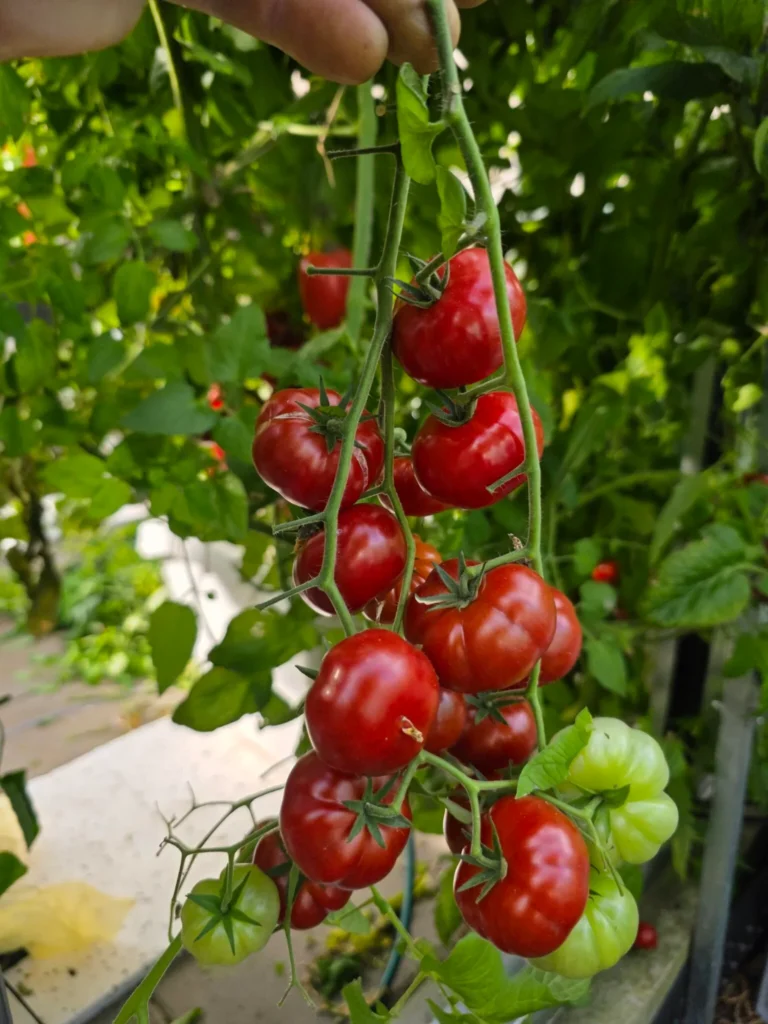
Tomatoes are self-pollinating. In an open greenhouse the wind shakes the pollen out of the flowers. Indoors under lamps a small fan helps, or you gently shake the string once a day. Everything about tomatoes is in my guide Tomatoes in hydroponics.
Peppers
| Problem | Common cause | Solution |
|---|---|---|
| small, stunted fruits | too little light, heat, EC too low for the fruiting phase | more light, fruit EC up to 2.0, potassium via the bloom fertiliser |
| brown spot on the blossom end | blossom end rot, calcium is not getting through | even water supply, fertiliser with calcium |
| fruits shrivel on the plant | lack of water, for example pump too infrequent or water level too low | check pump times and water level, pump longer in heat |
For me peppers are among the most rewarding plants. They grow brilliantly even in the narrow, vertical tower and drink little. More in the guide Peppers in hydroponics.
Cucumbers and courgettes
| Problem | Common cause | Solution |
|---|---|---|
| white, floury coating | powdery mildew, stagnant humid air | remove infested leaves, plenty of air movement, air the room in the morning |
| fine pale dots, later webbing | spider mites in heat and dry air | spray in the morning, use predatory mites |
| crooked or misshapen fruits | incomplete pollination, heat, lack of water | supply evenly, remove crooked fruits early |
| leaves mottled yellow-green like a mosaic, stunted | cucumber mosaic virus, transmitted by aphids | remove the plant, keep aphids down from the start |
| young leaves yellow, veins green | iron is not getting through, usually pH above 6.5 | set the pH to 5.8 |
| old leaves yellow, veins green | Magnesium | check pH, fertiliser with magnesium |
To be honest: cucumbers are demanding. I was able to harvest a few, but there is still work to do before my cucumber growing is really successful. It is not the hydroponics; fertiliser and values are right. The problems are spider mites and powdery mildew, and every gardener has those, in soil too. Cucumbers also like it more humid than tomatoes.
Strawberries
| Problem | Common cause | Solution |
|---|---|---|
| lots of foliage, few flowers | too much nitrogen, too little light, June-bearing variety | EC not above 1.4, more light, choose everbearing varieties for indoors |
| small or misshapen fruits | flowers incompletely pollinated | dab open flowers indoors with a soft brush |
| roots stay wet too long | pump runs too long | indoors 5 minutes on, 30 minutes off |
Every little seed on a strawberry is a seed, and each one has to be pollinated. Where that is missing, the fruit does not grow, and it stays small or crooked. Outdoors insects do this; indoors you help with a brush.
Lettuce and pak choi
| Problem | Common cause | Solution |
|---|---|---|
| pale, light green leaves, poor development | EC too low, pH off, too little light | bring EC to 1.1 to 1.6, pH 5.8, check light |
| soft, watery leaves | too much nitrogen, little light | EC not above 1.6, more light |
| brown leaf edges in the centre | calcium is not getting through, fan or lamp too close, heat | see section Brown leaf edges |
| lettuce shoots up | heat and long days | place cooler, harvest earlier, sow again regularly |
More in my guide Lettuce in hydroponics.
Basil, parsley and other herbs
| Problem | Common cause | Solution |
|---|---|---|
| plants limp even though there is water | root rot, warm water, pump failed | look at the roots, air stone running continuously, check pump |
| slow growth, yellowish leaves | EC too low, pH off, too cold | EC up to 1.6, pH 5.8, keep basil warm |
| dark spots on basil | cold, for example a cold window pane or draughts | place warmer, keep leaves away from the glass |
| basil yellow between the veins, grey coating underneath | downy mildew in humid air and with wet leaves | remove infested plants, move the air, only spray in the morning |
| long, thin stems | too little light | grow light, 14 to 16 hours |
Basil loves warmth and germinates best at 20 to 25 °C. Parsley needs patience to germinate, but then grows for many months. More in the guides Basil and Parsley.
Kohlrabi
| Problem | Common cause | Solution |
|---|---|---|
| small bulbs, slow growth | too little light, too crowded, heat, EC too low | more space and light, EC up to 2.2, plant early in the year or from August |
| yellow leaves | EC too low or pH off | pH 6.0 to 6.5, increase EC step by step |
| small round holes, beetles jump away | flea beetles in heat and drought | plant early in spring or from August |
| caterpillars and feeding damage on the leaves | Cabbage white | fine-mesh net over the tower |
HydroFlex Tower for indoors and outdoors, seedling box, seedling station, support rings and my own nutrient. After you buy, I’ll help you on WhatsApp.
To the shop ›11Pests, fungi, root rot and algae
Briefly explained, in detail on their own pages.
Without soil many problems disappear: no slugs, no soil pests. But even a tower is not completely free of them. Here are the essentials in brief.
- Spider mites and thrips love heat and dry air. Spray in the morning, use predatory mites, and blue sticky traps against thrips.
- Aphids outdoors nature takes care of it. Indoors I dip small plants upside down into a bucket of water once a week. Plants from outdoors never come into the house.
- Mildew is a white, floury coating. Remove infested leaves, air the room for 15 minutes in the morning, humidity below 60 %, gentle fan.
- Root rot makes roots brown, slimy and musty. The causes are usually water above 24 °C, light or dirt in the container, or too much fertiliser. With an air stone it hardly ever occurs.
- Algae need light. A light-tight, closed container keeps them away. I have no problems with them even above 30 °C.
 AquaForte Hi-Flow V-30 air pumpPowerful air pump for the tank. Runs continuously for me and keeps the roots healthy.51,94 EURView on Amazon*To Amazon*
* Affiliate link: if you buy through it, I earn a small commission. Your price stays the same. Prices incl. VAT, as of 9.11.2026.
12Prevention is easier than cure
A few minutes a day are enough.
Almost everything on this page comes down to a few simple habits. With them most problems never arise.
| Habit | Why |
|---|---|
| check water level, pump and air stone every day | failures are noticed before it is too late |
| measure EC and pH every 2 to 3 days, EC first, then pH | stop deficiency from wrong pH arising in the first place |
| use a complete fertiliser with calcium and magnesium | no short stave in the barrel |
| water 18 to 22 °C, air stone running continuously | healthy, white roots |
| lamp 20 to 30 cm at the side, at most 16 hours | compact plants without burnt edges |
| gentle air movement, humidity below 60 % | no powdery mildew, fewer brown edges |
| take a quick look under the leaves every day | spot pests early |
| if there is a deficiency, mix fresh instead of topping up | no residues building up in the tank |
How to set up and care for your tower is shown in the guide to the hydro tower and in the overview of the Vegetable growing.
* Affiliate links (Amazon): if you buy, I receive a commission; your price stays the same.

Frequently asked questions about hydroponic problems
What do I do first if my plants in the hydro tower are ailing?
Which pH value is right in hydroponics?
Why does my plant show deficiency even though there is enough fertiliser in the water?
How do I know which direction to search in with a deficiency?
What does nitrogen deficiency look like?
How do I tell magnesium deficiency from iron deficiency?
What is the most common cause of iron deficiency in the tower?
How do I recognise phosphorus deficiency?
How do I recognise potassium deficiency?
Should I add zinc, copper, boron or manganese individually?
What does the barrel image mean for feeding?
Does it help to simply add more fertiliser if there is a deficiency?
When do I change the nutrient solution completely?
Why does the EC rise even though I have not added fertiliser?
What do I do if the EC is too high?
What do I do if the EC is too low?
Where do brown leaf edges on lettuce come from?
What helped Frank against brown edges on lettuce?
Do brown leaf edges turn green again?
How long can the grow light be on per day?
How do I recognise too little light?
How far from the tower does the lamp hang?
Is a water softener good for hard water in hydroponics?
Are white crusts on the tower bad?
Which pump times are right indoors?
What do I do if the pump has failed and the leaves are drooping?
Why do my tomatoes make lots of foliage but hardly any fruit?
Why do the flowers on my tomatoes drop off?
What is blossom end rot?
Are curled tomato leaves dangerous?
Why are my tomatoes not turning properly red?
Why do cucumbers grow crooked?
Why do strawberries stay small and misshapen?
Which water temperature prevents root rot?
What do healthy roots look like?
Continue with your own growing

168 pages, simply explained for beginners and with videos on the topics (in German). Exactly how I grow myself: from sowing to harvest.
More about the book ›A few questions about space, location and what you want to harvest, and you get a recommendation.
To the tower advisor ›Questions about your setup? Message me on WhatsApp.
Tapping opens WhatsApp (provider: WhatsApp Ireland Ltd.). More in the privacy policy.