A full plant tower quickly weighs 50 kg. The better solution: the water comes to you, not the tower to the drain.
“Just tip it out”? Not a good idea, neither for your back nor for your setup. With the right method a complete water change takes less than 10 minutes: clean, controlled and effortless. You will also find out when topping up is enough and when the nutrient solution really has to come out completely.
Why you should not carry your tower to the drain
Just tipping it out sounds simple. But it is not. The 37 litres in the box of my Pro series alone weigh 37 kilos, plus the tower, plants and wet roots. That is no good for your back, and when tipping, something easily spills.
The good news: you have to change the water completely much less often than you think. And when it is time, you get the water out with a small pump or a hose. The tower simply stays where it is. That way a complete change only takes a few minutes, clean and without effort.
The principle: suction instead of muscle power
Instead of moving the tank, you use physics or technology to drain the water in a controlled way. Two methods have proven themselves in practice.
How to change the water in four steps
- Let the plants drink the tank almost empty. Then you have less to pump out and do not waste nutrient solution.
- Pump out the rest with the spare pump or the shaker siphon hose.
- Fill with fresh water. Wipe the tank out briefly first if a coating has formed.
- Mix a new batch: set the EC first, then the pH.
This is my favourite method, indoors and outdoors. You should have a matching spare pump anyway: if the main pump fails, you simply switch over. When changing the water it empties the tank almost completely without you having to do anything.
After the change the main pump goes back on the timer. Mine runs for 5 minutes and then pauses for 30 minutes. Only in great heat do I set it to 15 minutes on and 15 minutes off.
Related:Pump times in the hydro tower: 5 on, 30 off and what applies in heat›
* Affiliate-Link: Bei einem Kauf erhalte ich eine Provision, dein Preis bleibt gleich. Preis inkl. MwSt., zzgl. Versand, Stand 8.11.2026. Bilder: Amazon Creators API
* Affiliate links (Amazon): if you buy, I receive a commission; your price stays the same.
For balcony and garden, when there is no socket nearby. A shaker siphon hose has a small valve at one end. You hold this end in the water and shake it briefly up and down until the water runs through the hose. After that it keeps flowing by itself, like a siphon.
Only one thing matters: the bucket must stand lower than the water level in the tank, ideally lower than the bottom of the tank. Otherwise the flow stops before the tank is empty. You can get a shaker siphon hose cheaply at the DIY store.
How often should you change the water?
Topping up is enough
In normal operation it is enough to top up the level regularly. I top up straight away with ready-mixed nutrient solution.
Only with two clear signs
A complete change resets your system to “zero”. But not by the calendar, rather when the EC rises for no reason or deficiencies show even though pH and water temperature are right.
Over time, excess salts build up in the water, which can lead to nutrient lockouts. A complete change reliably fixes this as soon as one of the two signs appears. Your meter shows you when it is time.
Day to day: top up instead of changing
In a running system I do not change the water every week. The plants drink every day, so I top up regularly. And not with plain water but straight away with ready-mixed nutrient solution. I mix it in my 10 litre watering can, suited to my plants‘ stage.
After topping up I measure. If the EC is too low, I add a little fertiliser. If it is too high, I top up with plain tap water. Then I check the pH value, because fresh tap water raises it. If the leaves look healthy, the water simply stays in.
How often you top up
You notice that quickly, and over time it becomes routine all by itself. Tomatoes use a lot of water; for them I top up every week. Lettuce needs little: for me a full container lasts around 4 weeks. If I have no meter in the tank, I measure every 2 to 3 days, always EC first, then pH.
Large container, large reserve
How often you top up also depends on your container. The Pro series of my HydroFlex Tower has a large 37 litre box. It is the practical option: you have peace for a long time and can get through a long weekend. The Classic series and the Rotondo and Quadrato herb towers with round and square containers are the more attractive choice. In return the reserve is smaller, and you check the water level more often.
Outdoors I have another trick for my tomatoes: a 200 litre barrel of ready-mixed nutrient solution stands raised next to the containers. A float valve like in a toilet cistern automatically lets more in as soon as the water level drops. That way I can go on holiday without worrying.
📖How I set up the barrel with a float valve, I show in my book in the chapter “Urlaub ohne Sorgen” (Holidays without worries). Just check the table of contents.›A few questions about space, location and what you want to harvest, and you get a recommendation.
To the tower advisor ›When the water has to come out completely
I do not need a fixed calendar for changing the water. I change the nutrient solution completely when one of two signs appears:
- Deficiency shows even though pH and water temperature are right. Pale, yellow or mottled leaves are typical.
- The EC rises for no reason, even though you top up normally.
In both cases adding more fertiliser no longer helps, only fresh nutrient solution.
Why the mix changes over time
The plant only takes up the nutrients it needs at that moment. I am the same with Brussels sprouts: I do not like them, so they stay on the plate. It is similar in the nutrient solution. What the plant does not take stays in the water. Your tap water also brings substances the plant hardly needs, such as sodium and chloride. They build up a little with every top-up.
Your meter only shows how much salt there is in the water in total, but not which. So the EC can look fine or even rise although the plant has long been lacking something. If you now simply add fertiliser, new nutrients join the residues. Some are then far too plentiful, and too much of one nutrient slows the uptake of another. So deficiency appears again despite a full tank. That is why: mix fresh instead of topping up with fertiliser.
You can read about the signs of deficiency and what is behind them under nutrients and under Problems and solutions.
📖Why the EC can be deceptive and when everything has to come out, I explain in my book in the chapter “Wenn Mangel auftritt” (When deficiencies appear). Just check the table of contents.›Keeping clean while changing
- Use a long hose; it gives you more room to manoeuvre.
- Lead the water directly into a bucket, the drain or, outdoors, into flower boxes.
- Test the water’s path “dry” first. Then there are no surprises on the floor.
Wipe out the tank briefly
A thorough clean is not necessary when changing. A quick wipe is usually enough. You remove any coating or algae at the same time, so the new nutrient solution starts clean. How to avoid algae from the start, you can read under Algae.
Related:Algae in the tower: recognise, prevent and remove›Mixing new nutrient solution: how I do it
Indoors I mix the nutrient solution in a 10 litre watering can, outdoors for my many systems in a 200 litre barrel. I add the fertiliser with a syringe under the running water, leave the meter in at the same time and turn off the tap as soon as the target EC is reached. That way I hit the value without lengthy calculations. Then I set the pH; my target value is 5.8.
If you prefer to calculate in advance, my nutrient calculatorwill help you. Which EC suits which plant is explained under the EC value. And how soft or hard your tap water is, you can find out under Types of water.
Measure your water first
Before mixing, measure your tap water once without fertiliser. Below 0.3 mS/cm it is soft, 0.3 to 0.5 medium and above 0.5 hard. Rainwater and reverse osmosis water are almost at 0. The softer your water, the more room there is for fertiliser. My liquid fertiliser is made for soft water.
| Water without fertiliser | EC in mS/cm | What it means for you |
|---|---|---|
| soft | below 0.3 | ideal, lots of room for fertiliser |
| medium | 0.3 to 0.5 | good to use, dose fertiliser by EC |
| hard | above 0.5 | pH rises faster, measure more often |
| Rainwater or reverse osmosis water | almost 0 | fertiliser must supply calcium and magnesium |
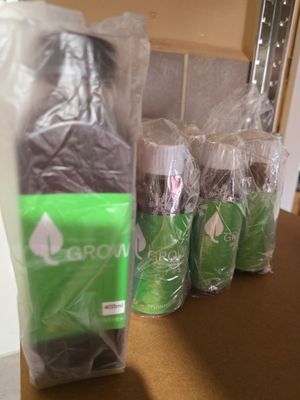
Seedling and leaf nutrient from one bottle, with calcium and magnesium, made for soft water. For all plants from sowing to the growth phase, leafy plants until harvest.
View in the shop ›
* Affiliate-Link: Bei einem Kauf erhalte ich eine Provision, dein Preis bleibt gleich. Preis inkl. MwSt., zzgl. Versand, Stand 8.11.2026. Bilder: Amazon Creators API

* Affiliate-Link: Bei einem Kauf erhalte ich eine Provision, dein Preis bleibt gleich. Preis inkl. MwSt., zzgl. Versand, Stand 8.11.2026. Bilder: Amazon Creators API
* Affiliate links (Amazon): if you buy, I receive a commission; your price stays the same.
Affordable, easy to use and perfectly adequate for beginners.
View on Amazon* ›* Affiliate link: I earn a commission if you buy. Your price stays the same.
Bonus: what to do with the old water?
Do not tip it away; the nutrient-rich residual water is perfect as fertiliser:
Plants in the garden soil
spread generously over beds and shrubs
Balcony boxes
lead it straight in with the hose
Houseplants (diluted)
better dilute with water and spread over many pots
The old nutrient solution is still full of fertiliser. That is why nothing goes down the drain for me. I use it to water my houseplants, balcony boxes or the garden. But do not tip it all onto a single pot plant, otherwise it gets too salty for it. Better spread it well over many plants.
At the end of the season
In autumn I tidy up outdoors. I pump out the nutrient solution and pour the rest onto the shrubs. Then the plants come out, and the roots come out of the net pots. I take the segments apart and put them in nicely warm water, about 40 °C, warm enough that you can still comfortably put your hand in. Swirl back and forth, brush a little and rinse the inside.
Never in the dishwasher: the heat deforms the printed parts. I put the pump, air stone and hoses in water with a little citric acid for a few hours; that dissolves the limescale. Then let everything dry well and store it dust-free. With a lamp, it simply carries on indoors.
📖How I clean the tower and store it over winter is in my book in the chapter “Saisonende” (End of season). Just check the table of contents.›Checklist: your setup for 10-minute maintenance
- Submersible pump or shaker siphon hose (the submersible pump doubles as your spare pump)
- Matching hose, ideally a bit longer
- Bucket or drain, a watering can works too
- Meter for EC and pH (needed for mixing fresh)
- Fresh nutrient solution or fertiliser for mixing fresh
- Cloth for wiping out the tank
Everything for your hydroponics, perfectly matched to my plant towers.
To the shop ›Conclusion
Changing the water in a plant tower does not have to be a heavy or annoying job. With the right method you need neither strength nor time, just a little preparation. And usually topping up is enough anyway.
- Pump out instead of carrying.
- System instead of chaos.
In the video I briefly show you how to pump out:
Frequently asked questions about changing the water in the plant tower
Do I have to change the water in the hydro tower every week?
What do I top up the tank with day to day?
What do I do if the EC is too low after topping up?
What do I do if the EC is too high after topping up?
Why do I check the pH value after topping up?
Why does the EC rise when the water level drops?
How long does a full container last for lettuce?
How often do I top up for tomatoes?
When do I change the nutrient solution completely?
What do I check before changing the water because of pale leaves?
Why can the EC look fine although the plant is lacking something?
Why does it not help to simply add more fertiliser if there is a deficiency?
How do I change the water in four steps?
How do I empty the tank without lifting the tower?
Why should I always have a spare pump?
How does a water change work without electricity?
Where does the bucket have to stand with the shaker siphon hose?
What do I do with the old nutrient solution?
Can I pour all the old nutrient solution onto one pot plant?
Do I have to clean the tank when changing the water?
What is the easiest way to mix fresh nutrient solution?
How often do I measure without a continuous monitor?
Which container has the largest water reserve?
How do I manage on holiday without topping up?
What do I do with the water at the end of the season?
How long does a complete water change take?
Do I have to change the water completely every 4 to 6 weeks?
What is a siphon hose?
Do I need a meter for changing the water?
How soft or hard is my water for the nutrient solution?
How long does the pump run after the water change?
You will find more about care in my guide to hydroponics, on EC value, on pH value and in the article How often does the water run in hydroponics?.
Continue with your own growing

168 pages, simply explained for beginners and with videos on the topics (in German). Exactly how I grow myself: from sowing to harvest.
More about the book ›A few questions about space, location and what you want to harvest, and you get a recommendation.
To the tower advisor ›Questions about your setup? Message me on WhatsApp.
Tapping opens WhatsApp (provider: WhatsApp Ireland Ltd.). More in the privacy policy.