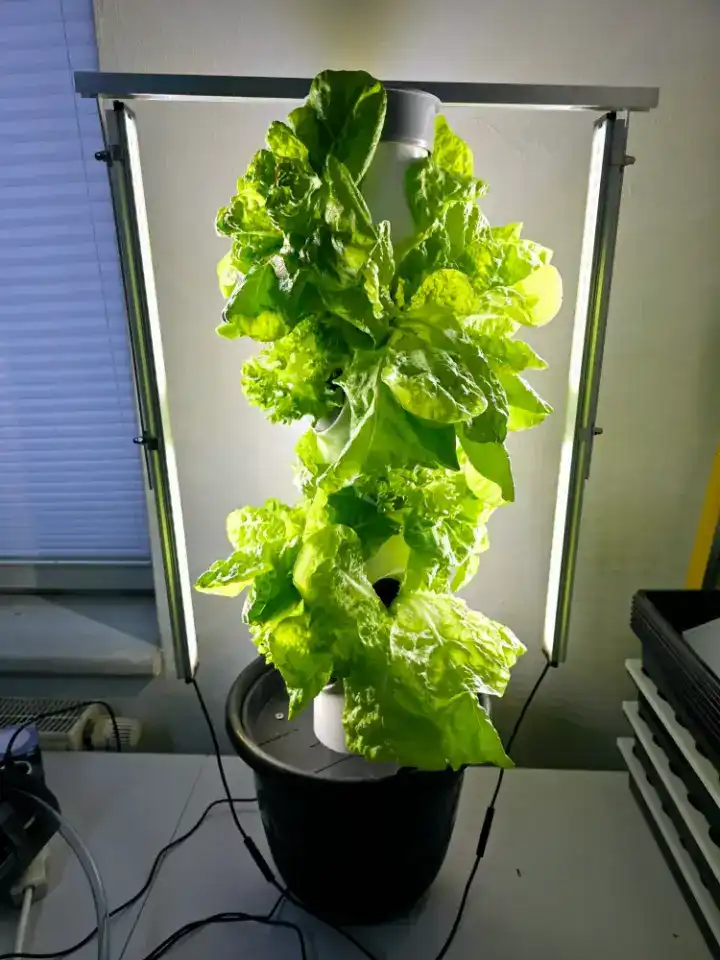
pH and EC values in hydroponics: measuring and setting them correctly
The two most important readings for healthy plants: what they mean, how to measure correctly and which values your plants need in which phase.
More videos on my YouTube channel
Contents
Hydroponics assistant (German)
Do you have a problem with your plants or values? My assistant helps you step by step (in German).
1What is the pH value?
The pH value shows how acidic or alkaline your nutrient solution is. The scale goes from 0 to 14. At 7 water is neutral, below that acidic, above that alkaline. Tap water is often at 7 to 8. Important: the scale isn’t a normal number series. Each step means tenfold, so pH 5 is ten times more acidic than pH 6.
The EC tells you how much nutrient is in the water. The pH tells you whether the plant can actually reach it. In hydroponics 5.5 to 6.5 is a very good range, my target is 5.8. There the plant can take up most nutrients well.
Your pH keeps rising? All causes and solutions ›
▶ On video:
Why pH 5.8 is the best value
Why does the pH rise?
2What is the EC value?
The EC value is the electrical conductivity. Dissolved salts in water conduct electricity, including those from the nutrient. The meter measures this conductivity in mS/cm or µS/cm. More nutrient means a higher EC. Important: the EC only shows how much is in there, not which nutrients.
Too low an EC means nutrient deficiency. Too high an EC means too much salt: the roots can then hardly take up water. And your tap water already counts before you even add nutrient.
▶ On video:
Why does the EC suddenly rise?
EC rises as water is used up
3EC guideline values by phase
| Phase | EC (mS/cm) | Frankie’s liquid nutrient |
|---|---|---|
| Germination | no nutrient | 0 ml |
| First leaves | 0.4 to 0.6 | 0.5 ml per litre |
| Young plant | 0.6 to 0.8 | 1 ml per litre |
| Seedling station | 0.8 to 1.2 | 1 to 2 ml per litre |
| Lettuce and herbs in the tower | usually 1.2, up to 1.6 | 2 to 3 ml per litre |
| Tomatoes until flowering | approx. 2.0 | approx. 4 ml per litre |
| Tomatoes in flowering and fruit | 2.0 to 2.5 | Powder nutrient |
| Tomatoes for ripening | approx. 2.0 | Powder nutrient |
The values apply with my soft tap water (EC 0.25). If your water has a different value, calculate with yours. It doesn’t have to be exact to the decimal: watch your plants. If they’re healthy and strong, everything’s fine.
Why are the values so important?
 Advanced Hydroponics Dutch FormulaThree-part fertiliser for flowering and fruiting plants. The dose lets you set the EC exactly to your plants growth stage.46,40 EURView on Amazon*To Amazon*
* Affiliate link: if you buy through it, I earn a small commission. Your price stays the same. Prices incl. VAT, as of 26.11.2026.
▶ On video:
Can seedlings handle high EC?
How I dose my fertiliser
My main fertiliser to suit your water plus a balancing fertiliser you can use to balance the pH yourself. Every water is different: start with about 10 % balancing fertiliser and work your way up slowly. Your plants still get all the nutrients they need.
4Measuring and checking correctly
Which meter?
It doesn’t work without a meter. I use three devices, and each has its place: an affordable beginner pen for about 40 euros that shows mS/cm and is good to start with, a quality pen that measures more precisely and faster and shows µS/cm, and a permanent monitor that stays in the water and constantly measures EC and pH, with app. There are also test strips and drops for colour comparison, they’re cheap but much less precise.
 BudgetPious 5-in-1 meterThe easy start: pH, EC and temperature in one pen. Perfectly fine for beginners, as long as you calibrate regularly.39,99 EURView on Amazon*To Amazon*
 ProBluelab OnePenMeasures faster and more stable, with a replaceable probe. Values go to the app via Bluetooth so you can see the trend. Pro meter: the app analyses your readings and keeps measurement logs.203,15 EURView on Amazon*To Amazon*
* Affiliate link: if you buy through it, I earn a small commission. Your price stays the same. Prices incl. VAT, as of 26.11.2026.
 Ueomul 5-in-1 meterWaterproof alternative pen, measures pH, EC and temperature in one go.39,99 EURView on Amazon*To Amazon*
 UIUZMAR pH/EC monitorAffordable monitor that stays in the reservoir and shows all values all the time, no app needed.50,56 EURView on Amazon*To Amazon*
* Affiliate link: if you buy through it, I earn a small commission. Your price stays the same. Prices incl. VAT, as of 26.11.2026.
How to measure in 5 steps
- Cap off: Remove the protective cap and check that the tip is clean.
- Dip in: Hold the pen directly in the reservoir until the tip is fully in the water.
- Swirl: Move it back and forth for a few seconds, that releases air bubbles.
- Read: Wait until the number stops jumping. Only then is the value right.
- Rinse: Rinse the tip with clear water and put the cap straight back on.
How often to measure?
With a permanent monitor I check daily. With a pen it’s enough to measure every 2 to 3 days. Measure immediately when there’s little water in the reservoir, because then the EC rises, after rain if the tower stands outdoors, and when your plants look different than usual. Ideally always measure at the same time of day, because pH and EC fluctuate over the day.
Don’t forget to calibrate
| Device | How often | With what |
|---|---|---|
| pH meter | about every 4 weeks | pH buffer solutions, always fresh |
| EC meter | every 1 to 3 months | calibration solution, e.g. 1.413 mS/cm |
 Measury calibration solution pH 4 + 7Without calibration every meter drifts sooner or later. With pH 4 and pH 7 you set it right again in two minutes.21,95 EURView on Amazon*To Amazon*
* Affiliate link: if you buy through it, I earn a small commission. Your price stays the same. Prices incl. VAT, as of 26.11.2026.
▶ On video:
Calibrating the meter: pH and EC
Calibrating with pH 7 and pH 4
5pH and EC values for all plants
Here you’ll find the values for over 60 plants. Just type the name into the search field. The figures are starting guidelines, always look at your plants too.
| Plant | pH value | EC value | Category | Difficulty |
|---|---|---|---|---|
| Pineapple | 5.5 to 6.0 | 1.4 to 2.0 | Fruit | Hard |
| Anise | 5.5 to 6.5 | 0.8 to 1.4 | Herbs | Medium |
| Artichoke | 6.0 to 6.5 | 1.0 to 2.0 | Vegetable | Medium |
| Aubergine | 5.5 to 6.5 | 1.5 to 2.5 | Vegetable | Hard |
| Banana | 5.5 to 6.5 | 1.6 to 2.2 | Fruit | Hard |
| Basil | 5.5 to 6.5 | 1.0 to 1.8 | Herbs | Easy |
| Blueberry | 4.5 to 5.5 | 1.2 to 1.8 | Fruit | Hard |
| Cauliflower | 6.0 to 6.5 | 0.5 to 2.0 | Vegetable | Medium |
| Beans | 6.0 to 6.5 | 2.0 to 4.0 | Vegetable | Medium |
| Bok choy | 6.0 to 6.5 | 1.5 to 2.5 | Vegetable | Easy |
| Broccoli | 6.0 to 6.5 | 2.8 to 3.5 | Vegetable | Medium |
| Chilli | 5.5 to 6.5 | 2.0 to 3.5 | Vegetable | Medium |
| Dill | 5.5 to 6.5 | 0.8 to 1.4 | Herbs | Easy |
| Strawberry | 5.5 to 6.5 | 1.2 to 1.8 | Fruit | Medium |
| Peas | 6.0 to 6.5 | 0.8 to 1.8 | Vegetable | Easy |
| Fennel | 6.4 to 6.5 | 1.0 to 1.4 | Vegetable | Medium |
| Cucumber | 5.5 to 6.0 | 1.7 to 2.5 | Vegetable | Easy |
| Ginger | 5.5 to 6.5 | 1.0 to 1.8 | Vegetable | Medium |
| Currant | 5.5 to 6.5 | 1.2 to 1.8 | Fruit | Medium |
| Coffee | 6.0 to 6.5 | 1.0 to 1.8 | Fruit | Hard |
| Prickly pear | 6.0 to 6.5 | 1.2 to 1.8 | Fruit | Hard |
| Carrot | 6.3 to 6.5 | 0.8 to 1.2 | Vegetable | Easy |
| Potato | 5.5 to 6.0 | 2.0 to 5.0 | Vegetable | Medium |
| Cherry | 6.0 to 6.5 | 1.0 to 1.8 | Fruit | Hard |
| Kohlrabi | 6.0 to 6.5 | 1.8 to 2.2 | Vegetable | Easy |
| Coriander | 6.0 to 6.5 | 1.0 to 1.8 | Herbs | Medium |
| Pumpkin | 5.5 to 6.5 | 1.8 to 2.4 | Vegetable | Medium |
| Leek | 6.0 to 6.5 | 1.4 to 1.8 | Vegetable | Medium |
| Lavender | 6.4 to 6.5 | 1.0 to 1.4 | Herbs | Medium |
| Lovage | 6.0 to 6.5 | 1.2 to 1.6 | Herbs | Medium |
| Lime | 5.5 to 6.5 | 1.4 to 2.0 | Fruit | Hard |
| Sweetcorn | 5.5 to 6.5 | 1.6 to 2.4 | Vegetable | Medium |
| Mandarin | 5.5 to 6.5 | 1.8 to 2.4 | Fruit | Hard |
| Mango | 5.5 to 6.5 | 1.2 to 1.8 | Fruit | Hard |
| Chard | 6.0 to 6.5 | 1.8 to 2.3 | Vegetable | Easy |
| Melon | 5.5 to 6.0 | 1.0 to 2.0 | Fruit | Medium |
| Mint | 5.5 to 6.5 | 1.0 to 1.6 | Herbs | Easy |
| Carrots | 6.3 to 6.5 | 0.8 to 1.2 | Vegetable | Easy |
| Okra | 6.0 to 6.5 | 1.8 to 2.5 | Vegetable | Medium |
| Papaya | 5.5 to 6.5 | 1.4 to 2.2 | Fruit | Hard |
| Peppers | 5.5 to 6.0 | 1.5 to 2.5 | Vegetable | Medium |
| Parsnip | 6.0 to 6.5 | 1.0 to 1.5 | Vegetable | Medium |
| Parsley | 5.5 to 6.0 | 0.8 to 1.2 | Herbs | Easy |
| Pepper (black) | 5.5 to 6.0 | 1.5 to 2.5 | Herbs | Medium |
| Peach | 6.0 to 6.5 | 1.4 to 2.0 | Fruit | Hard |
| Radish | 6.0 to 6.5 | 1.2 to 1.6 | Vegetable | Easy |
| Rhubarb | 6.0 to 6.5 | 1.6 to 2.2 | Vegetable | Medium |
| Brussels sprouts | 6.0 to 6.5 | 2.0 to 3.0 | Vegetable | Medium |
| Rocket | 6.0 to 6.5 | 0.8 to 1.2 | Vegetable | Easy |
| Lettuce | 5.5 to 6.5 | 1.2 to 1.6 | Vegetable | Easy |
| Sage | 6.0 to 6.5 | 1.0 to 1.5 | Herbs | Easy |
| Chives | 6.0 to 6.5 | 1.0 to 1.8 | Herbs | Easy |
| Celery | 6.3 to 6.5 | 1.8 to 2.4 | Vegetable | Medium |
| Spinach | 6.0 to 6.5 | 1.8 to 2.3 | Vegetable | Easy |
| Thyme | 5.5 to 6.5 | 0.8 to 1.6 | Herbs | Medium |
| Tomato | 5.8 to 6.2 | 2.0 to 2.5 | Vegetable | Medium |
| Watermelon | 5.5 to 6.5 | 1.2 to 2.0 | Fruit | Medium |
| Grape | 5.5 to 6.5 | 1.4 to 2.0 | Fruit | Hard |
| Lemon | 5.5 to 6.5 | 1.4 to 2.0 | Fruit | Hard |
| Zucchini | 6.0 to 6.5 | 1.8 to 2.4 | Vegetable | Easy |
| Onion | 6.0 to 6.5 | 1.4 to 1.8 | Vegetable | Medium |
| Beetroot | 6.0 to 6.5 | 0.8 to 2.2 | Vegetable | Medium |
6Setting pH and EC
The right order
- Tap water into a clean bucket or watering can.
- Add nutrient and stir well.
- Measure EC. Too high: add water. Too low: a little nutrient. Measure again.
- Only when the EC is right, measure the pH.
- Adjust the pH if it’s outside 5.5 to 6.5.
Lowering pH
Usually you only need pH down, because tap water is above pH 7. Ready-made products from the shop are diluted and safest. Always add drop by drop, stir and measure again. My pro tip: phosphoric acid (75 %). It’s very economical, with my soft water 2 to 3 drops per 10 litres are enough, and the pH stays stable for a long time. Citric acid and vinegar don’t last: bacteria break them down and the pH rises again.
Raising pH
You rarely need this. Use pH up from the shop and dose it very sparingly, drop by drop.
Adjusting EC
Why does the pH change?
| This lowers the pH | This raises the pH |
|---|---|
| Fresh nutrient in the water, the more, the lower | The plant uses up the nutrient |
| Acid like pH down | Tap water for topping up brings lime |
| air in the water drives out carbonic acid |
A few questions about space, location and what you want to harvest, and you get a recommendation.
To the tower advisor › Phosphoric acid 85 %My pH down: a few drops are enough for a whole reservoir. Always dose drop by drop, stir, measure again, wear gloves and goggles.18,90 EURView on Amazon*To Amazon*
 Plagron pH plus/minus setReady for both directions: if you go too far lowering, bring the pH back up with the plus.39,99 EURView on Amazon*To Amazon*
* Affiliate link: if you buy through it, I earn a small commission. Your price stays the same. Prices incl. VAT, as of 26.11.2026.
▶ On video:
Lowering pH with phosphoric acid
Mixing fertiliser and checking pH
7Your water: the most important starting value
Your starting water affects both values. Tap water contains dissolved calcium and magnesium, i.e. lime. That already counts towards the EC before you add nutrient. So always measure your water without nutrient first.
| Your water | EC without nutrient | Hardness |
|---|---|---|
| soft | below 0.3 mS/cm (300 µS/cm) | below 8.4 °dH |
| medium | 0.3 to 0.5 mS/cm | 8.4 to 14 °dH |
| hard | above 0.5 mS/cm | above 14 °dH |
If your water EC is high, there’s hardly any room for nutrient. With soft water (0.25), 1.35 of nutrient still fits up to EC 1.6, with hard water (0.8) only 0.8. You can mix hard water with rain or RO water: mixed 1 to 1 you roughly halve hardness and starting EC. Hard water also keeps pushing the pH up.
Related:How hard is your water? Look it up by postcode (Germany)› Related:Types of water compared›▶ On video:
Hard and soft water: which fertiliser?
Tap water is often pH 7.6
Do different vegetables need different values? Leafy and flowering plants in the hydro tower
Blausocke asked under one of my videos on TikTok: “Don’t different vegetables and fruits need different values?” A really good question, because this is exactly where it is decided whether your tower runs easily or whether you have to keep adjusting.
Plants like different amounts of nutrient, that is true. For your tower it is still very simple: there are basically only two groups. Leafy plants like lettuce and herbs, and flowering plants like tomatoes and cucumbers. Within one group the values fit together so well that you can grow everything together.
Leafy plants: everything together in one tower
For all plants where you harvest the leaves, I keep it really simple: I combine them all in one tower. Lettuce, loose-leaf lettuce, basil, parsley, chives, rocket, mint and pak choi feel at home in the same water environment.
My value for the whole mix: EC 1.2. I never go higher than 1.6 for leafy plants. I have very soft water, there is hardly any lime in it and the nutrient makes up almost the entire EC. At 1.2 everything grows lush green and tastes wonderful.
| Plant | pH | EC | My value in the tower |
|---|---|---|---|
| Lettuce | 5.5 to 6.5 | 1.2 to 1.6 | 1.2 |
| Basil | 5.5 to 6.5 | 1.0 to 1.8 | 1.2 |
| Parsley | 5.5 to 6.0 | 0.8 to 1.2 | 1.2 |
| Rocket | 6.0 to 6.5 | 0.8 to 1.2 | 1.2 |
| Mint | 5.5 to 6.5 | 1.0 to 1.6 | 1.2 |
| Chives | 6.0 to 6.5 | 1.0 to 1.8 | 1.2 |
Why does this work although the ranges differ a little? Plants take what they need. A value in the middle supplies all of them well, and no plant gets so much that it harms it. The values for all plants are in my table pH and EC values for all plants.
My tower for leafy plants
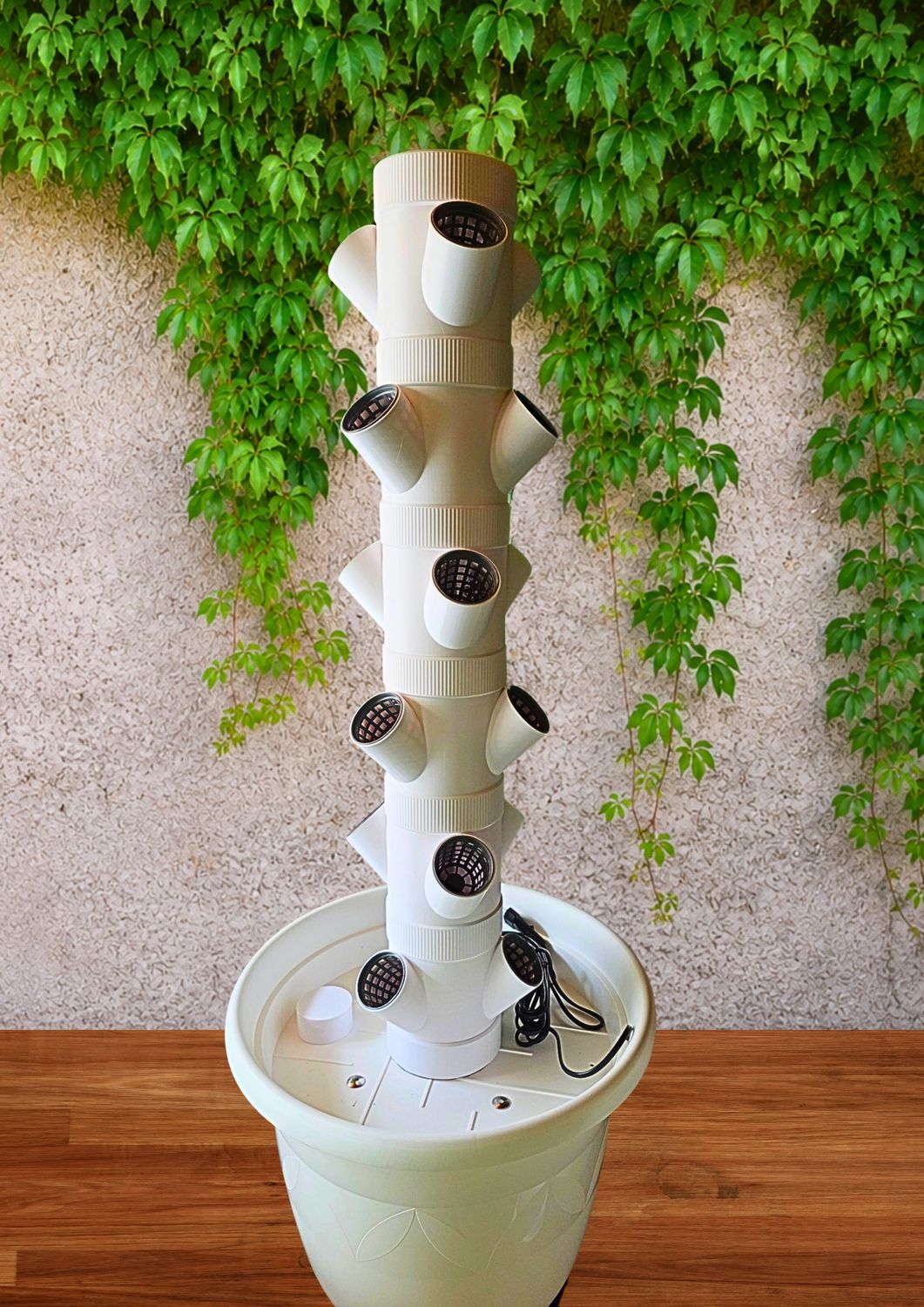
Harvest lettuce and herbs together: the HydroFlex Tower Classic 6+
17-litre tank and room for 18 plants or more. Just right if you want to grow lettuce, basil and parsley together.
Flowering plants: tomatoes, cucumbers and peppers need more
Plants that flower and bear fruit are different. Tomatoes, cucumbers, peppers and strawberries need clearly more nutrients as soon as flowering starts. Above all potassium becomes important so that flowers and fruit develop well.
| Plant | pH | EC |
|---|---|---|
| Tomato until flowering | 5.8 to 6.2 | approx. 2.0 |
| Tomato in flower and fruit | 5.8 to 6.2 | 2.0 to 2.5 |
| Cucumber | 5.5 to 6.0 | 1.7 to 2.5 |
| Pepper | 5.5 to 6.0 | 1.5 to 2.5 |
| Strawberry | 5.5 to 6.5 | 1.2 to 1.8 |
That is why these plants get not only more nutrient but a different nutrient: a bloom nutrient* made for flowers and fruit. And that is why they must not go into the tower with lettuce and herbs. At EC 2.0 to 2.5 the leafy plants would suffer, at EC 1.2 the tomatoes would get too little.
My tip: give your tomatoes, cucumbers or peas their own tower. The wide Largo Uno is built exactly for that: a big tank, sturdy planting spots and enough room for strong plants.
My tower for flowering plants
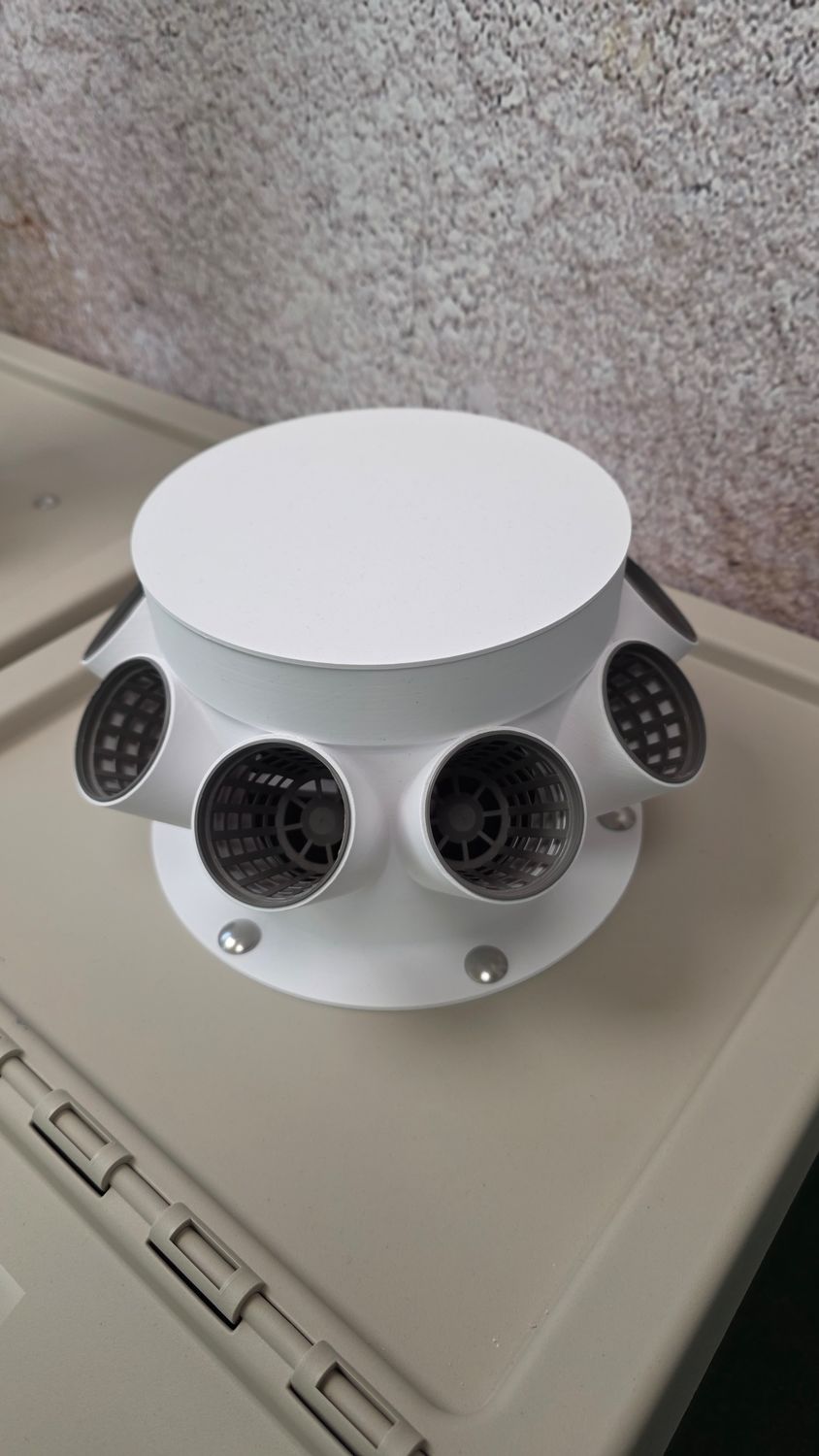
Tomatoes, cucumbers and peas: the HydroFlex Tower Largo Uno
37-litre tank and 16 cm wide segments for strong plants. Your tomatoes get their own tower with their own nutrient.
* Affiliate link: if you buy, I earn a small commission, your price stays the same.
My nutrient for leafy plants: what it can do
For all leafy plants I use a single liquid nutrient, from sowing to harvest. You can get it in my shop, and I put it together exactly for this.
- One bottle for everything: seedlings, young plants and fully grown lettuce or herbs. No switching, no mixing.
- With calcium: calcium makes the leaves sturdy and protects against brown edges. More in my article lettuce leaves turning brown at the edges.
- With magnesium: magnesium is part of the green in the leaves. Your plants stay lush green.
- Iron as chelate: the iron stays dissolved in the water and the plants can reach it easily. Yellow young leaves hardly stand a chance.
- Made for soft water: I work with very soft water myself, and that is exactly what it is tuned for. More in water quality.
- Easy to dose: with the included dosing syringe the nutrient is measured in seconds.
| Stage | EC | My nutrient |
|---|---|---|
| Young plant | 0.6 to 0.8 | 1 ml per litre |
| Lettuce and herbs in the tower | mostly 1.2, up to 1.6 | 2 to 3 ml per litre |
My nutrient
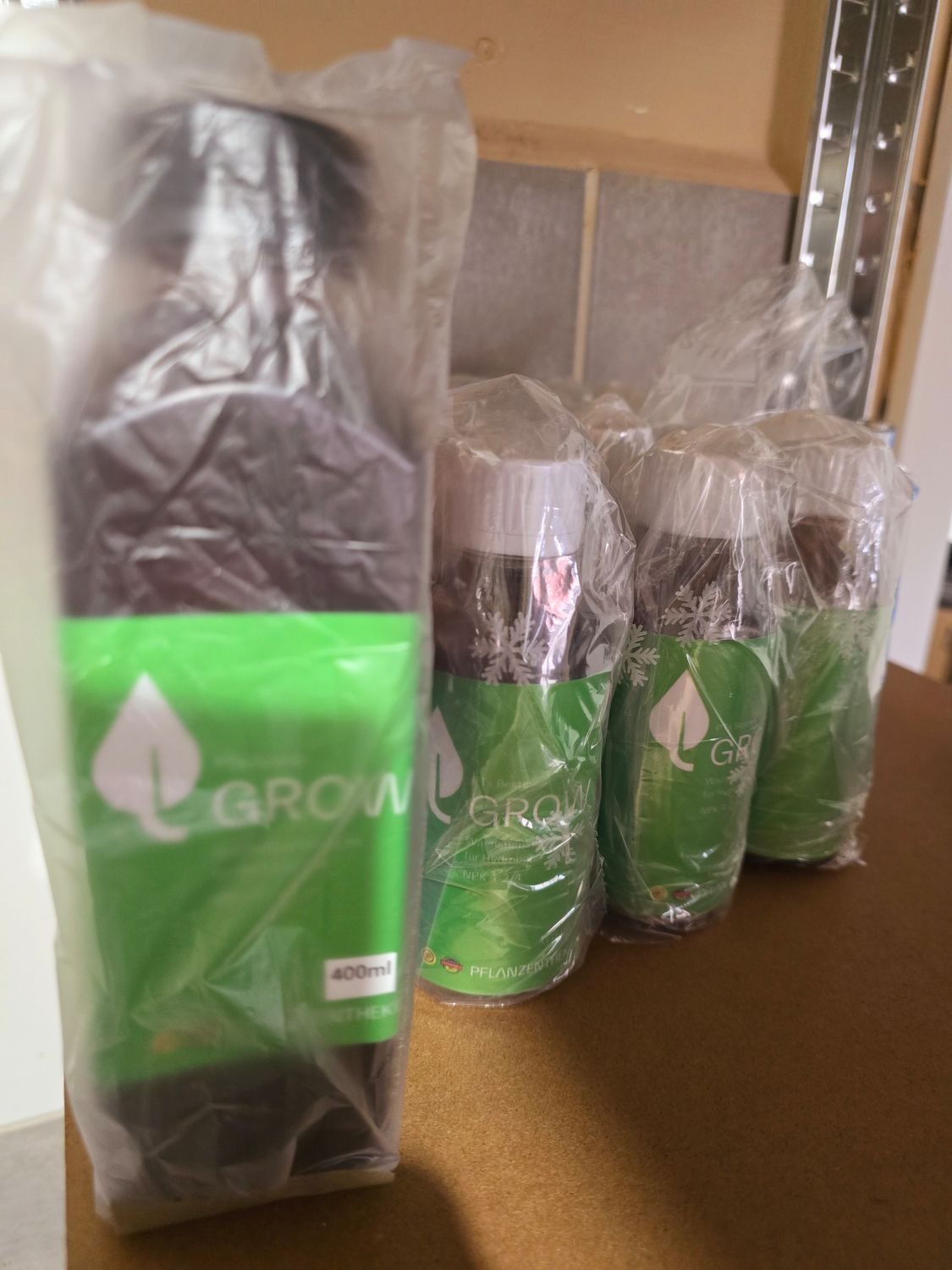
Frankie’s liquid nutrient for lettuce and herbs
With calcium, magnesium and iron, made for soft water. One bottle from sowing to harvest, with dosing syringe.
How to mix and dose the nutrient is shown step by step in my guide working with liquid nutrient.
Avoid common mistakes
 OsmoFresh reverse osmosis unitIf your tap water is hard, the EC is high before you even add fertiliser. RO water starts near zero, so you dose exactly to plan.67,15 EURView on Amazon*To Amazon*
* Affiliate link: if you buy through it, I earn a small commission. Your price stays the same. Prices incl. VAT, as of 26.11.2026.
Conclusion
With correctly set pH and EC values you create the best conditions for strong plants and a good harvest. Measure the water first, then feed, first EC, then pH, and always in small steps. Measure regularly and write the values down, then you have everything under control.
All values and tables to look up are in my book (in German) in the part “Zum Nachschlagen”.›Continue with your own growing
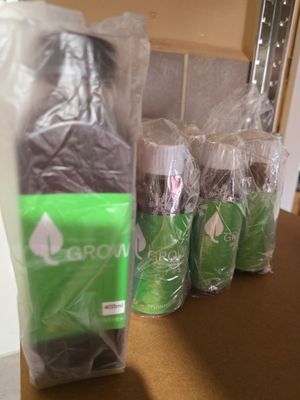
Seedling and leaf nutrient from one bottle, with calcium and magnesium, made for soft water. For all plants from sowing to the growth phase, leafy plants until harvest.
View in the shop ›A few questions about space, location and what you want to harvest, and you get a recommendation.
To the tower advisor ›Blausocke: She wanted to know whether different vegetables need different values. My answer with a table: Do different vegetables need different values? ›
Do you have a question too? Here is how to ask it ›
Tapping opens WhatsApp (provider: WhatsApp Ireland Ltd.). More in the privacy policy.
Did you enjoy this topic? Is anything missing, or do you see something differently? I keep learning all the time and I would love to hear your question and your experience. Just write it in the comments below, no sign-up needed.
Write your question or experienceFAQ about pH and EC
Which pH value is right in hydroponics?
What does the EC value mean?
What EC does lettuce need?
What EC do tomatoes need?
What do I measure first, EC or pH?
How do I lower the pH?
Why does my pH keep rising?
How often should I measure?
How often do I need to calibrate the meter?
What’s the difference between mS/cm and µS/cm?
Why does my tap water matter?
Can I use citric acid or vinegar?
Do different vegetables need different values?
Yes, but there are basically only two groups: leafy plants like lettuce and herbs with EC up to 1.6, and flowering plants like tomatoes and cucumbers with EC 2.0 to 2.5 and their own nutrient.
Can I put lettuce and herbs together in one tower?
Yes. Lettuce, basil, parsley, chives and pak choi grow together at my place at EC 1.2 and pH 5.8 to 6.0.
Can I grow tomatoes and lettuce together?
Better not. In flower, tomatoes need EC 2.0 to 2.5 and a bloom nutrient. That would be too much for lettuce. Give tomatoes their own tower.
Which EC is right for leafy plants?
1.6 at most. With soft water I run at 1.2, which is enough for lush green leaves.
Which pH suits all plants?
pH 5.8 to 6.0 suits almost every plant in the tower.
Which nutrient suits lettuce and herbs?
A liquid nutrient for leafy plants with calcium, magnesium and iron. Mine is in the shop and lasts from sowing to harvest.
Why is EC 1.2 enough for me?
With very soft water almost the entire EC comes from the nutrient. 1.2 supplies leafy plants completely.
What happens if the EC is too high?
The plants take up water less easily. With lettuce this often shows as brown leaf edges.