Checking water: hardness, chlorine, sodium, iron and copper
In hydroponics your water is the basis of the nutrient solution. Here I show you how to check your water, how to read your supplier’s analysis and what to look out for with well water and rainwater.
Which type of water you use and which fertiliser suits it is explained in detail on my page Water types in hydroponics. This post is about the water check.
Why the EC alone does not tell you everything
Without soil, everything your plants get comes from the water. That is why my first step is always the same: I measure the water without fertiliser. The EC shows you how many dissolved salts are already in it. But it does not show you which ones. My book says the same: the EC tells you how much is in it, not which nutrients.
Usually it is lime, meaning calcium and magnesium. That is harmless and even useful. But it can also be substances your plants hardly need, for example sodium or chloride. They stay in the tank when the plants drink water, and with every top-up there is a little more. That is why a second look is worthwhile: what is in your water?
The good news first: tap water in Germany is of drinking water quality, and hydroponics works with almost any tap water. With the following steps you will know where you stand in a few minutes.
1The quick check at home
Measure EC and pH without fertiliser.
- Let the water run briefly until it comes cool out of the pipe, and fill a clean cup.
- Hold the meter in it and wait until the number stops jumping.
- Read the EC. If your meter shows µS/cm: 1000 µS/cm is 1 mS/cm, so 250 µS/cm is 0.25 mS/cm.
- Measure the pH. Tap water is usually above pH 7; that is normal.
- Write down both values with the date. Next time measure at the same time of day.
| Your water | EC without fertiliser (mS/cm) | Hardness | What this means for you |
|---|---|---|---|
| soft | below 0.3 (mine: 0.25) | below 8.4 °dH | lots of leeway, use a fertiliser with calcium and magnesium |
| medium | 0.3 to 0.5 | 8.4 to 14 °dH | works well, keep an eye on the pH |
| hard | above 0.5 | above 14 °dH | pH rises faster, ideally dilute with rainwater or reverse osmosis water |
My water in Falkenstein is very soft at about 4 °dH (German hardness), the EC is 0.25. That is what I like working with most, because I know exactly what my plants get: what I put in with the fertiliser. How to dilute hard water and which fertiliser suits which water is explained in detail under Water types in hydroponics.
With these three numbers you know where you are starting.
 BudgetPious 5-in-1 meterAffordable, easy to use and perfectly adequate for beginners.39,99 EURView on Amazon*To Amazon*
 ProBluelab OnePenShows you how high the EC of your tap water starts and saves every reading in the app. Pro meter: the app analyses your readings and keeps measurement logs.203,15 EURView on Amazon*To Amazon*
* Affiliate link: if you buy through it, I earn a small commission. Your price stays the same. Prices incl. VAT, as of 26.11.2026.
2Reading your supplier’s water analysis
It shows what your meter cannot see.
Every water supplier must have its water tested regularly. You can usually find the values on its website, often under drinking water analysis or water quality. All you need is your postcode or your town. For hydroponics you only look at a few lines: hardness, sodium, chloride, iron, manganese, copper and boron.
Horticultural literature has guide values for irrigation water in greenhouses. I use them as a guide for the tower. 1 mg/l is the same as 1 ppm.
| Substance | ideal | still good | Why it matters |
|---|---|---|---|
| Sodium | below 20 mg/l | below 50 mg/l | hardly needed, builds up in the tank |
| Chloride | below 20 mg/l | below 140 mg/l | only needed in traces, too much harms the roots |
| Iron | below 1 mg/l | below 4 mg/l | forms brown deposits in the pump and pipes |
| Manganese | below 1 mg/l | below 2 mg/l | trace element, too much is toxic |
| Copper | below 0.1 mg/l | below 0.2 mg/l | only needed in tiny amounts, quickly harms the roots |
| Boron | below 0.1 mg/l | below 0.5 mg/l | small gap between enough and too much |
Source of the guide values: UMass Extension, University of Massachusetts, fact sheet on water analysis in the greenhouse. The limits for drinking water are higher for some substances, for sodium for example 200 mg/l. So drinking water is always safe for you. For plants in a closed circuit, however, less sodium is better. In most regions tap water is well below these values anyway.
And the lime?
The analysis gives the hardness in °dH, often also calcium, magnesium and hydrogen carbonate. Calcium and magnesium are nutrients and count towards the EC. The hydrogen carbonate pushes the pH up. The more of it there is, the more often you need pH Down, and the more drops it takes. How to set the pH correctly is explained under Lowering the pH value.
Chlorine in tap water
In Germany tap water is usually supplied without chlorine. Some suppliers, however, permanently add a small amount, others only temporarily, for example after construction work or heavy rain. After treatment, as a rule at most 0.3 mg/l free chlorine is allowed. Whether and how much your supplier adds is in its analysis or in a notice.
This matters for your plants, because chlorine is meant to kill germs and is not good for fine roots either. In trials at the University of Connecticut, lettuce in hydroponics grew more weakly at just 0.5 mg/l free chlorine. The usual amount in tap water is below that. But if your water smells of chlorine, or your supplier has announced chlorination, there is a simple way: pour the water into an open bucket and let it stand for a day, or let the air bubbler run in it for a while. Free chlorine escapes into the air.
Sodium and chloride: the silent salts
The plant hardly takes up sodium and chloride. What it does not need stays in the nutrient solution. If you keep topping up, their share slowly rises. You notice this when the EC gets higher from week to week even though you fertilise as usual. Then it is time for fresh water. How to do that without carrying buckets, I show you under Water changes in the plant tower.
The biggest source of sodium in the house is a water softener. It swaps the lime for sodium. The water is soft afterwards, but full of sodium. That makes it unsuitable for hydroponics. In this case use water from a tap before the softener, for example the garden tap, or rainwater or reverse osmosis water. More on this on the page Types of water.
Iron and manganese
Your plants need iron, but in the right form. In fertiliser it is present as a chelate. That way it stays dissolved and available to the plant, even if the pH drifts a little. My liquid fertiliser contains iron in this form.
It is different with dissolved iron from the water, which occurs mainly in well water. When it comes into contact with air, it turns into brown rust. This settles in the pump, in the hoses and on the roots. With tap water the waterworks removes iron and manganese beforehand. If you see brown flakes or deposits in the tank, test your water for iron.
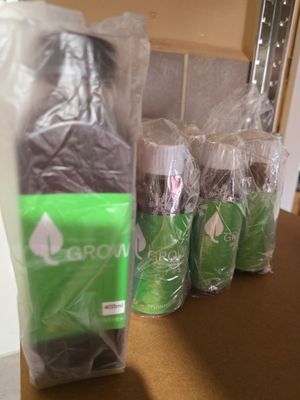
Seedling and leaf nutrient from one bottle, with calcium and magnesium, made for soft water. For all plants from sowing to the growth phase, leafy plants until harvest.
View in the shop ›Copper and zinc: pipes and roofs
The plant only needs copper and zinc in tiny amounts. Too much of them quickly harms the roots. There are two places you should know about.
Water that has stood in the pipe
If the water has stood in copper pipes overnight or during your holiday, it can contain more copper. That is why you first let the water run until it comes noticeably cool out of the pipe. Use this standing water for watering flowers, not for the nutrient solution. The German Environment Agency (Umweltbundesamt) recommends the same for drinking water.
Rainwater from a metal roof
Rain washes metal off copper and zinc roofs and out of zinc gutters. The German Environment Agency has shown that this can significantly increase the values in the roof runoff. So collect rainwater for hydroponics from a tiled, glass or plastic roof, not from a copper roof.
Checking rainwater
Rainwater is very soft; the EC is close to 0. That makes it ideal for diluting hard tap water. Its pH is usually slightly acidic, because rain absorbs carbon dioxide from the air. It does not bring calcium and magnesium. If you use a lot of rainwater, you therefore need a fertiliser with calcium and magnesium.
- Collect the water from a clean roof, not from copper or zinc.
- Let the first rain after a long dry spell run off. It washes dust, pollen and bird droppings off the roof.
- Collect it in a covered barrel. The cover keeps out leaves, dirt and light, otherwise algae grow.
- Measure EC and pH before every use. Fresh rainwater has an EC close to 0. If it is much higher, something from the roof or the barrel has come along.
If your tower stands outside, rain also plays a direct role: it dilutes the nutrient solution. Measure the EC after heavy rain and add a little fertiliser if needed.
Having well water tested
Well water varies greatly from place to place. It can contain a lot of lime, iron, manganese, sodium, chloride or nitrate. Your meter only shows you the total. If your well has not been tested as drinking water, have the water analysed in a lab before you use it for the nutrient solution. Labs offer ready-made packages for well water.
| What to look for in the analysis | Why |
|---|---|
| pH, conductivity and hardness | show how much is already in it |
| Sodium and chloride | build up in the tank |
| Iron and manganese | form deposits in the pump and pipes |
| Nitrate | is a nutrient and counts towards the EC; a lot of it points to fertiliser from the surroundings |
| Boron and copper | become too much even in small amounts |
| Germs | important, because you eat the vegetables raw |
Ideally repeat the test once a year, because well water can change with the weather and the seasons. If sodium, chloride or iron are too high, a reverse osmosis system or switching to tap water or rainwater helps.
If your water does not suit: reverse osmosis or distilled water
A reverse osmosis system filters almost all dissolved salts out of the water, including sodium, chloride and iron. My simple system takes my tap water from 250 to about 10 to 15 µS/cm. With my soft water, however, I do not need it. It is worthwhile if your water is very hard or the analysis shows too much sodium or iron. For small amounts, for example for starting seeds, distilled water from a canister also works.
Remember: reverse osmosis and distilled water no longer contain calcium or magnesium. Your fertiliser must bring both. You can also mix the water with tap water; then the tap water brings some of it.
 OsmoFresh reverse osmosis system Smartline GoldFor very hard water or too much sodium. Filters out almost all dissolved salts.67,15 EURView on Amazon*To Amazon*
 Wagner BLUE reverse osmosis 150 GPD with TDSThree-stage reverse osmosis system with built-in TDS meter. That way you see directly how clean the water coming out of the system is.99,00 EURView on Amazon*To Amazon*
* Affiliate link: if you buy through it, I earn a small commission. Your price stays the same. Prices incl. VAT, as of 26.11.2026.
3Keeping water quality in a running tower
Good water only stays good if you look after it.
Measure and write down
I have a continuous monitor and check it daily. For you it is enough to measure every few days, especially when there is little water in the container. Ideally always measure at the same time of day, because pH and EC fluctuate over the day. Write down the values with the date, then you can see where things are heading. And calibrate the pH part of your meter regularly, otherwise it will show wrong values over time. How to do that, I show you under calibrating a pH meter.
* Affiliate link: if you buy through it, I earn a small commission. Your price stays the same. Prices incl. VAT, as of 26.11.2026.
Topping up correctly
In a running tower I top up with ready-mixed nutrient solution, not with plain water. Then I measure and adjust: if the EC is too low, a little fertiliser goes in; if it is too high, plain water. If the EC still rises week after week, salts have built up, and then I change the water.
Temperature and oxygen
Between 18 and 22 °C the roots work well. If the water gets warmer, it holds less oxygen, and harmful germs have an easier time. An air bubbler brings oxygen into the water and does not belong on the timer; it runs continuously. More on this under the right water temperature.
 AquaForte Hi-Flow V-30 air pumpAir pump for the air bubbler. Brings oxygen into the nutrient solution, especially important with warm water.50,74 EURView on Amazon*To Amazon*
* Affiliate link: if you buy through it, I earn a small commission. Your price stays the same. Prices incl. VAT, as of 26.11.2026.
Dark and clean
Where light meets nutrient solution, algae grow. So keep the tank and all containers dark and covered. More on this under Algae. At the end of the season, clean containers, hoses and pump thoroughly. White crusts are lime from your water; wipe them off with vinegar or citric acid. Many people also use hydrogen peroxide to clean the empty system. Follow the manufacturer’s instructions and rinse well with clean water afterwards.
 Hydrogen peroxide 3 percentFor cleaning the empty system at the end of the season. Use according to the manufacturer’s instructions and rinse well afterwards.13,99 EURView on Amazon*To Amazon*
* Affiliate link: if you buy through it, I earn a small commission. Your price stays the same. Prices incl. VAT, as of 26.11.2026.
My checklist for good water
| Check | How often | Target |
|---|---|---|
| EC and pH without fertiliser | once, then whenever the water source changes | EC below 0.3 is soft, above 0.5 hard |
| Supplier’s analysis | once a year | sodium below 50 mg/l, chloride below 140 mg/l |
| Chlorine | if the supplier chlorinates or you smell it | let the water stand open for a day |
| Standing water from the pipe | every time | let it run until it comes cool |
| Rainwater | before every use | EC close to 0, no metal roof |
| Well water | once a year in the lab | iron, sodium, chloride, nitrate and germs within limits |
| Nutrient solution in the tower | every few days | EC by plant, pH 5.8 to 6.0 |
You will find the right EC values for every plant and every growth stage in my EC table for all plants. What the EC measures exactly, I explain under EC value, everything about pH under pH value.


Did you enjoy this topic? Is anything missing, or do you see something differently? I keep learning all the time and I would love to hear your question and your experience. Just write it in the comments below, no sign-up needed.
Write your question or experienceFrequently asked questions about water quality
What do you measure first when checking your water?
Does the EC tell me which substances are in my water?
From what EC without fertiliser is water considered soft?
How do you convert µS/cm to mS/cm?
Where do you find your supplier’s water analysis?
Which sodium value is ideal for hydroponics?
Which chloride value is still good?
Is 1 mg/l the same as 1 ppm?
Why do sodium and chloride build up in the tank?
How do you notice that salts have built up?
Is tap water in Germany chlorinated?
At what chlorine level did lettuce grow more weakly in trials?
How do you get rid of chlorine in water?
Do I always have to let tap water stand?
Why is softened water unsuitable?
Which iron does the plant need?
What does dissolved iron from well water do in the tower?
Why do you let water run that has stood in the pipe?
Which copper value is ideal?
From which roof do you not collect rainwater for hydroponics?
Why do you let the first rain after a dry spell run off?
Which fertiliser do you need with a lot of rainwater?
Why do you cover the rain barrel?
What does a much higher EC in rainwater reveal?
What do you have well water tested for?
Why do you also have well water tested for germs?
What helps if your water has too much sodium or iron?
What do you watch out for with reverse osmosis and distilled water?
Why do you always measure at the same time of day?
What do you top up with in a running tower?
Which water temperature is ideal?
Read more: Water types in hydroponics, EC values for all plants, EC value, pH value and Nutrients.
Continue with your own growing

212 pages, now available on Amazon, simply explained for beginners and with videos on the topics (in German). Exactly how I grow myself: from sowing to harvest.
View the book on Amazon* ›A few questions about space, location and what you want to harvest, and you get a recommendation.
To the tower advisor ›Blausocke: She wanted to know whether different vegetables need different values. My answer with a table: Do different vegetables need different values? ›
Do you have a question too? Here is how to ask it ›
Tapping opens WhatsApp (provider: WhatsApp Ireland Ltd.). More in the privacy policy.
Questions and comments
Ask your question here, even without a name. I will answer as soon as I can.